The Defense Department’s Missile Defense Agency (MDA) requested a $7.9 billion budget in its FY 2018 request released Tuesday, a $379 million increase over the FY 2017 request.The budget request provides $821 million for the Ground-based Midcourse Defense (GMD) program. The MDA will use this funding to maintain 36 Ground-Based Interceptors (GBIs) at Fort Greely, Alaska and Vandenburg Air Force Base, Calif. as well as deploy eight additional GBIs to the Alaska site. This will increase the GMD system to…
Defense Secretary Pete Hegseth said Wednesday the Trump administration plans to continue its push for at least $350 billion in defense funds via the reconciliation process “regardless of what happens […]
A small, bipartisan group of senators is backing the Fast Tracking European Investment in Ukraine’s Defense Act, S. 5175, to hasten the export of allied buys of U.S. munitions for […]
Rep. Jim Himes (D-Conn.), the ranking member of the House Permanent Select Committee on Intelligence, plans to increase the committee’s contractor oversight if the Democrats win control of the House […]
A new Congressional Budget Office report estimates the cost of the Iran war through Aug. 1 as $38 billion and says that the U.S. has likely depleted between one-half and […]
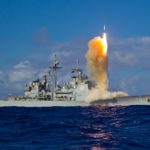
The Defense Department’s Missile Defense Agency (MDA) requested a $7.9 billion budget in its FY 2018 request released Tuesday, a $379 million increase over the FY 2017 request.
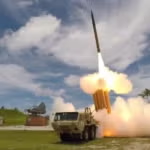
The budget request provides $821 million for the Ground-based Midcourse Defense (GMD) program. The MDA will use this funding to maintain 36 Ground-Based Interceptors (GBIs) at Fort Greely, Alaska and Vandenburg Air Force Base, Calif. as well as deploy eight additional GBIs to the Alaska site. This will increase the GMD system to a total of 44 GBIs.
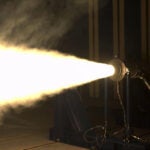
The agency is also requesting $465.5 million for Improved Homeland Defense Interceptors as it continues to develop the GMD Redesigned Kill Vehicle (RKV). The RKV seeks to address evolving missile threats, enhance kill vehicle reliability, and improve in-flight communications. The MDA expects to deploy the RKV in the 2022 timeframe.
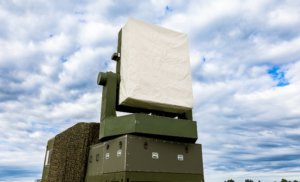
MDA is notably requesting $130.7 million for the Sea-Based X-band radar, extending on-station time from 120 days to 330 days at sea. It is also funding the Long Range Discrimination Radar (LRDR) at $357.7 million. This is a midcourse sensor meant to improve the ballistic missile defense system (BMDS target discrimination capability. The LRDR is planned to be available in 2020 in Alaska.
The MDA also highlighted it is requesting $21 million for a Homeland Defense Radar for Hawaii. This aims to provide a persistent capability to enhance the defensive capability of GBI’s for the enhanced defense of Hawaii. It aims to deliver an initial capability by FY 2023.
NATIONAL HARBOR, Md. – A Senate Armed Services panel chair today said boosters of the Golden Dome program still have work to do to increase support on Capitol Hill while […]


 By
By