In this monthly column, Defense Daily highlights individuals from across the government, industry and academia whose efforts contribute daily to national defense, from the program managers to the human resource leaders, to the engineers and logistics officers.
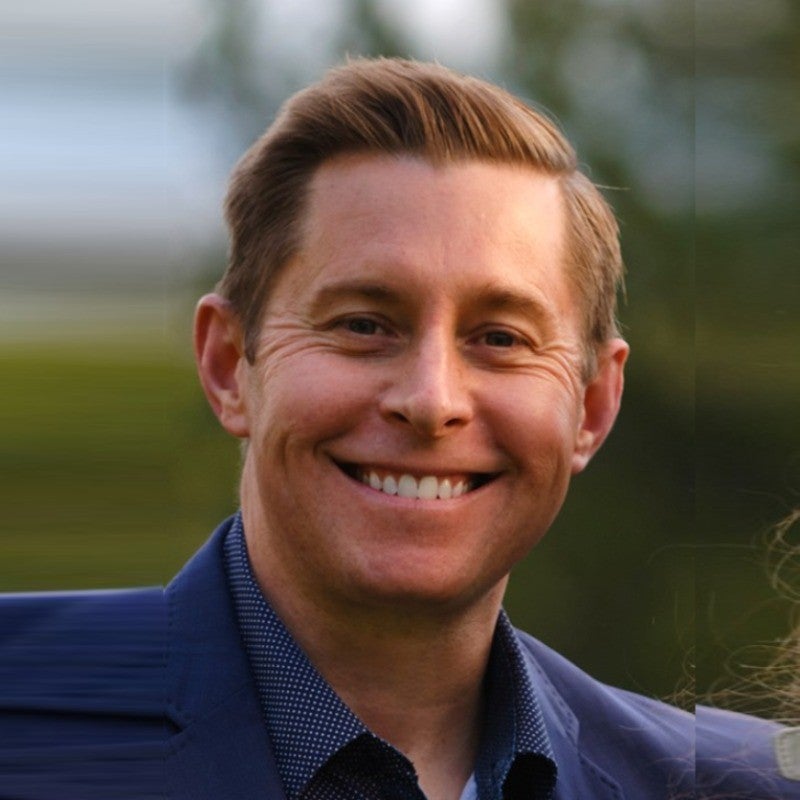
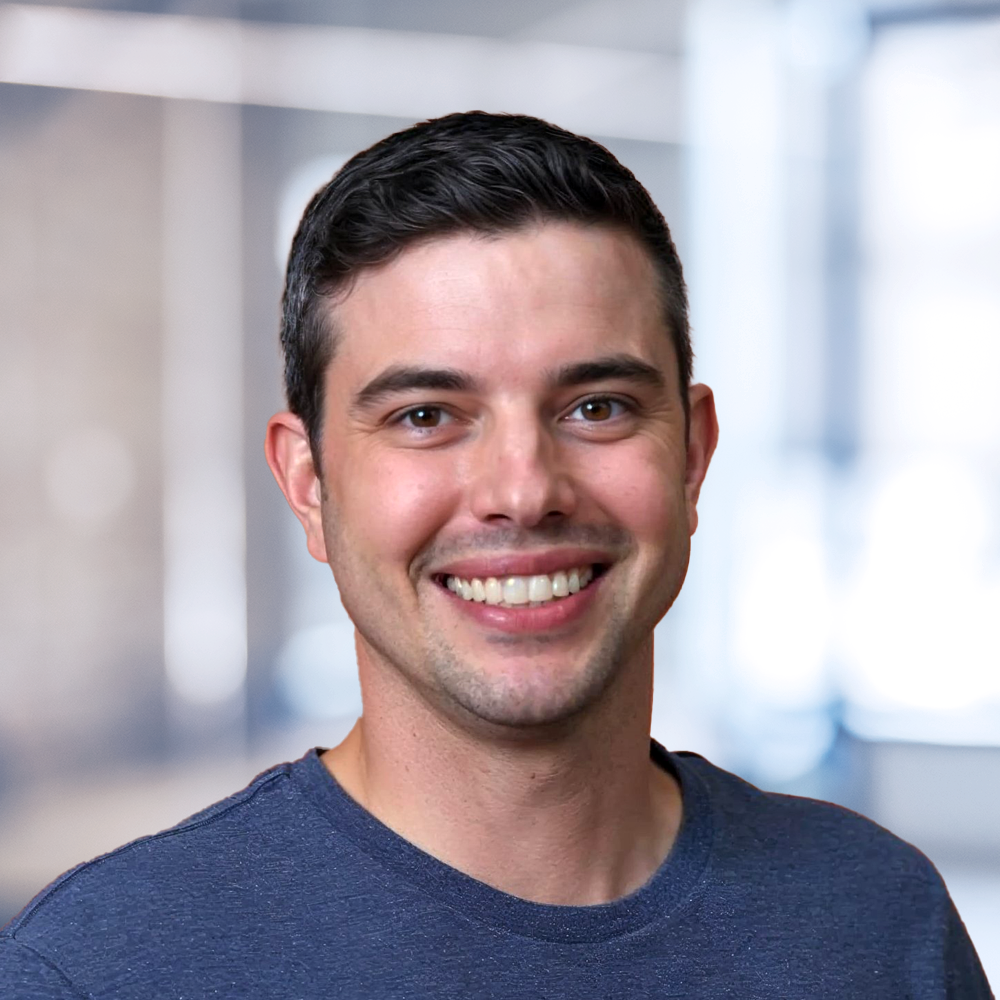
Michael DiOrio is Chief Operations and Product Officer at Dataminr. For over 10 years he has focused on scaling the company’s AI platform for real-time risk detection and its AI human-in-the-loop team. In this role he leads a global operations team instrumental in developing 1 million-plus unique sources of public data for Dataminr’s AI engine, and building out new alerting use cases to accelerate commercialization. DiOrio is also an intelligence officer in the U.S. Navy Reserves.
How did you get involved in the defense industry or community?
My path into national security started right after college graduation, when I took my first defense analysis job with the Department of Defense at age 22. While I had originally considered a path in law, a deep-seated fascination with the geopolitics and the historical drivers of conflict redirected my focus toward national security. I’ve always viewed history as the essential blueprint for understanding modern statecraft; that interest was crystallized by a counterterrorism course I completed in Australia, which fundamentally shifted my professional trajectory toward the defense community.
Over the next eight years, I served in a variety of operational roles across both the defense and intelligence sectors. Even as I pivoted into the private sector and joined Dataminr in 2013, I maintained a direct “boots-on-the-ground” connection to the mission by commissioning as an Intelligence Officer in the Navy Reserves. Serving in that capacity from 2016 to 2024 allowed me to bridge the gap between emerging commercial technologies and the evolving requirements of the warfighter, a dual perspective that has bolstered my customer focus at Dataminr. Since then, my focus has been on ensuring that the real-time insights we provide meet the high-stakes demands of the modern defense environment.
What are some challenges you faced working through your career?
There have been many, but the most consistent thread throughout all my experiences is change. When I was deployed to Afghanistan in 2009, it was a new experience for me. There was constant change, and I had to adapt quickly to a new and ever-shifting environment.
During this time, my team and I were still working 12- to 14-hour days, 7 days a week. It was a very team-oriented environment, and that camaraderie and sense of mission have stuck with me throughout my entire career. That experience taught me the importance of staying flexible amid change. It also sparked my passion for real-time, accurate information, which influenced my decision to join Dataminr when I left the defense community. I saw the potential impact that actionable information could make in mission-critical environments.
Even now, in my position at Dataminr, change is a constant. Whether it’s scaling solutions to meet the diverse information needs of our defense customers or adjusting to new product features and AI technology, rapid change is a challenge that allows me to continually improve myself. I’ve learned to navigate change and made it a personal goal to help others do the same.
Did you feel like you always had sufficient mentors and leaders to help guide you? Why/why not?
I’ve always been very lucky to have great mentors, especially in the defense world. During my time in the defense community, I had four key mentors who helped me build my career, from grad school to the Navy and now at Dataminr. As a member of the Council on Foreign Relations, they also supported me through the application process.
Each one consistently went out of their way to mentor me whenever I had a question or reached out. They are a big part of who I am today, and I am still very close with all of them. Their mentorship is also one of the reasons I returned to the Navy. I wanted to give back because I had such a positive experience and learned so much from the mentors and leaders there.
How do you work to be a mentor yourself to younger counterparts?
One of my mottos is to always “pay it forward.” One thing I realized as I progressed in my career was that the mentors I had didn’t have to pick up the phone. They had busy lives and families, yet they still made time to help me when I needed it.
That’s why whenever someone reaches out to me, whether it’s an alum from one of my schools, someone looking to learn more about the Navy, or just someone asking about Dataminr, I always take the call. I wouldn’t have gotten to where I am today without help, so I always try to be available and open to giving that back to people, because I was once in that same position.
What does it mean to be successful in your career field?
In product management, it’s really about being able to accurately prioritize. There are always a million things you could do from a product perspective, so it comes down to focusing on the ones that move the needle most for the customer and have the greatest mission impact. You have to be ruthless with scope. You can’t do everything at once, so you need to prioritize getting critical features out to the customers and users who need them most, like those protecting our national security.
From a success metric standpoint, it is not just about feature shifts and delivery. It also comes down to the business side, including customer retention and increased revenue.
That said, while the business side is important, at the end of the day it’s about building a product that helps users every day, 24/7.
What are some of the under-appreciated positions in the defense field, the unsung heroes or essential cogs in the machine that help the job get done with less recognition?
It’s the people behind the scenes. For example, the people who staff the security guard checkpoints, checking IDs and badges, have a really tough, thankless job. The same goes for IT personnel. There are always an incredible amount of issues across so many different tech systems and services. You usually have a young IT member attached to you who ends up being the hero, constantly troubleshooting, fixing things and jumping in to help support you.
I would also include a lot of the people involved in travel and orders. They really are the essential cogs in the machine. They are typically doing their best while being overwhelmed.
From the security folks, who are in a very lonely but critical front-line role, to the teams handling travel and personnel, I learned very early in my career that you should always be incredibly nice to these people because they are essential to the mission.
What is your advice for new entrants to the defense/military community?
Raise your hand. Volunteer for new assignments, even if they seem daunting, or out of your job scope, or you don’t know all the details. If it’s a new assignment where you’re going to learn new skills, you have to go for it. That’s how you learn and grow. I did this many times in the DOW, and each time, I gained an incredible new experience.
I spent six months at Special Operations Command because I raised my hand. I raised my hand for Afghanistan and department rotations. Each time, it felt like going to grad school again. I gained a lot of education and so many new skills.
It wasn’t always easy, and there were many times where I volunteered for roles I wasn’t fully qualified for and got that “oh no” moment when I was selected. But for me, on-the-job learning was key. I made it a point to listen and absorb as much as possible. I also looked for opportunities to contribute where I felt confident, like conducting analysis, making maps and presentations.
It’s about stepping up for new opportunities and being willing to learn. I always encourage others: if a new skill or role is needed, be the one who raises your hand.
What do you see as the future of your sector in national defense?
I honestly believe that AI is the future of defense. Whether it’s World Models, LLMs, AI-enabled drone technology, or countering adversaries who leverage AI for cyber capabilities. All of these developments represent a new kind of battlefield. AI is one of those once-in-a-generation technologies that will truly shape the future landscape of national security. And Dataminr’s strong focus on AI and real-time capabilities is exactly why I believe we’ll play an important role in the future of U.S. and allied national security.
Who are the Force Multipliers in your community? Let us know at forcemultipliers@defensedaily.com.