Search

Army Aviation Developing Full Spectrum Brigades

Army Aviation Developing Full Spectrum Brigades

By Ann Roosevelt

FORT WORTH, Texas–Army aviation is tweaking its organization, designing a Full Spectrum Combat Aviation Brigade (CAB), a service official said.

Last week, the Army Chief of Staff approved moving ahead with the design of the Full Spectrum CAB, Army Aviation Branch Chief Maj. Gen. James Barclay said.

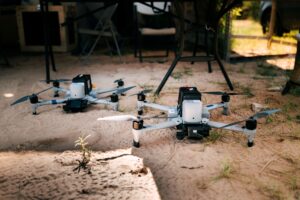
"The big difference is the incorporation and redesign [of the] recon squad, incorporating Shadow and [Extended Range Multi-Purpose] ERMP all become resident for the aviation brigades," Barclay said at the annual Army Aviation Association of America conference here.

The capability and success of manned and unmanned teaming in Iraq and Afghanistan led this change, which adds manned/unmanned capability to improve intelligence, surveillance and reconnaissance in the aviation brigades.

Story Continues Below


Subscribe today to get all the breaking news in the defense and aerospace industry.


The CABs will then have an expanded ability to be the eyes and ears for the Army, "able to see and provide better protection for our soldiers."

The redesign will be done using existing assets over the next few years, and eventually some 15 of 21 CABs will move to the full spectrum design, he said.

Barclay also told conference attendees that Aviation Study II, about a 10-month effort, didn’t offer the branch any surprises, but things officials already knew. For example, there’s a steady state demand for aviation. The current aviation capacity is running about equal to the needs of the Army Force Generation Model, which identifies where units are in the deployment ready, training, or reset phases.

The study also highlighted and confirmed for the Army staff where Army aviation needs to go in the future.

There’s a big lift requirement, for example, for UH-60 Black Hawk and CH-47 Chinook helicopters, he said. This is something the service well knows.

And, the Full Spectrum CAB comes as an a modification to the results of the Aviation I study to develop light, medium and heavy CABs.

The Army has approved a 12th CAB and, this month, a plan for a 13th CAB are due to the Office of the Secretary of Defense. The13th CAB will be a new-built brigade aimed to the fulfill the Army Chief of Staff’s requirement to get aviators on a schedule of one year deployed to two years at home.

"The chief told us to move rapidly," Barclay said.

The need for more aviators brought with it challenges in equipment and manning, he said.

"The big Army has done everything we’ve asked to keep our branch in the fight and turn these brigades as fast as we can," Barclay said. For example, trainers now have 24 additional AH-64 Apache helicopters and 21 additional Back Hawks for students.

However, there’s more work to be done, Barclay said, showing a list of items that need looking into, including small, lightweight precision munitions and joint interoperability, Barclay said.


Subscribe today to get all the breaking news in the defense and aerospace industry.

Congress Updates

CBO Says Upfront Costs To Protect Military Installations From Drones Between $1 Million And $74 Million

The initial costs to acquire and deploy counter-small unmanned aircraft system (C-sUAS) defenses at individual Defense Department installations are estimated at between $1.2 million and $73.6 million depending on the […]


House Heads For Recess Without Moving On NDAA After Procedural Vote Fails

The House will leave for the Fourth of July recess without moving forward on its $1.15 trillion fiscal year 2027 National Defense Authorization Act (NDAA), with a procedural vote to […]


Bipartisan Group Of House Members Introduce U.S.-Ukrainian Co-Production Bill For Unmanned Systems

A bipartisan group of six House legislators have introduced the Strategic Unmanned Systems Partnership Act–a bill to improve drone collaboration between the U.S. and Ukraine. Rep. Michael McCaul (R-Texas), the […]


Will $4 Billion For SB-AMTI/Space Data Network Backbone In Supplemental Reduce Or Add To Planned Funding For Systems In Reconciliation?

Nearly all of the Department of the Air Force’s fiscal 2027 procurement and research and development (R&D) budget for space-based air moving target indication (SB-AMTI) and the Space Data Network […]

Army Aviation Developing Full Spectrum Brigades

By Ann Roosevelt

FORT WORTH, Texas–Army aviation is tweaking its organization, designing a Full Spectrum Combat Aviation Brigade (CAB), a service official said.

Last week, the Army Chief of Staff approved moving ahead with the design of the Full Spectrum CAB, Army Aviation Branch Chief Maj. Gen. James Barclay said.

“The big difference is the incorporation and redesign [of the] recon squad, incorporating Shadow and [Extended Range Multi-Purpose] ERMP all become resident for the aviation brigades,” Barclay said at the annual Army Aviation Association of America conference here.

The capability and success of manned and unmanned teaming in Iraq and Afghanistan led this change, which adds manned/unmanned capability to improve intelligence, surveillance and reconnaissance in the aviation brigades.

The CABs will then have an expanded ability to be the eyes and ears for the Army, “able to see and provide better protection for our soldiers.”

The redesign will be done using existing assets over the next few years, and eventually some 15 of 21 CABs will move to the full spectrum design, he said.

Barclay also told conference attendees that Aviation Study II, about a 10-month effort, didn’t offer the branch any surprises, but things officials already knew. For example, there’s a steady state demand for aviation. The current aviation capacity is running about equal to the needs of the Army Force Generation Model, which identifies where units are in the deployment ready, training, or reset phases.

The study also highlighted and confirmed for the Army staff where Army aviation needs to go in the future.

There’s a big lift requirement, for example, for UH-60 Black Hawk and CH-47 Chinook helicopters, he said. This is something the service well knows.

And, the Full Spectrum CAB comes as an a modification to the results of the Aviation I study to develop light, medium and heavy CABs.

The Army has approved a 12th CAB and, this month, a plan for a 13th CAB are due to the Office of the Secretary of Defense. The13th CAB will be a new-built brigade aimed to the fulfill the Army Chief of Staff’s requirement to get aviators on a schedule of one year deployed to two years at home.

“The chief told us to move rapidly,” Barclay said.

The need for more aviators brought with it challenges in equipment and manning, he said.

“The big Army has done everything we’ve asked to keep our branch in the fight and turn these brigades as fast as we can,” Barclay said. For example, trainers now have 24 additional AH-64 Apache helicopters and 21 additional Back Hawks for students.

However, there’s more work to be done, Barclay said, showing a list of items that need looking into, including small, lightweight precision munitions and joint interoperability, Barclay said.