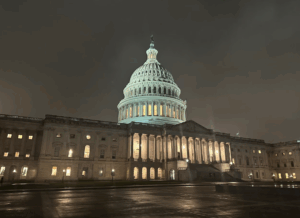
Sen. Thad Cochran (R-Miss.), former chairman of the Senate Appropriations and Agriculture Committees. Cochran passed away last week.
The Senate Appropriations Committee (SAC) tentatively plans to provide almost $63 billion less in its fiscal year 2018 defense appropriations bill than its House counterpart has advanced through its own chamber.According to the committee’s recent “funding guidance” to its subcommittees, the Senate defense bill would contain $595.2 billion, including $513.1 billion in base funding and $82.1 billion in overseas contingency operations (OCO) funding. By contrast, the House-passed defense bill would provide $658.1 billion, including $584.2 billion in base funding and…
More than three dozen industry associations on Monday called on congressional defense committee leaders to scrap a provision in the final version of the next National Defense Authorization Act that […]
Two senior Republicans on the House Armed Services Committee, including a potential frontrunner for the panel’s top GOP role, have officially lost their reelection bids. Reps. Rob Wittman (R-Va.) and […]
Democrats’ sweeping victories in Tuesday’s midterms, taking back control of the House and Senate, are set to reshape key spots atop defense committees, to include House Armed Services panels and […]
As the mid-term elections near with polls showing an increasing likelihood of a switch in majority control in the House and potentially the Senate, three Virginia Republicans on the House […]
The Senate Appropriations Committee (SAC) tentatively plans to provide almost $63 billion less in its fiscal year 2018 defense appropriations bill than its House counterpart has advanced through its own chamber.
According to the committee’s recent “funding guidance” to its subcommittees, the Senate defense bill would contain $595.2 billion, including $513.1 billion in base funding and $82.1 billion in overseas contingency operations (OCO) funding. By contrast, the House-passed defense bill would provide $658.1 billion, including $584.2 billion in base funding and $73.9 billion for OCO.
Sen. Thad Cochran (R-Miss.), chairman of the Senate Appropriations Committee and defense subcommittee
The SAC indicated in a July 20 statement that its subcommittee funding levels could change but that until Congress reaches a FY 2018 budget agreement, it will work with the FY 2017 funding levels to adhere to budget caps mandated by the Budget Control Act of 2011.
“Negotiations within Congress and with the president may eventually produce a new budget agreement,” said Sen. Thad Cochran (R-Miss.), the SAC’s chairman. “Until such time, however, it is reasonable that we move forward using FY 2017 funding levels.”
Sen. Patrick Leahy (D-Vt.), the committee’s ranking member, offered an amendment to increase defense and non-defense funding by $54 billion each above the budget caps, but his proposal failed by a 15 to 16 vote.
The SAC has not yet announced when it will mark up its defense bill.
The House bill adds tens of billions of dollars to the Trump administration’s request. It would fund the purchase of 84 Lockheed Martin [LMT] F-35 Joint Strike Fighters, 14 above the request; 11 Navy ships, two more than requested; and 24 Boeing [BA] F/A-18E/F Super Hornets for the Navy, 10 more than requested.
Separately, Sen. John McCain (R-Ariz.), chairman of the Senate Armed Services Committee, confirmed in a statement July 31 that Senate floor consideration of the FY 2018 defense authorization bill will wait until he returns to Washington in September. McCain had hoped to have the Senate take up the bill before the August congressional recess, but he ended up heading home early to undergo treatment for a brain tumor.
McCain’s statement also indicated that he plans to offer an amendment aimed at creating a “strategy for success” for U.S. involvement in Afghanistan. “Eight years of a ‘don’t lose’ strategy has cost us lives and treasure in Afghanistan,” he said. “Our troops deserve better.”
In the latest U.S. Air Force fighter force structure report submitted to Congress, the service speaks of a “theoretical potential” to achieve a goal of 1,509 combat-coded fighters in the […]


 By