Navy Details Potential Fixes for Super Hornet Pilot Health Issues
Valerie Insinna
SHARE:
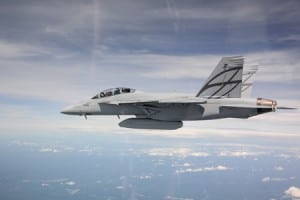
International sales of Boeing's F/A-18E/F Super Hornet fighter jet is helping offset declining domestic revenues. Photo: Boeing.
Lawmakers on Thursday pressed a panel of Navy aviation leaders about a rise in health problems in Super Hornet pilots that could be caused by insufficient oxygen, depressurization or other factors.The Navy has noted an increase in such episodes since 2009 and has formed a team to investigate the root cause, Rep. Michael Turner (R-Ohio), chairman of the House Armed Services Committee’s tactical air and land forces subcommittee, said during the hearing.But finding the source of the health issues is…
A small, bipartisan group of senators is backing the Fast Tracking European Investment in Ukraine’s Defense Act, S. 5175, to hasten the export of allied buys of U.S. munitions for […]
Rep. Jim Himes (D-Conn.), the ranking member of the House Permanent Select Committee on Intelligence, plans to increase the committee’s contractor oversight if the Democrats win control of the House […]
A new Congressional Budget Office report estimates the cost of the Iran war through Aug. 1 as $38 billion and says that the U.S. has likely depleted between one-half and […]
NATIONAL HARBOR, Md. – A Senate Armed Services panel chair today said boosters of the Golden Dome program still have work to do to increase support on Capitol Hill while […]
Navy Details Potential Fixes for Super Hornet Pilot Health Issues
Valerie Insinna
SHARE:
Lawmakers on Thursday pressed a panel of Navy aviation leaders about a rise in health problems in Super Hornet pilots that could be caused by insufficient oxygen, depressurization or other factors.
The Navy has noted an increase in such episodes since 2009 and has formed a team to investigate the root cause, Rep. Michael Turner (R-Ohio), chairman of the House Armed Services Committee’s tactical air and land forces subcommittee, said during the hearing.
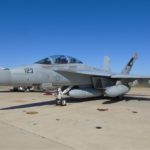
A Navy F/A-18 Super Hornet. Photo: Boeing
But finding the source of the health issues is “like chasing a ghost” because the planes are not equipped with monitoring devices that can identify the cause, which can include anything from too little oxygen onboard or poisoning caused by carbon monoxide or other noxious gases, said Rear Adm. Michael Manazir, the director of the Navy’s Air Warfare Division (N98).
Implementing a fix to the problem is a top priority for the service and is discussed on a monthly basis at the three-star level, said Rear Adm. Michael Moran, the Navy’s program executive officer for tactical aircraft.
The Physiological Episode Team, which numbers more than 100 people, investigate every reported incident. Of 273 cases adjudicated by the team so far, 93 have involved some form of contamination, 90 involved an environmental control system component failure, 67 involved human factors, 41 involved an on-board oxygen generating system component failure, 11 involved a breathing gas delivery component failure, and 45 were inconclusive or involved another system failure, stated the written testimony of Moran, Manazir and Lt. Gen. Jon Davis, the deputy commandant of the Marine Corps for Aviation.
“We’re really trying to understand that contamination piece,” Moran said. “Are there any things getting into the gas that the pilots are breathing that we’re not aware of?”
The service has made about 19 changes to Super Hornet’s environmental control system, including its pressure valves, control valves and sensors, and has also made modifications to the on-board oxygen generating system.
It has replaced the air filtration system in about 219 jets so far, and will modify 40 jets a month until all have the new system, he said. “That’s really done a great job of getting rid of all of the carbon monoxide and improving the breathing gas for the pilots.”
The Navy is also studying whether other contaminants could be causing problems.
“Right now we don’t have a way to measure that in the airplane, and so we’re looking at ways right now, testing a couple things at [Naval Air Station Paxtuxtent River] that we can put into their emergency gear to measure the gas, so that if there’s’ something we’re not seeing yet, hopefully we can find that and build it into the filtration system,” he said.
A new oxygen monitoring system is currently undergoing tests, and should be ready to be integrated on planes after those wrap up this year, Moran added.
Rep. Niki Tsongas, (D-Mass.) noted that these health issues have continued to persist at the same rate—about 20 to 30 events per 100,000 flight hours–over the past three years.
“Even though you’ve made these investments, you’ve not seen a lot of progress,” she said. “Is this a funding issue? Is it a technological issue?”
The Navy has received all the funding it’s asked for, Moran said, but it is considering another measure that would require additional money that would increase the amount of time emergency systems can deliver oxygen.
“Right now, depending on the altitude and really the condition of the pilot, that lasts from 20 minutes to maybe down to five minutes. Can we extend that about two to fourfold?” he said.
Later during the hearing, Tsongas said she was concerned that taxpayers could continue paying for planes that put pilots at risk.
“I know last year’s NDAA (National Defense Authorization Act) authorized 12 additional F-18s,” she said. “How are you making sure these new planes aren’t delivered to the Navy without the same onboard oxygen system problems that you’re struggling with today?”
Super Hornets are coming off the production line with the newest modifications, said Manazir, who stressed throughout the hearing that the Navy did not have a confidence problem in the plane that would lead to its grounding.
An HII [HII] shipbuilding executive last week told lawmakers how the company plans to improve and accelerate shipbuilding throughout via workforce improvements, adding new shipbuilding infrastructure and reinforcing distributed shipbuilding […]