 By
By 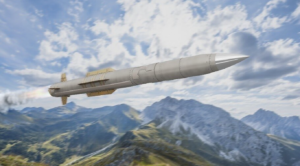
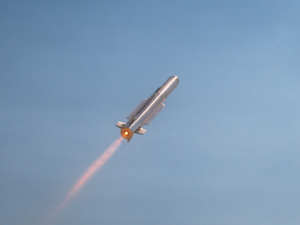
Lockheed Martin’s [LMT] newly-announced PAC-3 Adapted Capability Effector (PAC-3 ACE) “could be a solution” for the Army’s Low-Cost Interceptor (LCI) effort, a company official said Tuesday.
While Lockheed Martin is not currently part of the initial LCI competition, Paula Hartley, vice president of strategy and business development for missiles and fire control, noted the company would look at getting involved in Army’s plan to run another iteration next year.
“We’ve been in conversation with the U.S. government on our offering,” Hartley said during a briefing at the Association of the U.S. Army’s annual conference in Washington, D.C.
Lockheed Martin announced its new PAC-3 ACE in July, which it said is “less than half the cost” of the current PAC-3 MSE interceptor per unit and is designed to defeat “airbreathing threats, cruise missiles, close-range and short-range ballistic missiles” (Defense Daily, July 20).
Hartley reiterated that Lockheed Martin plans to begin flight testing PAC-3 ACE in 2027 and that it could be ready for operational use “about 30 months from now.”
“It’s still very capable against a wide variety of threat sets. And it’s still interchangeable, from a launch perspective, with [PAC-3] MSE,” Hartley said.
The Army began accepting industry’s proposals for its LCI competition in July, seeking pitches for cheap rounds along with individual components, such as rocket motors, seekers and fire control and flight guidance capabilities (Defense Daily, July 9).
A Request for Information notice published in May detailed the Army’s interest in all-up rounds that can integrate with the M903 launch station and the Northrop Grumman [NOC]-built Integrated Battle Command System (IBCS), with an aim for a total cost of less than $1 million per round.
A PAC-3 MSE interceptor is currently estimated to cost between $4 million-$5 million per unit.
The Army recently announced the initial 30 finalists for its LCI competition and selected the following companies to demonstrate their all-up round offerings in October and November to inform awards in December: Aerovironment [AVAV], Anduril and RTX [RTX] along with Aeon Industries, AirX Robotics, Furientis, Greenjets, QinetiQ, UDD Tech Corporation and Wardstone (Defense Daily, Oct. 1).
Lt. Gen. Frank Lozano, program acquisition executive for fires, told reporters in September that the service will give industry “multiple bites at the apple” to compete for LCI beyond the upcoming initial demonstration and award effort, with additional shoot-off opportunities planned for late fiscal year ‘27 and FY ‘28 for those who may need time to continue developing their solutions (Defense Daily, Sept. 10).