 By
By 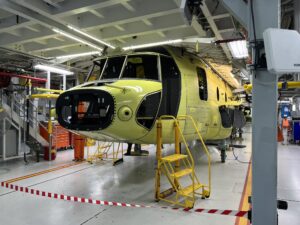
NASHVILLE, Tenn. – A lead Boeing [BA] official has said the company needs the Army to commit to future plans for the CH-47F Chinook Block II heavy-lift helicopter, with a lawmaker on Wednesday also raising concerns about the program’s fate.
“We really need the Army to commit to Block II to take the minimum sustaining rate out of the conversation. We just need them to commit to Block II. And I think as their vision unfolds and as they go through [the Army Transformation Initiative], I think that will reflect itself in the future. So I’m still waiting on that,” KJ Jolivette, vice president and general manager of Boeing Vertical Lift, told Defense Daily at the Army Aviation Association of America’s annual conference here.
Rep. Mary Gay Scanlon (D-Pa.), whose district is home to Boeing’s Chinook production site, said during a House Armed Services Committee member day hearing that the Army plans to cut funding for the program and could go as far as cancelling it.
“While I do not want to impugn the intentions of Army leadership, it is clear that they have cut Chinook funding so that they can request funding elsewhere in the budget, knowing that Congress will backstop the program,” Scanlon said. “The back and forth on whether to move forward with Block II, followed by meager budget requests, has kept the production line well below the minimum sustaining rate, causing multiple rounds of layoffs at the Ridley Park facility and increasing the Chinook’s per-unit cost.”
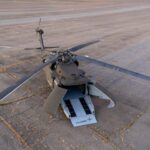
The CH-47F Block II upgrades the platform with an improved drivetrain, increased range, a redesigned fuel system and an ability to lift an additional 4,000 pounds.
Heather McBryan, Boeing’s H-47 program manager, told reporters here the company is on contract for 24 Block IIs to date, having delivered six of the aircraft last year and on track to deliver another in late 2026.
Boeing was awarded a contract for nine more Block IIs last September and recently received another order for three six additional aircraft, while McBryan deferred to the Army on the total acquisition objective for the program.
While Scanlon alluded to no funding being included in FY ‘27 for the Block II program, budget documents released earlier this month show the Army requesting $210.7 million for five more aircraft.
The Army for several years did not include funding for Block IIs in its recent budget requests as it assessed the path forward for the program, while Congress would then add funds in final appropriations bills covering a few of the new aircraft to sustain what Boeing has called a “minimum sustainable rate” for the platform (Defense Daily, April 27 2023).
As part of the Army’s aviation rebalance in February 2024, which included canceling development of the Future Attack Reconnaissance Aircraft, the service announced a commitment to eventual full-rate production for the CH-47F Block II Chinook and has included funding for several aircraft each year (Defense Daily, Feb. 8 2024).
“I think they’re still working toward that commitment,” Jolivette told Defense Daily. “I think we’re still on that track. But we’re trying to just execute what we have today.”
When asked what specific decision point would signify the Army’s commitment to the program, such as a Milestone C decision, Jolivette said Boeing was “still trying to figure that out.”
Scanlon noted the Chinook program retains “strong bipartisan support” and said 18 lawmakers recently sent a letter to HASC requesting support for securing 12 more Block IIs in FY ‘27.
The Army last October affirmed a rapid fielding decision for the Block II program, which includes plans to outfit two Combat Aviation Brigades with the upgraded heavy-lift helicopter (Defense Daily, Oct. 3).
“Through the rapid fielding fielding process, we’ll continue to deliver [Block IIs] through 2028, 2029 for those that are on contract,” McBryan told reporters.
Jolivette said Boeing’s intent is to move beyond the “minimum sustaining rate” framework for Block II, while McBryan added the Chinook line is in a “good place” for at least the next two years when factoring in Germany’s plan to purchase 60 aircraft.
“But, certainly, we’re always evaluating based on what we see in the president’s budget plus future orders,” McBryan said.