The White House wants $65 million in fiscal 2019 for the Department of Energy's work on the low-yield ballistic-missile warhead called for in the latest Nuclear Posture Review, a weapon Congress must authorize before the agency can start building it.The Donald Trump administration made the funding request official Friday in proposed amendments to the spending request it released in March for the budget year starting Oct. 1.“At the time the FY 2019 Budget was transmitted to the Congress, the details…
A small, bipartisan group of senators is backing the Fast Tracking European Investment in Ukraine’s Defense Act, S. 5175, to hasten the export of allied buys of U.S. munitions for […]
Rep. Jim Himes (D-Conn.), the ranking member of the House Permanent Select Committee on Intelligence, plans to increase the committee’s contractor oversight if the Democrats win control of the House […]
A new Congressional Budget Office report estimates the cost of the Iran war through Aug. 1 as $38 billion and says that the U.S. has likely depleted between one-half and […]
NATIONAL HARBOR, Md. – A Senate Armed Services panel chair today said boosters of the Golden Dome program still have work to do to increase support on Capitol Hill while […]
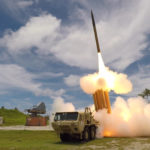
The White House wants $65 million in fiscal 2019 for the Department of Energy’s work on the low-yield ballistic-missile warhead called for in the latest Nuclear Posture Review, a weapon Congress must authorize before the agency can start building it.
The Donald Trump administration made the funding request official Friday in proposed amendments to the spending request it released in March for the budget year starting Oct. 1.
“At the time the FY 2019 Budget was transmitted to the Congress, the details of the NPR [Nuclear Posture Review] were still being defined, and were not ready for inclusion in the FY 2019 Budget,” Mick Mulvaney, director of the White House Office of Management and Budget, wrote in a budget amendment package dated Friday. [full amendments package on whitehouse.gov].
As expected, DoE’s semiautonomous National Nuclear Security Administration (NNSA) will create the new low-yield warhead by modifying some existing W76 warheads currently used by the Trident II D-5 missiles carried aboard Ohio-class submarines.
The NNSA is in the middle of a separate life-extension program for the W76 warhead and wants to use the assembly lines built for that work to do the low-yield modification, Mulvaney wrote in his letter to House Speaker Paul Ryan (R-Wis.).
The 2019 funding for the weapon modification would come out of the budget for the NNSA’s Defense Programs, though Mulvaney did not identify the operations that would be cut for the low-yield warhead’s sake.
The NNSA cannot begin design work on the low-yield warhead without congressional authorization either as part of a budget bill or in separate legislation such as the annual National Defense Authorization Act.
Democrats in Congress have bucked at the Trump administration’s desire to build low-yield warheads. Along with the low-yield ballistic missile warhead mandate, the Nuclear Posture Review directs the NNSA and the Pentagon to study a low-yield option for a future sea-launched cruise missile.
An HII [HII] shipbuilding executive last week told lawmakers how the company plans to improve and accelerate shipbuilding throughout via workforce improvements, adding new shipbuilding infrastructure and reinforcing distributed shipbuilding […]


 By
By