US Army, Raytheon complete DeepStrike missile preliminary design review
New long-range weapon doubles firepower and reduces cost
PR Newswire
TUCSON, Ariz., March 26, 2019
TUCSON, Ariz., March 26, 2019 /PRNewswire/ — Raytheon Company (NYSE: RTN) and the U.S. Army completed a successful preliminary design review for the new DeepStrike® surface-to-surface missile, moving the weapon down the development path toward its first flight tests planned for later this year.
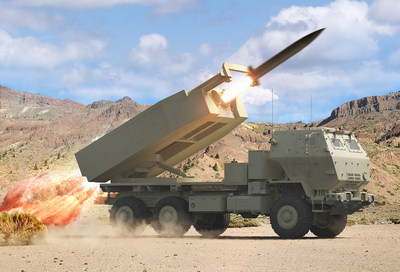
The DeepStrike missile meets the Army’s Precision Strike Missile, or PrSM, requirement, and will replace the current missile that was designed in the 1970s and is approaching the end of its service life. During the Preliminary Design Review, the Army evaluated every aspect of the new missile’s design, from its advanced propulsion system and innovative lethality package to its guidance system.
“Completion of Raytheon’s PrSM Preliminary Design Review helps us accelerate development and fielding of this high priority Army program,” said Col. Chris Mills, U.S. Army program manager for Precision Fires, Rocket and Missile Systems. “We are now ready to move to test and integration activities that will lead to a demonstration of PrSM’s new capabilities.”
Featuring an innovative, two-in-the-pod design and many other advancements, Raytheon’s new long-range precision strike missile will fly farther, faster and pack more punch than the current weapon.
The DeepStrike missile will defeat fixed land targets 60-499 kilometers away, improve effectiveness and responsiveness compared to current systems, and restore the Army’s capability to overmatch adversaries. It will also be upgradable to keep U.S. soldiers ahead of the threat.
Previous program milestones include the successful integration of DeepStrike’s new launch pod missile container into the Army’s M142 HIMARS and M270 MLRS launchers.
About Raytheon
Raytheon Company (NYSE: RTN), with 2018 sales of $27 billion and 67,000 employees, is a technology and innovation leader specializing in defense, civil government and cybersecurity solutions. With a history of innovation spanning 97 years, Raytheon provides state-of-the-art electronics, mission systems integration, C5ITM products and services, sensing, effects, and mission support for customers in more than 80 countries. Raytheon is headquartered in Waltham, Massachusetts. Follow us on Twitter
Media Contact
John B. Patterson
+1.520.440.2194

 View original content to download multimedia:http://www.prnewswire.com/news-releases/us-army-raytheon-complete-deepstrike-missile-preliminary-design-review-300818560.html
SOURCE Raytheon Company