
LWCLU Award. RTX’s Raytheon said on Oct. 19 that its Javelin Joint Venture (JJV) with Lockheed Martin has received a $215 million production contract for the missile’s Lightweight Command Launch Units (LWCLU). Raytheon noted the award comes five months after the first LWCLUs were delivered to the Army, adding the new capability is “30 percent smaller and 25 percent lighter, while doubling target detection and recognition, compared to the current Block I Command Launch Unit.” “This contract reflects the strong partnership between industry and the Army to sustain and advance the Javelin system,” Jenna Hunt Frazier, JJV president and Javelin program director at Raytheon, said in a statement. “By modernizing our factory and strengthening our production line, we’re ensuring soldiers receive a lighter, more capable launcher that improves operational readiness across the force.”
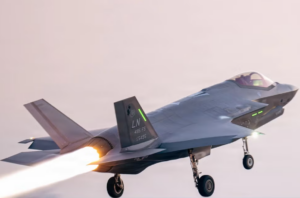
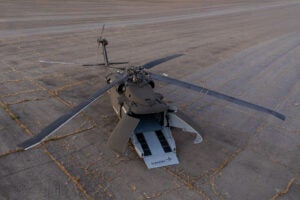
Ukraine Priority. Restarting U.S. military aid to Ukraine to fight Russia will be a priority for Democrats, if they retake control of Congress in the coming elections. “If Democrats regain the majority in the House of Representatives in the next Congress, and I have the privilege to serve once again as chair of the committee, providing support for Ukraine and its defense of democracy will be one of my priorities,” Rep. Rosa DeLauro (D-Conn.), wrote in an editorial last month in the New Haven Register. DeLauro is the ranking member of the House Appropriations Committee and said she traveled with HAC Chairman Tom Cole (R-Okla.) to Ukraine this summer. “In total, Europe has provided some $235 billion in aid, roughly $100 billion more than the United States has to date,” she wrote in the editorial. “Defending Ukraine should be a partnership of democratic countries — the United States and Europe — against the belligerence of Russian expansionism…The F-35s protecting European airspace are propelled by engines made in Connecticut, while the [H-60] Seahawks and Black Hawks patrolling European coasts are assembled here as well. We cannot in good conscience continue to withhold desperately needed support for an American ally fighting for its independence against such brutal and senseless aggression.”
Netherlands FMS. The State Department said on Oct. 19 it has approved a potential $294 million foreign military sale with the Netherlands for Common Infrared Countermeasure (CIRCM) systems. The deal includes 16 of the Northrop Grumman-built CIRCM laser-based aircraft protection systems along with 38 AN/APR-39E(V)2 Radar Warning Receivers. “The proposed sale will modernize the Netherlands’ armed forces, expand its capability to strengthen homeland defense, and deter regional threats. This enhanced capability will contribute to the Netherlands’ military goals of updating capability while further enhancing interoperability with the United States and other allies,” the State Department said in a statement. The U.S. Army awarded Northrop Grumman a nearly $5 billion production contract for CIRCM in September.
UGVs in Ukraine. Forterra’s Lancer autonomous ground vehicle, based on the Polaris RANGER XP 1500 and powered by its AutoDrive software, has completed nearly 1,500 missions and 88 casualty evacuation operations in Ukraine, according to Physical AI firm Ouster. The Lancer platform, which first started arriving in Ukraine in October 2025, utilizes Ouster’s Rev7 OS1 digital lidar “at the core of its sensor fusion perception stack.” “Lancers are operating in high danger zones where persistent drone surveillance makes crewed vehicles high value targets and creates unnecessary risk for personnel. Instead, uncrewed Lancer systems deliver essential supplies and evacuate wounded soldiers without undue risk to additional personnel,” Ouster said. “Ouster’s sensors enable 360-degree situational awareness for autonomous ground vehicles operating in complex and unpredictable environments.”
Drone Payloads. Perennial Autonomous recently announced it’s partnered with McAlester Army Ammunition Plant (MCAAP) for the weapons manufacturing facility to build, load and delivery payloads for the company’s drone platforms, including the Merops interceptors, Hornet mid-range strike drones and Bumblebee quadcopters. “This combines MCAAP’s best-in-class explosives manufacturing capabilities with Perennial Autonomy’s advanced autonomy and guidance systems, enabling its drones to carry reliable and lethal ordnance into contested environments across the world. The partnership also supports the Army Materiel Command’s push to modernize the organic industrial base, adapting production lines built for traditional munitions to the demands of modern drone warfare,” Perennial Autonomy said in a statement. “For Perennial Autonomy, the partnership secures something increasingly scarce in the drone industry: a reliable domestic source of combat-ready ordnance at scale. As demand grows worldwide for the Merops, Hornet and Bumblebee platforms, a secure munitions pipeline through MCAAP means shorter delivery timelines and a resilient U.S. supply chain, both critical as production ramps up to meet warfighter demand.”
Ukraine Space Help. Two Finnish companies, satellite manufacturer and operator ICEYE, and telecommunications giant Nokia, have signed a Letter of Intent with Ukraine’s Defense Ministry to explore enabling sovereign satellite communication for the country’s defense needs. “Through this Letter of Intent, together with Ukraine and ICEYE, we will explore how trusted, sovereign satellite communications can strengthen Ukraine’s resilience and give it control over the connectivity it depends on,” Mikko Hautala, chief geopolitical & government relations officer, and chairman of Nokia Defense, said in a statement. ICEYE and Nokia earlier this month partnered to offer customers broadband network connectivity from low Earth orbit. The Letter of Intent with Ukraine after the country reported its access to SpaceX’s military version of Starlink had been restricted.
Regional Freighter. Natilus, which is developing the 3.8 ton, optionally-piloted KONA regional freighter aircraft, has received $3.5 million in research, development, test and evaluation funding from the Defense Department’s Operation Energy-Innovation Directorate and the Air Force Energy, Installation and Environment office to accelerate development of the blended-wing body aircraft toward full-scale flight testing and a U.S. joint force demonstration. “In a fuel-constrained environment like the Pacific, efficiency translates directly into operational flexibility,” Jim Hartle, an Air Force official for Operational Energy, Safety and Occupational Health, said in a statement. “KONA provides an opportunity to evaluate how a commercially developed aircraft can contribute to distributed logistics while generating the data needed to inform future requirements.”
Counter-Drone “U.” The Univ. of North Dakota last week said it and the Northern Plains Unmanned Aircraft Systems Test Site at Grand Forks, N.D., signed a memorandum of understanding with the Joint Interagency Task Force (JIATF)-401 to “help identify promising counter-drone technologies for further evaluation and development.” Army Brig. Gen. Matthew Ross, the JIATF-401 director, stated, “This partnership brings together world-class research and operational testing expertise to help us identify what works, accelerate promising technologies, and deliver effective counter-drone capabilities to our warfighters.”
C-UAS Testing and Scoring. The Tactien Group, an advisory firm focused on aviation, unmanned aircraft systems (UAS) and counter-UAS, last week disclosed it has developed a software platform that scores any vendors’ drone detection sensors and system to aid customers in knowing what C-UAS solutions to acquire and use. As part of CAST, Tactien uses drones in different scenarios to “red team” against vendors’ sensors installed at a customer’s site and then puts the data into the software to score how well each sensor performed in each flight against key performance indicators and then provides recommendations on which sensors to use and where. Tactien has begun to use CAST with commercial customers and will work to get the platform on the Pentagon’s C-UAS Marketplace, Nate Ernst, the firm’s founder and president, told Defense Daily. The Department of Homeland Security, and state and local law enforcement agencies are also interested, he said.
Vectis Releasability. As Lockheed Martin develops Vectis, its expected future entry into the Air Force’s Collaborative Combat Aircraft program, the unmanned aircraft is being designed with “releasability” in mind, meaning it can easily be exported to America’s allies, Jim Taiclet, the company’s chairman, president and CEO, said last week. “We’re going to try to make sure that it’s releasable immediately to our allies,” he said Oct. 22 during the company’s third quarter earnings call. “In other words, it will be designed in a way that the U.S. and or the international allies that qualify can buy it instead of having to do something for a U.S. only releasability standard and then hope we can get clearance to sell it overseas later.”
…Design Focus. Vectis is being designed and developed for both air-to-air combat and air-to-ground missions such as strikes against integrated air and missile defense systems, Taiclet said. Vectis will work with manned aircraft through manned and unmanned teaming, he said. The company is eyeing offering Vectis for the Air Force’s second increment of the Collaborative Combat Aircraft program that’s expected to arise within two years, Taiclet said. “Increment 2 we anticipate will have, again larger payload, larger range, and larger survivability requirement that will go with that” versus Increment 1, he added. The Air Force is currently flight testing CCAs from Anduril Industries and General Atomics in Increment 1.
AM for Tomahawk. Nikon AM last week said it received a $23.5 million contract under the Defense Department’s Industrial Base Analysis and Sustainment program to deliver and use multiple units of its two-meter z-height SLM Solutions laser powder bed fusion additive manufacturing (AM) systems to manufacture prototypes of Tomahawk Land Attack Missile mid-bodies. Nikon AM said the work will be done at its technology center in Long Beach, Calif., adding the contract is to “scale critical production capacity.”
Carrier Controls MQ-25. The Navy said an underway aircraft carrier for the first time controlled an MQ-25A test aircraft located at Boeing’s Mascoutah, Ill., facility using a Proliferated Low Earth Orbit (pLEO) satellite. During a preliminary sea trial, the Unmanned Air Warfare Center (UAWC) aboard the USS Ronald Reagan (CVN 76) used its MD-5C Ground Control Station to connect with the aircraft via the satellite network. This was one in a series of build-up exercises the Navy is conducting to validate procedures, networks and interfaces for the future carrier-based unmanned aircraft tanker.
Drone Batteries. Global Ordnance Holdings said on Oct. 20 it has signed an agreement with Sparkz aimed at building and selling 210,000 battery packs for drones beginning in early 2027. “The agreement establishes the first fully domestic manufacturing for high-performance drone batteries as the U.S. Department of War directs more attention and funding to domestic drone technologies,” Global Ordnance said in a statement. “Sparkz will manufacture and supply batteries, while Global Ordnance will lead sales and distribution through its defense market relationships and distribution network. The high-energy-density batteries will be configurable to meet the power output and operational requirements of different unmanned systems.” The firms expect to achieve full manufacturing capacity by the second quarter of 2027.
DDG-91. The Arleigh Burke-class guided missile destroyer USS Pinckney (DDG-91) started the second phase of its upgrade process under the Destroyer Modernization 2.0 (DDG MOD 2.0) program in a Depot Modernization Period (DMP) at the General Dynamics NASSCO shipyard in San Diego. The Navy said this period marks the first installation of both the SPY-6(V)4 radar and High Efficiency Super-Capacity (HESC) air conditioning plants. When the work is finished, DDG-91 will rejoin the fleet “equipped with the most comprehensive multi-spectral integrated sensor suite designed to maintain maritime superiority for decades to come,” Capt. Tim Moore, program manager, DDG MOD 2.0, said in a statement. The Pinckney previously finished its first 1.5 DMP availability in 2024 as the first warship to receive the SLQ-32(V)7 Surface Electronic Warfare Improvement Program (SEWIP) and sponson modifications. The new HESC plans are needed to support the electrical and thermal needs of the radar and Aegis Combat Systems Baseline 10 on the destroyer.
Elbit AUVs. Israel’s Elbit Systems on Oct. 20 announced it completed the acquisition of the Canada-based International Submarine Engineering Ltd. (ISE) that specialized in autonomous underwater and remotely operated systems. The company said the purchase price was not material to Elbit. The 50-year-old ISE is headquartered in the Vancouver area and has delivered over 250 underwater vehicles to customers in over 20 countries. The company said adding ISE’s autonomous technologies aims to expand Elbit Systems’ capabilities in underwater Intelligence, Surveillance and Reconnaissance (ISR), Mine Counter Measures (MCM) and Anti-Submarine Warfare (ASW), further strengthening the Company’s end-to-end maritime offering.
SubSea Craft USA. British maritime technology firm SubSea Craft appointed Matthew Zirkle as Chief Executive Officer of its SubSea Craft USA division as it looks to expand work in and with the U.S. In this new role, Zirkle will lead the company’s U.S. operations, with the company announcement saying he will focus on accelerating growth, strengthening partnerships across government and industry and expanding its ability to deliver maritime capabilities to customers. Zirkle is a retired rear admiral in the U.S. Navy who last served as chief of staff, U.S. Naval Forces Europe and Africa in August 2018. Previously, he also served as commander, submarines, NATO and director of Innovation for the Navy Reserve. Following his Navy career, Zirkle served as president of Defense Maritime Solutions for three years, regional director of maritime industrial base with the Navy at Serco, and president of the U.S. division of Rivencore Global Solutions.
MQ-8C Testers. The Army and Navy repurposed MQ-8C Fire Scout unmanned helicopters divested from the Navy into a second life as “dynamic test assets” for the U.S. Army within 14 months, the Navy said Oct. 22. The Office of the Chief of Naval Operations (OPNAV N98) directed that the Navy start divesting of Fire Scouts in February 2024, with final sundown scheduled by the end of fiscal year 2026, but in November 2024 the Multi-Mission Tactical UAS Program Office (PMA-266) got a request to evaluate if the MQ-8Cs could serve as a captive carry testbed for the U.S. Army Redstone Test Center (RTC) at Redstone Arsenal, Ala., to test Army sensor packages. By December 2024, teams started evaluating the MQ-8C and its systems and in January 2025 RTC submitted the formal request to OPNAV N98 for four MQ-8Cs, two Mobile Mission Control Systems, spare engines and support equipment for standup at Redstone Arsenal. OPNAV N98 approved the request in May 2025 and by July 2026 all of the aircraft and most of the equipment were delivered to Alabama. The final related equipment arrived at Redstone Arsenal in July 2026 and in August RTC completed ground testing and launched flight tests in Dugway Proving Ground, Utah, and at Redstone Arsenal to start building pilot confidence and build maintenance experience. The Navy said the whole effort saved the Army over $70 million in procurement costs alone.
Bluebottle Payloads. Australia’s Ocius on Oct. 21 announced the payloads of its two diesel-hybrid renewable powered Bluebottle Hybrid Uncrewed Surface Vessels (USVs) participating in this month’s U.S. Navy-led Maritime Big Play Pacific exercise as part of AUKUS Pillar II. In the first Bluebottle Hybrid participation in a U.S. Navy exercise, the company said they will carry ThayerMahan’s Outpost acoustic intelligence payloads and its TransparenSea processing software, which will allow them to detect and track undersea threats in an integrated suite of maritime capabilities. These hybrid vehicles supplement the USV’s renewable energy sources with a diesel generator, allowing persistent operations in low-light environments, high-latitude winters, and supporting payloads with higher power needs. Ocius billed the exercise as using “realistic operational scenarios spanning anti-submarine warfare, maritime strike and seabed operations, allowing defense, science and industry teams to test emerging technologies in operationally relevant conditions.”
Boeing CCA Participation. Boeing’s Wichita, Kansas-based Spirit Defense is to help build the airframe for the General Atomics Aeronautical Systems, Inc. (GA-ASI) FQ-42 entrant in the U.S. Air Force’s Collaborative Combat Aircraft (CCA) engineering and manufacturing development (EMD) phase, according to GA-ASI. The FQ-42 is competing in EMD against the FQ-44 by Anduril Industries. Spirit Defense is to aid GA-ASI “to scale CCA production faster, while strengthening production resilience, and reducing the risk of single points of failure,” according to GA-ASI.
Army C-UAS Award. L3Harris Technologies last Friday said the Army has awarded the company a potential $60 million, three-year, Phase 2 contract to advance development of a long-range, maneuverable interceptor to counter small and medium-size UAS and traditional short-range air defense threats. The award was made under the Combat Capabilities Development Command Aviation & Missile Center Xtended Ranged Counter-small UAS program. L3Harris said it will deliver a fully integrated interceptor for “flight performance testing.” Work is being done by the company’s Missile Solutions segment. “This design combines innovative propulsion with advanced seeker technologies to provide a highly capable, modular and cost-effective solution deployable from existing launch platforms,” Scott Alexander, president of propulsion systems at Missile Solutions, said in a statement.
…SOCOM C-UAS Awards. U.S. Special Operations Command (SOCOM) recently awarded one-year contracts to three companies for small form-factor C-UAS interceptors for use by dismounted, small unit maneuver forces. The ANCHOR Other Transaction Agreements were made to Askari Defense, $1.7 million, Mara Solutions, Inc., $1.5 million, and Tyco.AI, $894,788. SOCOM last week told Defense Daily that test, evaluation and operational assessment of the prototype interceptors are planned for fiscal year 2027. The small, high-speed, man-portable, lightweight interceptors are expected to engage small drone threats within 1 kilometer.
New GDIT Chief. General Dynamics last Friday said that Amy Johnson has been appointed as president of GD Information Technology, effective Nov. 3. Johnson is a 27-year veteran of GD Mission Systems, which along with the IT business, makes up the company’s $13.5 billion Technologies segment. GDIT had been led by Amy Gilliand, who abruptly departed the company earlier this month (Defense Daily, Oct. 2). Paul Nedzbala has been serving as the acting president of GDIT since Gilliland’s departure. Johnson has held “increasingly senior roles in engineering, engineering management and business leadership across cybersecurity, defense electronics, space and intelligence systems, most recently as vice president and general manager for Space, Cyber and Intelligence,” GD said.