By Shaza Arif, Defense Opinion Writer.
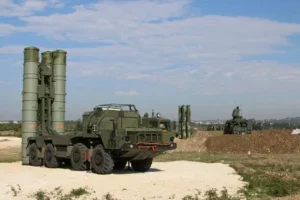
Air defense has always been a central aspect of warfare. In South Asia, the phenomenon carries immense significance due to compressed reaction times. In this context, one of the most-hyped systems is the Russian-made S-400, touted by New Delhi as a one-stop solution to counter aerial threats from both Pakistan and China.
The 2025 conflict between India and Pakistan marked an important chapter in testing the S-400 technology. The conflict began on May 7, when India attacked what it alleged were terrorist targets in both Pakistani-held Kashmir and Pakistan proper, using drone and missile strikes. The conflict lasted for four days, culminating in a U.S-facilitated ceasefire. However, the brief conflict debunked a lot of the myths regarding the S-400 technology.
First, India claimed that the mobile S-400 would be able to control Pakistan’s airspace. In contrast, Pakistani aircraft continued to operate freely, according to official briefings by the Pakistani military. Although the Pakistan Air Force (PAF) aircraft were in their own airspace, they were still within the air defense range.
Second, Pakistan’s drones penetrated well inside Indian territory. According to the Pakistani military, the PAF was also able to disrupt the enemy’s power and transport system, cripple its critical operational installations, shoot down India’s most modern Rafale jets and destroy a state-of-the-art S-400 battery.
Such developments raise questions about whether the S-400 was even employed during the conflict or whether it simply failed.
Not a gamechanger
India perceived the system as a gamechanger that could protect its airspace without being vulnerable. In reality, Pakistan was able to target two batteries of the system deployed at Adampur and Poonch, damaging the radar components, according to Pakistani officials.
Pakistan carried out the attacks with a Chinese-made CM-400AKG air-to-surface missile launched from JF-17 aircraft. The episode marked the first time that the system came under attack.
Beyond the operational setback, the conflict exposed several technical limitations. The Indian manufacturers had repeatedly emphasized the 248.5-mile range. The advertised ranges do not guarantee battlefield success, as they are valid only under ideal conditions.
Operational environment can be unforgiving. The system’s radars do not necessarily see everything within their range. In fact, they can be vulnerable to terrain masking, low-altitude penetration and electronic interference, which can put a cap on the detection range.
Even if the targets are detected, there is a probability of failing to engage the targets due to countermeasures or operational stress in the fog of war. In addition, while mobility is often an advantage, it also impacts performance vis-à-vis radar recalibration time, coverage gaps during movement and any required relinking of the network.
Major limitations exposed
The system operates in a networked manner, with ground radars, early-warning assets and the command network fully coordinated. Unless seamlessly integrated, the air defense system fails to perform optimally.
The synchronization of the system with the diverse weaponry in the Indian arsenal – American, Russian, Israeli, French and indigenous Indian – likely impacted its performance.
This mixed-origin architecture burdens the command-and-control system with different data links and varying communication protocols. If the system faced employment challenges in the conflict over these technical aspects, it raises fundamental questions about the acquisition of a multi-billion-dollar weapons system.
New Delhi has not yet lost faith in the platform, as reflected in its latest order of five additional S-400 batteries. It has sought to compensate for earlier vulnerabilities, thicken air defense and reduce coverage gaps.
However, the quantitative addition alone is less likely to deliver a meaningful impact. The system can be countered via saturation attacks, decoys, timings, false tracks, altitude mixing, multi-axis entry and electronic warfare tactics. Hence, the complex and evolving character of the battlefield certainly makes it imperative to adopt new and innovative technologies and tactics tailored to modern requirements and shift away from older air defense assumptions.
Challenges for Pakistan
For Pakistan, the systems pose challenges at various levels – strategic, operational and tactical, requiring solutions accordingly. In this context, long-range systems to counter the S-400, such as the Chinese HQ-9 system, are already in service.
At the operational level, layered defense and extended ranges pose challenges that can be mitigated using standoff weapons, innovative flying and coordinated operations. On the tactical level, due to the emission of radiation when employed, the system itself becomes a target – an aspect that can be exploited by both kinetic and non-kinetic measures.
Overall, the recent conflict didn’t reveal the weakness of a single system on the Indian side. It reflected the limitations of the belief that a single platform can provide absolute security in a contested battlefield. It is the seamless synchronization of leadership, doctrine, weaponry, tactics and training that resulted in a win for Pakistan.
Shaza Arif is a senior research associate at the Center for Aerospace & Security Studies in Islamabad, Pakistan. The think tank is part of the advisory board to the government of Pakistan’s national security division. Her expertise includes national security and strategy, defense modernization, nuclear security and artificial intelligence.

Are you a Defense Daily reader with a thought-provoking opinion on a defense issue? We want to hear from you.
- We welcome submissions of opinion articles on national security, defense spending, weapons systems and related areas.
- We welcome submissions from lawmakers, administration officials, industry representatives, military officials, academics, think tank experts, congressional candidates, international experts and others on issues important to the national defense community.
- We welcome a diverse range of opinions all along the political spectrum.
- Email: editor@DefenseOpinion.com