 By
By 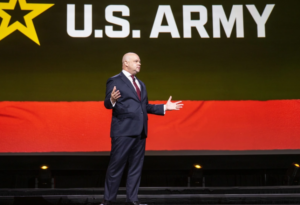
Acting Army Secretary Adam Telle announced Monday the service will hold its first “Manufacturing Rodeo” in early 2027 to identify weak points in its industrial base.
“We’ve invested a lot in our organic industrial base, now we need to strain it and the nation’s larger industrial base. We’re going to stress test the supply chain, the manufacturing processes and see where it breaks,” Telle said during remarks at the Association of the U.S. Army’s annual conference in Washington, D.C.
“We’re going to learn by doing, not by sitting around postulating at the Pentagon. [We’ll be] finding the weak links, making them stronger and keep iterating,” Telle added.
While few specifics have been confirmed on how the “Manufacturing Rodeo” will be conducted, the Army described the initiative as “competitive stress test for both the Army’s organic industrial base and the nation’s broader manufacturing network.”
The goal for the effort is “identifying weak links, strengthening them and continuously iterating to build a more resilient and responsive industrial base,” according to the Army.
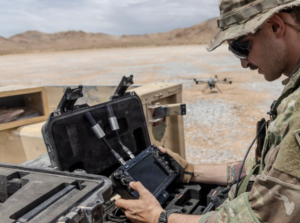
“Take a basic attack drone, we need to be able to make millions of these. It may look simple, but it’s a flying supply chain,” Telle said. “If somebody else controls one part, they can break the whole thing. If we control the parts, we control the pace. That’s why we need to make the things we need here in America and to keep making them when demand surges.”
The Army noted the “Manufacturing Rodeo” will build on current efforts aimed at “scaling flexible ‘advanced manufacturing’ capabilities across the organic industrial base.”
Over the last year, the Army has moved out on the SkyFoundry initiative, which it initially launched as an effort to manufacture its own cheap drones in high numbers but has since shifted toward a focus on using its organic industrial base and advanced manufacturing capabilities to produce key components that support Army and commercial partner requirements (Defense Daily, June 30).
The SkyFoundry work includes rapidly bolstering capacity in the near future to build around a million circuit cards and hundreds of thousands of brushless motors for small drones at the Tobyhanna Army Depot.
“By establishing advanced manufacturing hubs at key installations—such as Red River Army Depot, Anniston Army Depot, and Tobyhanna Army Depot—and securing critical Public-Private Partnerships (P3) with industry leaders like Hadrian and, the Army has built the production capacity to rapidly manufacture diverse subcomponents on demand,” the Army said.
“This agile infrastructure enables the OIB to sustain both legacy and future weapon systems, producing everything from complex electric motors to critical replacement parts like tank engine transmission belt housings, effectively eliminating supply chain bottlenecks and securing readiness at the speed of war,” the Army added.