The U.S. Senate passed its version of the fiscal year 2019 defense authorization bill late June 19, sending the $716 billion measure to a conference committee with the House.The Senate approved the legislation by an 85-10 vote, capping almost two weeks of floor debate. Sen. James Inhofe (R-Okla.), who steered the bill through the Senate due to the health-related absence of the chairman of the Senate Armed Services Committee, Sen. John McCain (R-Ariz.), said the legislation would help the U.S. military…
Defense Secretary Pete Hegseth said Wednesday the Trump administration plans to continue its push for at least $350 billion in defense funds via the reconciliation process “regardless of what happens […]
A small, bipartisan group of senators is backing the Fast Tracking European Investment in Ukraine’s Defense Act, S. 5175, to hasten the export of allied buys of U.S. munitions for […]
Rep. Jim Himes (D-Conn.), the ranking member of the House Permanent Select Committee on Intelligence, plans to increase the committee’s contractor oversight if the Democrats win control of the House […]
A new Congressional Budget Office report estimates the cost of the Iran war through Aug. 1 as $38 billion and says that the U.S. has likely depleted between one-half and […]
The U.S. Senate passed its version of the fiscal year 2019 defense authorization bill late June 19, sending the $716 billion measure to a conference committee with the House.
The Senate approved the legislation by an 85-10 vote, capping almost two weeks of floor debate.
Sen. James Inhofe (R-Okla.)
Sen. James Inhofe (R-Okla.), who steered the bill through the Senate due to the health-related absence of the chairman of the Senate Armed Services Committee, Sen. John McCain (R-Ariz.), said the legislation would help the U.S. military counter growing threats from China and Russia.
“We are making the needed investments in training, maintenance and modernization,” Inhofe said. The legislation provides for “catching up where we were falling behind — artillery, hypersonics, the nuclear triad.”
Some senators complained they were prevented from proposing significant changes to the bill because Senate rules allow just one lawmaker to block an amendment. Inhofe agreed that the impasse is a “major problem,” and he said he hopes to eliminate or minimize it in time for the FY 2020 defense authorization bill next year.
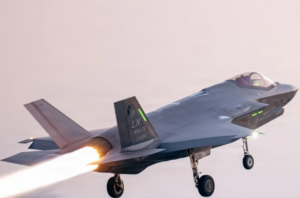
One amendment that did pass would require the Pentagon to regularly brief lawmakers on efforts to contain sustainment costs for the F-35 Joint Strike Fighter (Defense Daily, June 12). Proponents of the amendment said the F-35’s high sustainment costs must come down so the Department of Defense can afford to buy the number of jets it needs.
The conference committee has several key issues to resolve, including whether to require the Air Force to replace its aging E-8C Joint Surveillance Target Attack Radar System (JSTARS) ground-surveillance plane with a new aircraft. The House bill, which the full House passed in May, contains such a mandate, while the Senate bill does not.
The conference committee will also have to decide whether to accept a Senate proposal to block the transfer of F-35s to Turkey and ultimately end that country’s participation in the U.S.-led fighter program (Defense Daily, May 25).
F-35 prime contractor Lockheed Martin [LMT] is scheduled to hold a rollout ceremony June 21 in Fort Worth, Texas, for the first of 100 F-35As that Turkey is slated to buy. The jet will then be flown to Luke Air Force Base in Arizona for use in pilot training.
NATIONAL HARBOR, Md. – A Senate Armed Services panel chair today said boosters of the Golden Dome program still have work to do to increase support on Capitol Hill while […]


 By
By