Vanderbilt University Wins NASA’s 2019 Student Launch Competition
PR Newswire
HUNTSVILLE, Ala., May 16, 2019
HUNTSVILLE, Ala., May 16, 2019 /PRNewswire/ — NASA has announced the winners of the 2019 NASA Student Launch competition, with the Vanderbilt Aerospace Design Lab from Vanderbilt University in Nashville, Tennessee, claiming top honors. It is the team’s fifth win in the last six years.
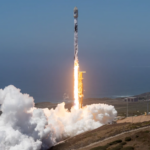
This year’s challenge, hosted by NASA’s Marshall Space Flight Center in Huntsville, Alabama, tasked student teams to propose, design, build and test a reusable rocket with a payload. The rocket had to reach a team selected altitude between 4,000 and 5,500 feet. Once reaching its highest point, the rocket deployed a recovery system and landed safely. The payload had to be a drone or rover that autonomously deployed from the rocket after the rocket landed. NASA engineers face similar questions as they design the Space Launch System rocket to send astronauts and payloads to the Moon.
“The 2019 Student Launch competition was extremely competitive as the teams were challenged with complex altitude and payload requirements,” said Katie Wallace, the Student Launch program manager at Marshall. “The teams rose to the challenge and brought innovation, creativity and excellence to the competition.”
The Vanderbilt team will receive a $5,000 award from Marshall industry partner Northrop Grumman for their win. The University of North Carolina-Charlotte from Charlotte, North Carolina, finished in second place and will receive a $2,500 award from the National Space Club – Huntsville. The Rookie Award, given to the top new team in the competition, was won by the University of Hawaii Community Colleges from Honolulu, Hawaii.
The top 10 finishers in the college/university division are:
1. Vanderbilt University, Nashville, Tennessee
2. University of North Carolina at Charlotte
3. University of Akron, Ohio
4. Oregon State University, Corvallis
5. California State University Long Beach
6. University of Alabama in Huntsville
7. Wichita State University, Wichita, Kansas
8. North Carolina State University, Raleigh
9. University of Hawaii Community Colleges, Honolulu
10. University of South Florida, Tampa
Teams earn points during the eight-month competition, and the team with the most points wins. Awards also are presented in 11 different categories that range from payload design and safety to best social media presence and STEM – science, technology, engineering and mathematics – outreach. A full list of the 2019 category winners can be found here.
Completing the 19th year of competition, Student Launch provides a realistic experience to students to resemble the development, test and operational lifecycle NASA and industry engineers use when developing and operating new hardware.
Marshall’s Office of STEM Engagement manages Student Launch to stimulate innovation and advance NASA’s mission through collaboration with educational institutions and students – the next-generation who will help us explore the Moon and travel even farther to Mars. It also furthers NASA’s goal of attracting and encouraging students to pursue degrees and careers in the STEM fields. NASA’s Human Exploration and Operations Mission Directorate and the Office of STEM Engagement, as well as Northrop Grumman, and the Huntsville chapter of the National Space Club provide funding and leadership for the initiative.
Images of launch week activities can be seen at:
https://www.flickr.com/photos/nasamarshallphotos/sets/72157707023508741
 View original content to download multimedia:http://www.prnewswire.com/news-releases/vanderbilt-university-wins-nasas-2019-student-launch-competition-300851844.html
SOURCE NASA