Naval Academy Displays NRL’s Enduring Presence in Space Research
PR Newswire
WASHINGTON, Sept. 27, 2019
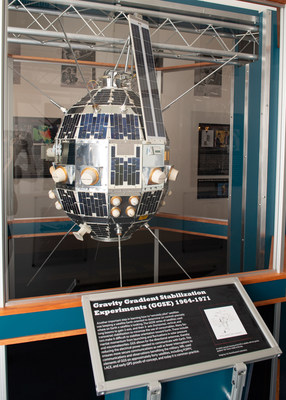
WASHINGTON, Sept. 27, 2019 /PRNewswire/ — The U.S. Naval Research Laboratory and the U.S. Naval Academy Museum combined resources to tell the story of how the Navy ushered in our nation’s presence in space. The USNA exhibit “Sea, Sun and Space” displays, through visual artifacts and curated narrative, the pioneering role NRL and its collaborators and sponsors played in the future of space exploration.
“NRL is proud to partner with the academy to illustrate the Navy’s 60 years in space,” said Gurpartap Sandhoo, D.Sc. superintendent, Spacecraft Engineering Department. “The display exhibits the Laboratory’s pioneering spirit and the possibilities NRL has to offer in forging the future of the Navy.”
Offered as an educational resource to academy midshipmen and instructors, the exhibit is open to the public, displaying the Navy’s innovative interplay between science and engineering and how scientific questions can propel naval capabilities and how engineering feats enable new fields of scientific study.
Artifacts and images on display chart the emergence of the Office of Naval Research, Advanced Research Projects Agency (now referred to as the Defense Advanced Research Projects Agency), National Aeronautics and Space Administration, the Space Test Program, Missile Defense Agency and other contributors to the U.S. space program, Artifacts include:
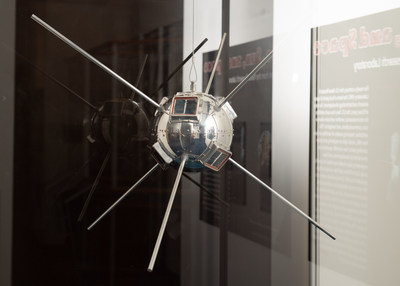
- Vanguard I – the first Navy satellite on-orbit and the first solar powered satellite. Vanguard I is the oldest spacecraft still orbiting the Earth.
- SOLRAD – the world’s first orbiting solar observatory. SOLar RADiation satellites were designed to extend studies of the Sun and its effects on near Earth space.
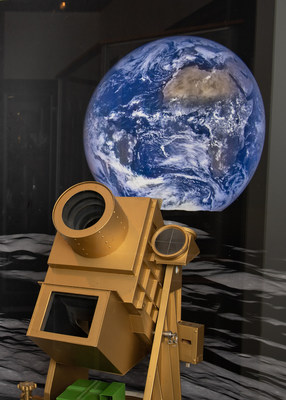
- Far-Ultraviolet Camera/Spectrograph – Apollo 16 astronauts operated this lunar observatory gathering images and spectra of nebulae, star clusters, and capturing the first global picture of the Earth’s ionosphere.
- Atomic Clocks for GPS – NRL’s Timation satellites tested and compared precise atomic clocks for navigation. The program provided proof of concept that reliable and instantaneous satellite navigation could be achieved through passive ranging. Timation was absorbed into the triservice NAVSTAR-GPS development program.
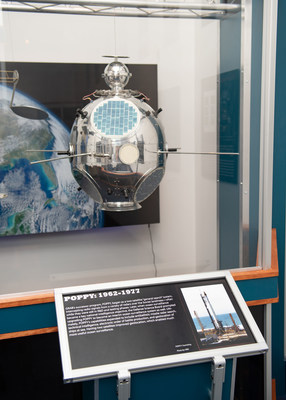
- POPPY – successor to the world’s first reconnaissance satellites, NRL’s GRAB and POPPY satellites provided electronic intelligence, general search, and ocean surveillance.
In the early 1920s, NRL researchers began probing near Earth space with radio waves, tracking what today is termed “space weather.” Their refined understanding of the ionosphere improved operation and security of World War II radio systems for communications, navigation, and situational awareness.
After American forces entered Germany in 1945, they captured the huge underground factory for V-2 rocket production at Nordhausen. Seeing opportunities for upper atmosphere research and improved missile design the Army Ordnance Corps invited NRL, universities and industry to coordinate experiments on captured V-2s.
Building on this concept, NRL developed a robust base of space science and engineering, becoming the home of the first U.S. scientific satellite program, Project Vanguard.
The Museum is located at the U.S. Naval Academy’s Preble Hall in Annapolis, Maryland, and is open daily except Thanksgiving, Christmas and New Year’s Day. Hours are Monday through Saturday from 9 a.m. to 5 p.m. and Sunday 11 a.m. to 5 p.m. For more information please visit www.usna.edu/Museum/index.php, or you may contact the Museum during business hours at (410) 293-2108.
Contact NRL Historian Angelina.Callahan@nrl.navy.mil to discuss recommended readings or scavenger hunt assignments.
About the U.S. Naval Research Laboratory
NRL is a scientific and engineering command dedicated to research that drives innovative advances for the Navy and Marine Corps from the seafloor to space and in the information domain. NRL headquarters is located in Washington, D.C., with major field sites in Stennis Space Center, Mississippi, Key West, Florida, and Monterey, California, and employs approximately 2,500 civilian scientists, engineers and support personnel.
Editor Contact: Daniel Parry, U.S. Naval Research Laboratory Public Affairs
daniel.parry@nrl.navy.mil
202-767-2326
 View original content to download multimedia:http://www.prnewswire.com/news-releases/naval-academy-displays-nrls-enduring-presence-in-space-research-300927031.html
SOURCE The U.S. Naval Research Laboratory