 By
By 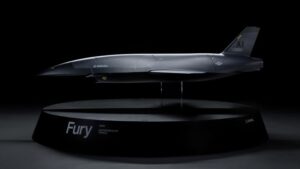
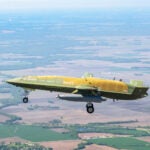
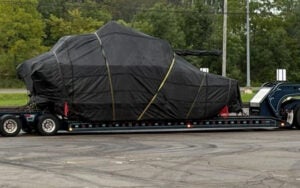
NATIONAL HARBOR, Md.—First flight of Anduril Industries’ entry into the Air Force’s Collaborative Combat Aircraft (CCA) program is “within spitting distance” of happening and will be semi-autonomous from taxi, to takeoff through landing, and taxi on return, company officials said on Monday.
Air Force Secretary Troy Meink told reporters later the first flight of Anduril’s Fury CCA is slated to occur by mid-October.
Anduril has been deliberate in developing its flight autonomy software for its YFQ-44A Fury unmanned aircraft so that the test flights do not require a “stick and throttle” to achieve the pre-planned flight profile, Diem Salmon, vice president for air dominance and tactical strike, told reporters at the annual Air Force Association Air Space Cyber Conference here. Flights will begin with a push of a button, she said.
The company has been burning down risk on the autonomy software so there will be less work required later, Salmon said.
Development of the software is the driver of first flight and “just a little bit more…needs to get wrung out,” she said, adding that effort “will allow us to kind of leapfrog the overall test plan, because we are kind of tacking that hard part first.”
The upcoming start of flight testing is “well ahead” of the Air Force’s schedule, Salmon said.
“It was not a race to get to first flight as fast as humanly possible,” she said.
General Atomics, the other competitor in the first increment of the CCA program, began flight testing last month of its YFQ-42A Gambit aircraft (Defense Daily, Aug. 27).
Anduril has multiple aircraft in ground testing and “several vehicles currently in various stages of manufacturing” to support the expansion of flight testing into 2026, Salmon said.
The fight autonomy software is being developed in-house by Anduril and the company will work with other vendors when the mission autonomy software is added, Jason Levin, senior vice president of engineering for air dominance and strike, said during the media briefing. While the software is leveraging similar technology the company has employed on other aircraft it is flying, for Fury it has been a “clean sheet” effort to get to the higher level of “rigor and complexity” to begin with semi-autonomous flight, he said.
Initial flight testing will involve the standard checklist that will include things like building up to low-speed handling qualities, avionics checkout, overall system checkout, and expanding the envelope, Levin said.
While the aircraft will fly semi-autonomously, there will be a “control element” on the ground allowing human supervision, Salmon said.