Search

Super Hornet Program Directed To Install Auto Ground Collision System

The Navy’s F/A-18 Super Hornet program manager has gotten direction to pursue installing automatic ground collision avoidance systems (GCAS) into Block I and II models.

Capt. David Kindley told reporters on Wednesday that he received the direction to pursue this from superiors after the House Armed Services Committee’s FY ’19 defense authorization bill included a provision directing the Navy to install auto GCAS in the Super Hornet fleet.

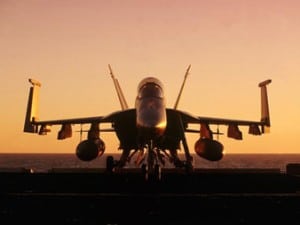
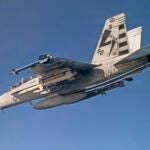
A Navy F/A-18 Super Hornet.  Photo: Boeing.
A Navy F/A-18 Super Hornet. Photo: Boeing.

Kindley explained installing the auto GCAS is not difficult, although it could be expensive to test “because how do you test that you didn’t fly into the ground,” he said at a media briefing at Boeing’s Arlington, Va., office.

Auto GCAS would utilize the Navy’s Terrain Awareness and Warning Systems (TAWS), which is already in the software for all Super Hornet models. “It’s a software build that is common to Block Is and IIs and eventually IIIs when we have them,” Kindley said.

He noted he is being told “very clearly” to add auto GCAS to all Super Hornet models.

Kindley said while the Marine Corps is moving forward on its own an auto GCAS solution the Navy looked at this issue in the past “so we have a pretty good avoidance warning system that is a warning system but it does not take the stick from you and the throttle.”

“What we’ve been challenged to go do is go show us a path to get there in the Super [Hornet],” he added.

In contrast, Kindley said the Marine Corps is working on a GCAS solution for their legacy F/A-18 Hornet A/C/D models that has to work differently because they have a manual rather than electronic throttle.

“So what the Marine Corps is challenging us to go look at is just give us an automatic flight control input to avoid the ground in case the pilot is incapacitated for whatever reason” and would give them a few more seconds to get back up to speed and oriented.

Kindley said he does not know how much the auto GCAS will cost yet.


Congress Updates

Amid Questions On Weapons Stockpiles, Caine Says U.S. Has ‘Sufficient’ Munitions For Iran Operation

Pentagon leaders on Wednesday sought to quell concerns over the rate at which the U.S. is employing critical munitions in its military strike campaign against Iran, with lawmakers also pressing […]


SASC Leaders Criticize Trump’s Defense Strategy, Press Colby On Policy Shifts

Senate Armed Services Committee (SASC) leadership on Tuesday criticized the Trump administration’s new National Defense Strategy (NDS) and pressed the Pentagon’s top policy official to explain the document’s priorities. SASC […]


Wicker Wants Legislation On DoD’s Equity Investments In Minerals Supply Chain

Legislation regarding equity investments by the Defense Department in critical mineral supply chains is needed to strengthen the larger defense industrial base and demonstrate to the “free market” that the […]


“Not Sure How They Get To Where They Wanna Be,” Calvert Says of $1.5 Trillion Defense Topline Proposal

As the federal government enters a third week of tardiness in a fiscal 2027 budget release, a big question is how the Pentagon will be able to spend $500 billion […]

Super Hornet Program Directed To Install Auto Ground Collision System

Super Hornet Program Directed To Install Auto Ground Collision System
A Navy F/A-18 Super Hornet. (Photo: Boeing)

The Navy’s F/A-18 Super Hornet program manager has gotten direction to pursue installing automatic ground collision avoidance systems (GCAS) into Block I and II models.

Capt. David Kindley told reporters on Wednesday that he received the direction to pursue this from superiors after the House Armed Services Committee’s FY ’19 defense authorization bill included a provision directing the Navy to install auto GCAS in the Super Hornet fleet.

A Navy F/A-18 Super Hornet.  Photo: Boeing.
A Navy F/A-18 Super Hornet. Photo: Boeing.

Kindley explained installing the auto GCAS is not difficult, although it could be expensive to test “because how do you test that you didn’t fly into the ground,” he said at a media briefing at Boeing’s Arlington, Va., office.

Auto GCAS would utilize the Navy’s Terrain Awareness and Warning Systems (TAWS), which is already in the software for all Super Hornet models. “It’s a software build that is common to Block Is and IIs and eventually IIIs when we have them,” Kindley said.

He noted he is being told “very clearly” to add auto GCAS to all Super Hornet models.

Kindley said while the Marine Corps is moving forward on its own an auto GCAS solution the Navy looked at this issue in the past “so we have a pretty good avoidance warning system that is a warning system but it does not take the stick from you and the throttle.”

“What we’ve been challenged to go do is go show us a path to get there in the Super [Hornet],” he added.

In contrast, Kindley said the Marine Corps is working on a GCAS solution for their legacy F/A-18 Hornet A/C/D models that has to work differently because they have a manual rather than electronic throttle.

“So what the Marine Corps is challenging us to go look at is just give us an automatic flight control input to avoid the ground in case the pilot is incapacitated for whatever reason” and would give them a few more seconds to get back up to speed and oriented.

Kindley said he does not know how much the auto GCAS will cost yet.