 By
By 
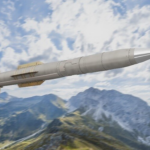
The Army hopes to start buying the next version of a long-range fire weapon, Precision Strike Missile (PrSM) Increment 2, in the middle of 2026, a senior official said Monday.
Maj. Gen. Frank Lozano, program executive officer for Missiles and Space, said the service has a contract with Lockheed Martin [LMT] to create and deliver the first PrSM Inc. 2 missiles for testing right now and if all goes as planned, they will move towards production next year.
PrSM is the Army’s program to replace the legacy ATACMS missiles with new Lockheed Martin missiles. It is working through several versions, or increments, but the base weapon has a range of up to 500 kilometers.

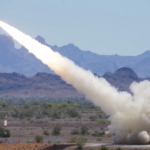
The Army is set to receive the initial Inc. 2 missiles by the end of the 2025, whereupon they will go to the White Sands Missile Range, N.M. for testing in the second quarter of Fiscal Year 2026.
“We’ll fly those first Inc. 2 missiles between January and March, and if they work as intended, as expected, then I would expect by at least July to want to obligate funds – assuming I have an appropriation,” Lozano said during a panel at the 2025 Association of the United States Army (AUSA) annual meeting and expo.
He noted PrSM Inc. 2 is technically a new start capability, so that schedule can only proceed if Congress passes an appropriation or a Continuing Resolution with an anomaly that allows new start activities.
“But if all that lines up and the first Inc. 2s fly successfully, then we’re going to try to award that contract, those funds for the first 10 Inc. 2 missiles really rip-tic. So maybe a June time frame is what I was thinking.”
He said he is fairly confident in moving forward quickly with PrSM Inc. 2 given how successfully they moved quickly in Inc. 1, “although there was a lot of concurrency risk, we executed a model where we developed and produced basically in a simultaneous manner. It was always kind of a fly or buy.”
Lozano noted that after they test flew a few PrSM Inc. 1 missiles and were comfortable with how they performed within expected parameters, “then we bought the first 26. And we’re taking delivery of the next 54…then they’re going to deliver 100 and then we’re jumping up to 400. We’re jumping up to 400 at the same time that two weeks ago, I just finished IOT&E for PrSM Inc. 1.”
Earlier this month, the Army announced it successfully finished the initial operational test and evaluation (IOT&E) for PrSM Inc. 1 with a series of soldier-led flight tests at White Sands (Defense Daily, Oct. 1).

Previously, in July, the Army approved the Milestone C decision for PrSM Inc. 1, transitioning it officially from development into the production and deployment phase (Defense Daily, July 7).
The current PrSm Inc. 1 production work is based off a nearly $5 billion Army contract to Lockheed Martin in March for PrSM Inc. 1, with work on it expected to last through early 2030 (Defense Daily, March 28).
Last year, a Lockheed Martin official said the company would deliver the initial 26 missiles for Early Operational Capability (EOC) 1 contract by the end of 2024 and EOC 2 would start the ramp up to 50 more PrSM Inc. 1s.
Lozano argued this kind of quick procurement and testing timeline, despite the concurrency risk is “going to become a trailblazer for the Army, at least in the fire space where…we have to be aggressive, we have to accept risk. We’ve got to be able to go into production as quickly as possible so that we can get the capability into the field where it’s most needed and relevant.”
Paula Hartley, Lockheed Martin vice president and general manager for tactical missiles at the company’s Missiles and Fire Control division, was also on the panel and underscored they will keep up quick production for the new Increment 2 via high commonality and bolstering the supply base.
“What is enabling me to make sure that I make the commitment that I’ve made to Gen. Lozano – there’s a lot of commonality between Inc. 1 and Inc. 2. All the major components, sub components, systems, subsystems and then we have a common supply chain. And we’re adding second sources. We’re adding alternates, so we make sure that we get the hardware in the facility on time,” she said.
Hartley said production for both increments of the PrSM is occurring at the “fully robotic all-up-round manufacturing system. We will be building Inc. 1s right alongside Inc. 2s” at the company’s Long Range Fires Production Facility at their Camden, Ark. site.
She noted there is some unique tooling for Inc. 2 due to the different capability, but they are confident in robotic production running to reach a 120 PrSM build rate and later reach the 400 missiles per year rate.
“Because of the commonality, the smart engineering requirements that float between Inc. 1 and Inc. 2 and the suppliers that we’ve selected, and the way that we’ve decided to build and test those that will make sure that we have increased confidence in those delivery commitments,” she said.