House defense authorizers are making a play to expand the military’s budget by transferring $18 billion from the wartime spending account to the base budget, effectively forcing the next president to ask for supplemental funding should she or he decide to sustain operations abroad.
The plan is to keep defense funding at the $610 billion topline agreed to by the White House and Congress under last year’s budget deal, but set base expenditures at $574 billion, House Armed Service Committee Chairman Mac Thornberry (R-Texas) said April 21. The remaining $36 billion for Overseas Contingency Operations will allow the services to support operations in the Middle East and Europe until about April 2017, or about halfway through that fiscal year.

“We are in a far more serious readiness crisis than I had understood or that most people understand,” he told reporters during a Defense Writers Group breakfast. “It’s absolutely wrong for us to send servicemembers out on missions for which they are not adequately prepared or supported.”
The additional $18 billion in base expenses will pay for end strength increases, a pay raise for troops, additional training hours, and more procurement. All of those areas are connected to the readiness problem, Thornberry said.
“The more we stretch out and delay getting new systems into the hands of the warfighter, the more work our depots and maintainers have to do, and the bigger challenge they have,” he said.
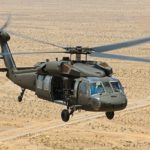
HASC subcommittees rolled out their portions of the National Defense Authorization Act on Tuesday. Those marks included increases in the procurement of F-35 Joint Strike Fighters from Lockheed Martin [LMT], Boeing [BA] F/A-18 Super Hornets, more Army helicopters, incremental funding to finish off construction of an Arleigh Burke-class destroyer and one additional Littoral Combat Ship.
Most of those items the Pentagon planned to buy in 2017, according to its 2016 future years defense plan, Thornberry said. “But when the president did not ask for the money that was expected from the budget agreement, then they had to cut out all that stuff.”
The Defense Department’s budget request included $524 billion in base expenditures and $59 billion for overseas contingency operations (OCO). The House and Pentagon budget numbers do not perfectly align because the NDAA also includes defense related funding for the Department of Energy and other agencies.
The House’s NDAA—slated for public release on Monday—will also contain changes to Thornberry’s acquisition reform bill (Defense Daily, April 21), as well as Goldwater-Nichols style changes to the Pentagon’s organizational structure, some of which were proposed by Defense Secretary Ashton Carter (Defense Daily, April 5) . The full committee will mark up the bill on April 27.
House Speaker Paul Ryan (R-Wis.) said the House appropriations committee will back Thornberry’s gambit.
“I support what Mac Thornberry is marking up at the House Armed Services and the appropriators will follow suite,” he said in a press conference.
However, Senate Armed Services Committee Chairman John McCain (R-Ariz.), said he may not follow the HASC chairman’s lead.
“I don’t know if we’re going to go in that direction or not. I don’t think so. We may go in a different direction,” he said. “But I respect his efforts very much.”
Whether President Barack Obama and Democrats support the increased base budget is also up in the air. For his part, Thornberry said he expects to see a veto threat from Obama over the transferred OCO expenses. “If it’s not that, it’s something else,” he said.