 By
By 
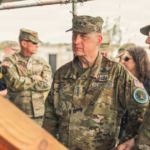
HUNTSVILLE, Ala. – The head of the Golden Dome program on Tuesday warned that if Congress does not pass another reconciliation bill with funding for for the homeland missile defense shield, the Golden Dome program will be frozen and largely cannot move forward.
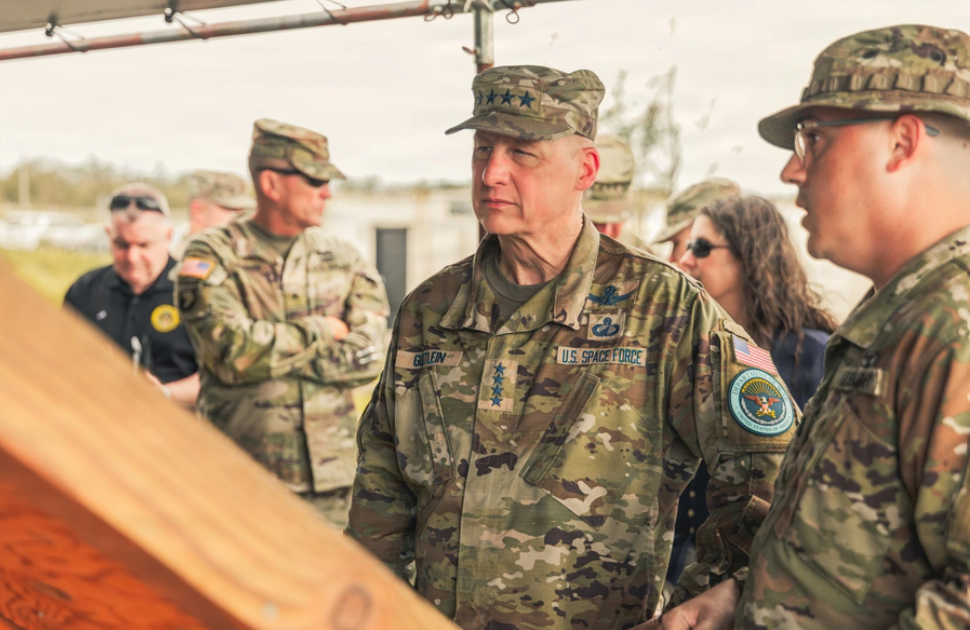
“We have a CR [continuing resolution], and we’re not going to shut down the federal government, but a CR doesn’t help me under Golden Dome because I don’t have a top line to fall back to to get that percentage of the continuing resolution,” Gen. Mike Guetlein, direct reporting program manager for Golden Dome for America, told the audience here at the annual Space and Missile Defense Symposium.
Guetlein said the country has to figure out another way of funding Golden Dome at least for fiscal year 2027.
“Both sides of the aisle, as well as the House and the Senate, are working through the math about how do you do this in ‘27. I will tell you that if they don’t figure it out, there is no Golden Dome because there is no funding,” he added.
Guetlein expressed some optimism that “as a nation we’re going to figure this out just because the sense of urgency is so great,” but admitted this is a “challenging budget environment” that also includes the need for a supplement to fund the conflict with Iran.
“It is a tough situation that we find ourselves in as a nation. We have a huge supplemental that we need to get after to take care of the conflict overseas, and we’ve got to figure out how to fund that as well as Golden Dome.”
Guetlein pleaded with an audience largely consisting of industry that, if they talk with their representatives, “please let them know your thoughts.”
Speaking to reporters following his discussion on stage, Guetlein clarified the Defense Department is largely funding Golden Dome through $25 billion from the 2025 reconciliation bill but they need a continued investment to be able to deliver the operational capability they plan to deliver to President Donald Trump by 2028.
“Without continued funding, Golden Dome will stop with everything we’ve already built and delivered,” he told media. “Everything that we’ve invested today, without additional investment, that’s where the program will have to stop. With everything we’ve delivered to today.”
The only Golden Dome-related items that fall outside the reconciliation bill are $400 million in military construction and other miscellaneous needs in the top line budget request, he said.
However, without reconciliation funding the “services have to find an alternative pathway,” he said.
Contingency Planning
Guetlein said there are discussions in DoD on how to go forward and potentially redirect other funds as a contingency plan.
“Because we have diversified execution of a lot of these capabilities, and a lot of these capabilities are already requested by Combatant Commands, there are some alternatives that we can pursue. We have not made any decisions on any pathway,” Guietlein told reporters.
For example, he said several space capabilities Golden Dome is investing in were also being invested in by the Space Force.
“So, if Golden Dome is not able to continue to invest in those types of capabilities, then the Space Force could decide at that time to continue the investments,” Guetlein said.
Successful Tests
He also hinted at two major successful Golden Dome tests so far.
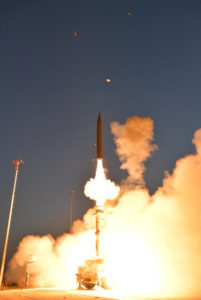
“There was a fall-based test that I can’t talk about the particulars of, but it was exceptionally effective. It hit the target in the intended threat environment and hit precisely as a bullseye hit,” Guetlein told reporters.
He said that the fall 2025 test was the first test to prove the Golden Dome program’s “pathway to command and control was the right way, and then that test led into the second test.”
Secretary of Defense Pete Hegseth on June 23 said on social media that he witnessed the Pentagon successfully completing a “full milestone test of Golden Dome for America.”
“Cutting edge directed energy was harnessed and the Dynamic Defense Autonomous Defeat (DDAD) system flawlessly and autonomously cued, targeted, and eliminated a multitude of incoming threats. This test was executed on schedule — and dynamically defeated every threat,” Hegseth said then.
The secretary said the systems were used to stop incoming drones and cruise missiles, with both traditional primes and “emerging primes” competing and collaborating.
Guetlein told reporters Hegseth spoke about the second test, which occurred at White Sands Missile Range (WSMR).
He favorably compared it to what he calls the most successful test in Missile Defense Agency history, Flight Test Ground-11, which involved targeting an ICBM target with two Ground-Based Interceptors.
“It takes an enormous amount of time to plan and execute a test of that magnitude…In January of this year I gave a challenge to the Missile Defense Agency of what test I needed to happen in the summer of 2026, and we executed that test. It was the most complex test with the most threats in the air in the history of WSMR. MDA pulled that off and executed that test in six months, and met every single test objective that I gave them,” Guetlein said.
He said MDA alongside a host of military commands and agencies pulled together the test in under six months, starting from scratch.
They “delivered what I will argue is the most complex integrated missile defense test that we have pulled off as a nation,” he said.
The test was “exceptionally effective and really demonstrated the capabilities that we’re going to be deploying around the homeland,” he said.
However, Guetlein warned the June test was only a fraction of what the Golden Dome program is aiming to deliver by the summer of 2028, so the next test in 2027 is due to be even more complex.
Guetlein said the test was part of his guarantee to President Trump that the Golden Dome program would perform a major test every year through initial delivery in summer 2028.