, Defense Opinion Writer
South Korea’s recent test flight of its first domestically produced hypersonic weapon represents another milestone in the country’s growing defense industrial capacity.
Nonetheless, such technological achievement does not necessarily lead to strategic necessity. A more relevant question for South Korea is whether its hypersonic glide vehicle (HGV) could offer a sufficient operational advantage against North Korea that justifies the expensive price tag.
Given Pyongyang’s somewhat limited missile defense capabilities, Seoul should evaluate whether investment in inexpensive and plentiful drones would deliver more practical benefits.
Where Do Hypersonic Weapons Fit?
South Korea’s Three-Axis System military strategy to counter the North Korea threat is comprised of Kill Chain, Korean Air and Missile Defense (KAMD), and Korea Massive Punishment and Retaliation (KMPR). Hypersonic weapons could contribute to two of these elements.
Under Kill Chain, South Korea aims to detect North Korea’s imminent signs of a missile or nuclear attack and preemptively strike the relevant targets. By shortening the time from launch to impact, hypersonic weapons could likely enable the South Korean military to neutralize time-sensitive targets before they change their locations.
Under KMPR, hypersonic weapons could provide additional options for retaliation against strategically important North Korean targets following a nuclear attack.
Nevertheless, neither mission requires hypersonic weapons. The overall effectiveness of Kill Chain depends fundamentally on the ability to identify and track mobile launchers, maintain credible ISR capacity, and decide to activate the Kill Chain at the right moment. Even hypersonic missiles cannot destroy a launcher whose location remains unknown.
Likewise, KMPR requires credible retaliatory capabilities over speed itself. South Korea already fields high-end conventional ballistic and cruise missiles, including the Hyunmoo missile family.
North Korea’s limited missile defenses
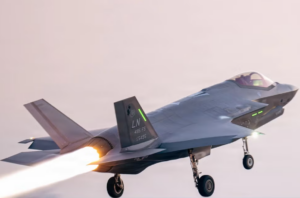
Countries like the United States, China and Russia are making enormous investments in advanced air and missile defense systems. Against these sophisticated systems, the maneuverability of hypersonic weapons could present practical benefits by complicating interception and reducing the time for meaningful response.
Yet, North Korea lacks a comparably sophisticated integrated missile defense system. Although Pyongyang operates surface-to-air missiles such as—SA-2, SA-3 and SA-5—and is continuously modernizing its defense capacity, its ability to intercept South Korea’s most updated ballistic missiles appears somewhat limited.
This raises an inevitable question: why should South Korea heavily invest in weapons that are designed to penetrate advanced defense systems when Seoul’s primary adversary has relatively vulnerable missile defenses?
Moreover, hypersonic weapons are not necessarily effective against North Korea’s underground facilities. Destroying deeply buried command centers depends not simply on flight speed but also on a number of elements, including warhead design, penetration characteristics, accuracy and information on targets.
The need for massive drone production
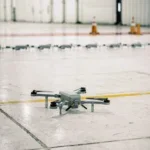
Recent armed conflicts illustrate the growing importance of inexpensive unmanned systems. Especially, Ukraine has demonstrated how affordable drones conduct surveillance, support artillery operations, strike military equipment and impose sustained attrition on much larger units.
For South Korea, this raises opportunity cost issues. The resources that are invested in acquiring a relatively small number of high-end hypersonic weapons cannot be spent on massive drone production and enhancing counter drone capabilities at the same time.
Small drones cannot penetrate hardened facilities or replace long-range precision missiles. Likewise, hypersonic weapons cannot conduct constant surveillance, repeated inexpensive engagements or the distributed operational presence that massive drone formations offer.
North Korea possesses considerable conventional forces, which include artillery, armored vehicles and large-scale troop formations. In a protracted war, South Korea would not only need precision strike capabilities but also an industrial capacity to replace equipment and sustain operations despite attrition.
Massive production of low-cost drones would meet the demands only when it is premised upon Seoul investing in reliable supply chains, safe communications, electronic warfare resilience and operator training.
Technology and strategic priority
None of this suggests that South Korea should abandon research on hypersonic weapons. Developing such weapons would undoubtedly reinforce domestic expertise in propulsion systems, advanced materials and guidance systems.
The problem lies in acquisition priority. Seoul should judge how much additional operational value hypersonic weapons offer beyond existing precision strike weapons systems and whether such value justifies the cost when compared to alternative investments.
South Korea should assess hypersonic weapons based on their contributions to realistic wartime requirements and not simply on their speed and technological sophistication.
South Korea’s recent breakthrough in hypersonic weapons development deserves praise as a technological achievement. Yet when applied against North Korea, which has a relatively limited missile defense system, the strategic returns from building a large hypersonic arsenal would not be as attractive as the technological achievement itself.
Thus, the central question for Seoul is not whether it can manufacture weapons that could fly faster, but whether its next defense investment should offer scale and sustainability.
Ju Hyung Kim is president of the Security Management Institute, a defense think tank in Seoul affiliated with the South Korean National Assembly. He is currently adapting his doctoral dissertation, “Japan’s Security Contribution to South Korea, 1950 to 2023,” into a forthcoming book.

Are you a Defense Daily reader with a thought-provoking opinion on a defense issue? We want to hear from you.
- We welcome submissions of opinion articles on national security, defense spending, weapons systems and related areas.
- We welcome submissions from lawmakers, administration officials, industry representatives, military officials, academics, think tank experts, congressional candidates, international experts and others on issues important to the national defense community.
- We welcome a diverse range of opinions all along the political spectrum.
- Email: editor@DefenseOpinion.com