Launch Cadence. On Aug. 28, National Reconnaissance Office (NRO) Director Chris Scolese said that the agency will have put into orbit more than 100 satellites between June last year and the end of this year, as NRO moves to deter China and Russia with a proliferated, multi-orbit satellite architecture permitted, in part, by a steep reduction in launch costs. On Friday, the NRO said that it and the U.S. Space Force Space Launch Delta 30 launched the NROL-113 mission—the third for the proliferated architecture–on Thursday night aboard a SpaceX Falcon 9 from Vandenberg Space Force Base, Calif. “Approximately half a dozen launches supporting NRO’s proliferated architecture are planned for 2024, with additional launches expected through 2028,” NRO said on Friday.
F-16 Advanced EW. Northrop Grumman’s ultra-wideband architecture AN/ALQ-257 Integrated Viper Electronic Warfare Suite (IVEWS) has completed U.S. Air Force testing in the service’s Joint Preflight Integration of Munitions and Electronic Sensors (J-PRIMES) facility, the company said. “During a series of rigorous tests, AN/ALQ-257 IVEWS was subjected to accurate representations of complex radio frequency spectrum threats in the J-PRIMES anechoic chamber,” Northrop Grumman said. “The system demonstrated the ability to detect, identify and counter advanced radio frequency threats while operating safely with other F-16 systems. The successful completion of this regimen allows AN/ALQ-257 IVEWS to begin flight testing on Air Force F-16 aircraft.”
…Three Years of Testing. Air Force Col. Michael Rigoni, director of F-16 International Electronic Warfare Systems, said in the company’s statement that “J-PRIMES marks the culmination of three years of extensive U.S. government IVEWS system-level testing that’s encompassed multiple Integration Demonstrations and Applications Lab (IDAL) events, flight demonstration on a surrogate platform during NORTHERN LIGHTNING 2021, Laboratory Intelligent Validated Emulator (LIVE) closed-loop testing and full integration into the Hill Air Force Base F-16 Block 50 avionics system integration lab.” While IVEWS beat out the L3Harris Technologies’ AN/ALQ-254(V)1 Viper Shield for equipping U.S. F-16s, L3Harris is pursuing foreign orders and anticipates that its system may one day go on U.S. F-16s.
Chinese Needles. Electronics components from China in Pentagon weapons have spurred concern about Chinese sabotage or supply cutoff. Chinese medical supplies for the U.S. military may be in a similar boat. On March 18, the Food and Drug Administration (FDA) issued warning letters on “unauthorized plastic syringes made in China that have not been cleared or approved by the FDA for sale or distribution in the U.S.” FDA said that quality control problems in Chinese needle manufacturing facilities have come to its attention. On Aug. 16, FDA advised U.S. health care providers and facilities to scrap plastic needles made by Jiangsu Caina Medical Co., Ltd., Jiangsu Shenli Medical Production Co., Ltd., and Shanghai Kindly Enterprise Development Group Co., Ltd. FDA recommended using alternative, non-Chinese sources. On Aug. 30, Rep. Mikie Sherrill (D-N.J.), a member of the House Armed Services Committee and a retired Navy helicopter pilot, introduced “The Safe Military Medical Equipment Act,” H.R. 9445—a bill to direct Defense Secretary Lloyd Austin “to replace certain syringes of the Department of Defense” that the directors of the Defense Logistics Agency and Defense Health Agency identify as “subject to a Food and Drug Administration import alert or meet the conditions of a Food and Drug Administration safety communication.” Replacement syringes would come from U.S. or allied nation suppliers. The headquarters of Becton Dickinson is in Franklin Lakes, N.J. near Sherrill’s district.
Munitions Producibility. Army Secretary Christine Wormuth last week said the service has done a good job at expanding manufacturing capacity to increase artillery shell production but now should assess how munitions can be produced more easily. “I think something we need to look at in the future is, ‘How can we increase even more quickly the volume of munitions we’re producing? But also, can we do more to focus on what I would call producibility of munitions,’” she said at the Defense News conference. She highlighted production by the U.S. during World War 2 of “huge quantities of things,” adding that while modern munitions are more complex and provide an advantage over Russia’s “mass approach,” the Army and industry need to look at increasing their producibility.
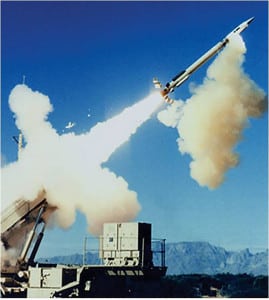
…Can’t Do it All. Given comments by Air Force officials about the need for more air defense of bases, particularly in the Indo-Pacific theater, Wormuth was asked how the Army is working to help the Air Force here. She replied that the Army is creating additional battalions to provide air defenses with Patriot and indirect fire protection capabilities, and is discussing with the Air Force how to help protect their bases. However, amid a flat budget and the need for the Army to protect its soldiers and bases, Wormuth said, “So I think that’s something we’re just going to have to continue to work through, but, but I don’t think the United States Army can do all of that for everyone all the time.”
Airframe 3D Printing. The National Institute for Aviation Research (NIAR) has acquired a Sapphire 1MZ additive manufacturing system from Velo3D to research and develop qualification methods for metal 3D-printed parts for airframe applications. NIAR, which is part of Wichita State Univ. in Kansas, conducts research for aerospace and defense innovations. “Our organization is well-known for its work in aeronautical research and by leveraging Velo3D’s solution to better understand the nuisances within the additive manufacturing process, we can help build confidence in 3D-printed parts, thereby accelerating adoption of this advanced manufacturing technology,” Lauren Tubesing, NIAR’s business development lead for advanced manufacturing, said in a statement.
Maritime Cyber Help. The Department of Homeland Security Science and Technology Directorate last week issued a Request for Information seeking feedback related to how commercial ports operate their information and operational technology systems so that DHS can provide actionable cybersecurity recommendations to the maritime port industry. S&T’s Maritime Port Resiliency and Security Research Testbed also wants to understand how to improve DHS’s regulatory authority to improve port cybersecurity. “Our goal is to successfully design and develop a virtual testbed where tactics, techniques, and procedures can be created for effective response to threats to critical maritime infrastructure without impacting real-world operations,” Jason McCasland, S&T project manager, said in a statement.
Done Deals. Federal engineering and technology solutions provider KBR last week said it completed its $737 million acquisition of LinQuest Corp., adding digital integration capabilities and expanding its work in the space, air dominance, and connected battlespace areas. LinQuest will be integrated into KBR’s Defense and Intel business unit within the Government Solutions segment. Separately, space technology company Redwire completed its acquisition of Hera Systems, a spacecraft development company focused on specialized national security space missions in geostationary orbit. Hera had $15 million in sales in 2023.
ITEP Engine. The Army has now conducted three ground runs with GE Aerospace’s new T901 helicopter engine on a Sikorsky prototype aircraft built for the now-canceled Future Attack Reconnaissance Aircraft (FARA) program, according to a lead official. GE Aerospace developed the T901 under the Improved Turbine Engine Program (ITEP), and it will eventually power the Army’s AH-64 Apache and UH-60 Black Hawk helicopters. In late April, the Army confirmed it had recently conducted a “light off” of the T901 engine on Sikorsky’s Raider X prototype for FARA to reduce risk heading into Black Hawk integration efforts. “With ITEP, we delayed the production there. So we’re delaying production but that has not ended the integration of the ITEP [engine] and the Black Hawk. We’ve got two engines down at West Palm Beach to date. Those engines are getting integrated into the first test aircraft. We think in fiscal year 2025 we’ll see, absolutely, those engines running in the Black Hawk and we’ll some flight tests executed, because we’re getting a lot of great results out of the pre-flight tests that we’re doing on the engine stands with the ITEP engine,” Brig. Gen. David Phillips, Program Executive Officer for Aviation, said on Sept. 4 at an AUSA event.
CH-47F Block II. Phillips also told attendees at the AUSA event that the Army is readying to receive the second CH-47F Block II Chinook heavy-lift helicopter from Boeing this week. “We had a bird strike early in the week during the acceptance flight. So there was no major damage, just enough to go back and do a little after-action checkout on the aircraft,” Phillips said. Boeing in late June delivered the first CH-47F Block II Chinook to the Army, as the service works toward a Milestone C decision to move the program into full-rate production next year. Block II upgrades for the Chinook include an improved drivetrain, increased range, a redesigned fuel system and an ability to lift an additional 4,000 pounds, with Boeing noting that up to 465 heavy-lift aircraft are likely to be modernized to the new configuration.
LPD-29. The Navy plans to commission the USS Richard M. McCool, Jr. San Antonio-class amphibious transport dock ship on Sept. 7 at Naval Air Station Pensacola, Fla. This is the 13th ship of its overall class and last ship in the Flight I configuration. This is also the first ship named after the World War II Medal of Honor recipient. The ceremony will feature a principal address by Secretary of the Navy Carlos Del Toro and remarks from Chief of Naval Operations Adm. Lisa Franchetti and Assistant Commandant of the Marine Corps Gen. Christopher Mahoney.
Navy Robotics. The Navy announced Future Sailor (FS) Karla Torres-Casillas has become the service’s first contracted Robotics Warfare (RW) specialist after enlisting in the Navy at Military Entrance Processing Station (MEPS) Phoenix, Aug. 27, 2024. This new rating become available for activate-duty contracts starting that day. It is the first dedicated enlisted workforce position to specialize in unmanned and autonomous technology across the military. The Navy announced the new RAW general rating in a February message, in line with Chief of Naval Operations Adm. Lisa Franchetti’s plans announced in the West 2024 conference to develop “a team who has the reps and sets in sensors, platform autonomy, and mission autonomy programs, and can provide input in machine-learning feedback processes.”
EPF-15. Austal USA launched the 15th Spearhead-class Expeditionary Fast Transport (EPF), the USNS Point Loma (EPF-15), on Sept. 3. The ship was previously christened in early August. Following the launch it was docked pierside for final outfitting and system activation in preparation for sea trials later in 2024.
EPF-16. Separately, the Austal USA hosted a keel laying ceremony for the future USNS Lansing (EPF-16) on Sept. 6. That event also included Del Toro as well as ship sponsor Michigan Gov. Gretchen Whitmer (D). EPF-16 is the first ship named after the capital of Michigan, since a previous USS Lansing was named after a World War II casualty.
Tactical Oceanography. An official at Naval Undersea Warfare Center (NUWC) Division Newport recently announced plans moving to establish a new National Center of Excellence for Tactical Oceanography. During the Southeastern New England Defense Industrial Alliance (SENEDIA) Defense Innovation Days in late August, NUWC Division Newport Technical Director Marie Bussiere announced the moves and described it as “the center of gravity for activity and accountability for the Navy in tactical oceanography.” Tactical oceanography is the study and application of oceanographic data and tools to support military operations and naval warfare. “Our vision is to inspire and enable a military and civilian team capable of providing knowledge and tools that safeguard the dominance of the United States Navy in the undersea domain. Our mission is to empower undersea warfare forces to create desired operational outcomes through deliberate use of and insight into the ocean environment,” Bussiere added.
F-35 Engines. The Navy awarded RTX’s Raytheon a $405 million undefinitized contract modification on Sept. 4 to add scope to the original contract to procure spares for the production and delivery of the F135 propulsion system including spares depot and common for the F-35 global spares pool, and country unique spares in support of the Joint Strike Fighter program for the U.S. Air Force, Marine Corps, Navy, non-Department of Defense participants, F-35 Cooperative Program Partners, and Foreign Military Sales customers. This work is expected to be finished by December 2027. Funds will be obligated on individual orders as they are issued.
…And More Propulsion. The Navy also awarded Raytheon a $112 million mod that extends the period of performance for the Propulsion System Block Four Flight Test Program to December 2026. This seeks to continue to provide technical engineering, flight test support, special tooling, test equipment repair, and flight test spare and repair parts for the F-35 Propulsion System Block Four Flight Test Program to most of the same F-35 users. This work is expected to be finished by December 2026.
Ssang Yong Details. The U.S. Navy elaborated on what operations will be included in the 2023 South Korean Ssang Yong exercise running from Aug. 26 to Sept. 7. While DoD previously detailed forces involved, U.S. Indo-Pacific Command now explained this will be the first time the U.S. Marine Corps’ next-gen Amphibious Combat Vehicle will be used in an exercise on the peninsula and Korean Marines’ MUH-1 helicopters have completed deck-handling qualifications for U.S. vessels. The primary focus was said to enhance the capability of the allies to conduct a combined joint forcible entry operation where coalition forces quickly neutralize key enemy facilities to terminate hypothetical conflict. The South Korean and U.S. Navy and Marine Corps conducted joint amphibious operations then moved to land-based operations that rehearsed eliminating enemy forces.