
Next Gen OPIR Polar. The House Armed Services Committee’s (HASC) version of its fiscal 2027 defense authorization bill rejects U.S. Space Force’s renewed attempt to end the program for the Next Generation Overhead Persistent Infrared Polar (Next Gen OPIR Polar) system by Northrop Grumman. In fiscal 2026, Space Force also tried to cancel the space-based missile warning program covering the Arctic region, but Congress restored funding. Space Force has said it has spent more than $3 billion on Next Gen OPIR Polar, but favors moving to missile defense systems in lower orbits. The HASC bill would fund Next Gen OPIR at $415 million in fiscal 2027.
…NGC2 Transport Layer. The committee adopted an amendment to its fiscal year 2027 National Defense Authorization Act from Rep. Pat Ryan (D-N.Y.) directing the secretary of the Army to submit a report to Congress by December on the service’s plans for pursuing data transport modernization as part of its Next-Generation Command and Control initiative (NGC2). The measure notes HASC’s support for NGC2, but cites concern “the Army has not prioritized data transport within the [NGC2] framework, and that the Army currently plans to rely on legacy radio systems, private networks, and satellite communications.” “The committee is aware that secure, private and resilient commercial cellular networks have been used for other mission sets within the Department of Defense. The committee believes that commercial cellular connectivity, when secured, has the potential to lower costs, increase resiliency, enhance mobility, and increase lethality as demonstrated in Guam and Taiwan,” the amendment states. The required report would cover development and acquisition timelines, an assessment of available commercial solutions and details of the larger transport layer strategy for NGC2.
…Experimental Formation. HASC also adopted an amendment from Rep. Eugene Vindman (D-Va.) directing the secretary of the Army to develop a plan for establishing “one or more experimental, battalion-sized formations that integrate unmanned aircraft systems for ISR and precision strike operations at scale.” The amendment adds the experimental formation is intended to “evaluate the operational effectiveness, survivability, targeting capacity and cost-efficiency of such a formation relative to legacy cavalry and scout formations and to inform future force design decisions.”
…Israel Tech Cooperation. HASC also rejected by voice vote an amendment from Rep. Ro Khanna (D-Calif.) that would have stripped the U.S.-Israel Defense Technology Cooperation Initiative from the panel’s FY ‘27 NDAA. Khanna said Israeli Prime Minister Benjamin Netanyahu has commented that the provision would “create a new network of joint defense co-development, co-production and mutual investment in advanced missile defense, artificial intelligence, cyber security and next-generation military platforms.” “Last I checked Netanyahu doesn’t have a seat on this committee…If we want to give aid to Israel, if we want to sell them weapons, that should be a vote for the entire Congress,” Khanna said. The measure faced pushback from HASC leadership, with ranking member Adam Smith (D-Wash.) stating “it’s not a new framework at all” and that the provision suggests areas where the U.S. and Israel could work together and appoints someone to coordinate the existing programs. “To say that this is us bowing to the bidding of Israel on this is completely inaccurate. The reason we’re doing this is because we benefit from that technology development,” Smith said.
DDG-127. The Navy accepted delivery of the last Flight IIA Arleigh Burke-class destroyer, the future USS Patrick Gallagher (DDG-127), two months earlier than planned from builder General Dynamics Bath Iron Works. The Navy in a statement said it accepted delivery early on May 28 “due to exceptional builder’s sea trials. The trials executed hull, mechanical, electrical and combat systems at sea testing in series, during a single accelerated effort.” The service added that the Navy and industry team found opportunities to streamline the process, ensuring complete construction and reducing the time between trial events. The earlier delivery now means the fleet will have extra time for training and certification.
Unmanned Support. The Navy awarded nine companies $349 million total in a multiple award contract on May 12 to support development, integration and sustainment of unmanned maritime systems through May 2034. Under this contract, awardees have the opportunity to compete on specific task orders during the ordering period. Awardees include Abbott On Call Inc., Astrion Group, HII Mission Technologies Corp., ManTech Advanced Systems International, Inc., Naval Systems Inc., Peraton Inc., Prescient Edge Corp., Science Applications International Corp. and Serco Inc. Naval Information Warfare Center Pacific received 21 bid. In a June 2 statement, Astrion described the work as providing “technical solutions for the full lifecycle of unmanned maritime systems, from specification, design, and integration through testing, fielding, operations, and sustainment.” Astrion said it is leveraging its current experience operating and maintaining the Navy’s Sea Hunter and Seahawk Medium Displacement Unmanned Surface Vessels.
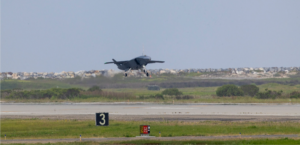
C-130J Autonomy. Boston’s Merlin, Inc., said that it has completed Critical Design Review of autonomous C-130J aircraft for U.S. Special Operations Command (SOCOM). “The milestone supports a demonstration of Merlin’s C-130 autonomous capability development, showcasing the potential reduction in crew workload through all phases of flight,” according to Merlin. In June, 2024, SOCOM said that it had awarded Merlin a five-year up to $105 million contract to provide advanced automation for the C-130 as a step toward such features for special operations forces fixed wing aircraft.
Spectrum Awareness. The Army on June 1 said it has awarded a $350 million deal to 3dB Labs for the Spectrum Situational Awareness System (S2AS) program. “The S2AS senses, detects, and reports in near real time a command post’s electromagnetic spectrum (EMS) signature and sources of electromagnetic interference (EMI) from all sources. As a dedicated EMS situational awareness system, it supports commanders’ Emissions Control (EMCON) decisions, EMI resolution and warns operation centers of unauthorized or intentional sources of interference to enable multi-domain operations,” the Army said in a statement. S2AS fielding is expected to begin this year, according to Lt. Col. John Cross, product manager for tactical spectrum warfare.
Rheinmetall and Romania. German defense firm Rheinmetall said on Jun 2e it has signed a $6.6 billion deal with Romania, calling it the “largest international contract package in the company’s recent history.” Under the deal, Rheinmetall will build nearly 300 Lynx combat vehicles for Romania, while also delivering medium-caliber ammunition for air defense and armored personnel carriers, two offshore patrol vessels and two diver support vessels. Rheinmetall said it will invest “several hundred million euros” in Romania to support its work on the project.
Maritime Targeting. Taiwan’s Military News Agency last week that Taiwanese army forces participating in live fire exercises on land used Altius-600M loitering munitions supplied by Anduril Industries and the Javelin anti-armor missiles made by a Lockheed Martin-RTX joint venture to strike targets at sea. The news agency said that for Altius, it was the first time it was used for a maritime target mission, adding the loitering munitions hit their targets 100 percent of the time. The Javelin also hit its target at sea.
SOUTHCOM Balloon. Ondas Holdings last week said that U.S. Southern Command has awarded the company’s World View subsidiary an initial three-month, $4.8 million contract to provide a stratospheric high-altitude balloon to provide persistent intelligence, surveillance and reconnaissance support of maritime domain awareness. Ondas said the award follows a successful demonstration of the sensor-equipped balloon during the UNITAS 2025 exercise with U.S. Naval Forces Southern Command.
Greek V-BATs. The Hellenic Army has signed a contract with Shield AI to acquire more V-BAT unmanned aircraft systems for maritime domain awareness operations across the Aegean Sea, the company said last week. “V-BAT is exceptionally well-suited for operations in Greece, where forces operate across dispersed islands, remote coastlines, deep valleys, mountain ranges, and complex maritime environments,” James Lythgoe, regional director of Eastern and Southeast Europe for Shield AI, said in a statement. “V-BAT has proven itself in combat operations in Ukraine, including in GPS- and communications-denied environments, and was built for exactly these kinds of operational realities.” The company said it will establish an office in Athens to work more closely with its customers and industry partners in Greece.
Canadian Torpedo Cooperation. Fincantieri’s subsidiary WASS Submarine Systems on June 4 announced it signed a Memorandum of Understanding with Magellan Aerospace Corporation at the CANSEC 2026 defense expo recently held in Ottawa, Canada, focused on cooperation for Canadian underwater defense capabilities. The companies aim to work together to explore opportunities for Canadian industrial participation in heavyweight torpedoes and torpedo countermeasures system capabilities. Areas of potential cooperation include like production of components, energetic sections, subassemblies, final assembly and factory testing, as well as maintenance and in-service support activities. They hope to combine WASS’ underwater systems industrial and technological expertise with Magellan’s established industrial presence in Canada to “support the long-term development of sovereign underwater capabilities, strengthen local industrial participation, and enable sustainable in-country sustainment.”
More FMTV A2s. Oshkosh Defense said on June 3 it recently received $142 million in orders to continue delivering Family of Medium Tactical Vehicles (FMTV) A2 platforms for U.S. military and international customers. The latest orders include the FMTV A2 4×4 Cargo, 6×6 Cargo and Long Wheel Base configurations, according to the company, who did not disclose the countries that will receive these latest vehicles. “Our international customers require vehicles that combine durability, flexibility, and advanced capability. The FMTV A2 delivers that performance while aligning with the operational needs of modern forces,” Pat Williams, Oshkosh Defense’s chief programs officer, said in a statement.
Autonomous Manufacturing. Deterrence, which developing autonomous manufacturing capabilities, has partnered with General Dynamics Ordnance and Tactical Systems division to collaborate on improving production efficiency and throughput, Deterrence said last week. “The partnership integrates production equipment, operational workflows, and quality systems into connected manufacturing environments designed to support day-to-day operations, reduce downtime and improve visibility across facilities supporting critical defense programs,” Deterrence said. The initial focus of the partnership is OTS’s Mesquite, Texas, location to create a repeatable model for use elsewhere.
Swarm Forge Award. Valid Evaluation last week said it won a contract from the Pentagon’s Chief Digital and Artificial Intelligence Office (CDAO) “to power” the Swarm Forge Page-Setting-Project. The CDAO launched Swarm Forge this spring to validate and rapidly field artificial intelligence-enabled robotic swarm packages and related software, collaboration, interfaces and tactics operational use. Denver-based Valid Eval said its tools, which fuse the selection criteria into a single user view, will help the Swarm Forge acquisition judges make their decisions.
Drone Deals. Drone developer PDW Holdings, also known as Performance Drone Works, has agreed to acquire Vanteon Corp., adding expertise in communications, radio frequency systems and software-defined radio technologies. “The planned acquisition strengthens PDW’s ability to design, develop and deliver next-generation sUAS capabilities and expands mission-critical connectivity at the tactical edge,” PDW said. Transaction terms were not disclosed. Separately, Mobix Labs, Inc., said it has agreed to acquire Vision Aerial, Inc., a maker of multi-rotor drones and payloads for medium- and heavy-lift applications in different markets. Deal terms were not disclosed.
Another IPO. Applied Aerospace & Defense, Inc., last Wednesday began trading on the New York Stock Exchange using the ticker symbol “AADX.” The company’s initial public offering (IPO) of 32.5 million shares was priced at $20 per share. Applied is based in Huntsville, Ala., and provides manufacturing and assembly, design, lifecycle management, advanced materials production and testing, and other services for space and launch, military aviation, and C5ISR and precision strike markets.
New Labor Contract. Leonardo DRS and its nearly 300 union members working in West Plains, Mo., in late May agreed to a new contract that ended a month-long lockout by the company. The new contract increases compounded wages by more than 30 percent over five years, limits annual increases in health insurance premiums with no changes to co-pays. Leonardo DRS’s work in West Plains contributes to the Maneuver-Short Range Air Defense system, surveillance systems, heavy assault bridging equipment, and fuel and water distribution systems.
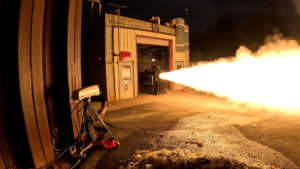
Facility Expansions. L3Harris Technologies has added 130,000 square feet of manufacturing space to its Advanced Manufacturing Facility-South solid rocket motor facility in Huntsville, Ala., bringing the company’s total footprint in the area to about 670,000 square feet at three sites. The expansion was part of a $25 million investment. AeroVironment last week said it will invest $15 million to expand its production capabilities near Dayton, Ohio. The 44,000 additional square feet will support pilot-scale and mid-volume production of biotechnology materials and components. Of the investment, $7 million was approved by the Ohio Tax Credit Authority.
GD Hikes Dividend. General Dynamics’ board last week declared a $1.59 per share quarterly dividend, a six percent increase from the current $1.50. The higher dividend is payable beginning Aug. 7.
BALTOPS 2026. The U.S. Navy and NATO on June 4 kicked off the two-week-long 55th iteration of Baltic Operations (BALTOPS) 2026 with 20 NATO ally ships sailing from Gdynia, Poland. The exercise is led by the U.S. 6th Fleet and this time will be commanded and controlled from Allied Joint Force Command (JFC) Brunssum, Netherlands, to provide training under a NATO command structure. “BALTOPS forms for us three vital tasks: deters Russian threats in the Baltic Sea region, builds real world readiness and interoperability, strengthen alliance’s cohesion” Lt. Gen. John Mead, deputy commander of JFC Brunssum, said in a statement. NATO plans for this BALTOPS to practice missions including amphibious operations, air defense, anti-submarine warfare, mine countermeasures, crisis response, and unmanned systems experimentation. BALTOPS will include 6,000 personnel from 15 countries including Denmark, Estonia, Finland, France, Germany, Latvia, Lithuania, Norway, Poland, Portugal, Romania, Sweden, Turkey, the United Kingdom, and the U.S.
U.S.-Korea Mine Warfare. The U.S. Navy and Republic of Korean (South Korea) Navy finished the five-day 2026 ROK-U.S. Combined Mine Warfare Exercise in late April, the Navy announced June 4. During the exercise, a naval unit from both countries worked together to clear a route for ships through a simulated minefield using advanced mine hunting, detection and neutralization capabilities, including underwater detonation of a simulated mine. ROKN Mine Squadron 52 and U.S. Navy Commander, Task Force 77 commanders worked together to direct the mine hunting tasks, allowing both countries’ participants to practice communicating and operating as a bilateral team while maximizing mine hunting capabilities.