 By
By 
Sen. Mark Kelly (D-Ariz.) on Wednesday showed strong skepticism that the wide-ranging Golden Dome missile defense initiative is realistic while also cutting the Pentagon’s independent weapons testing office that could ensure the systems work.
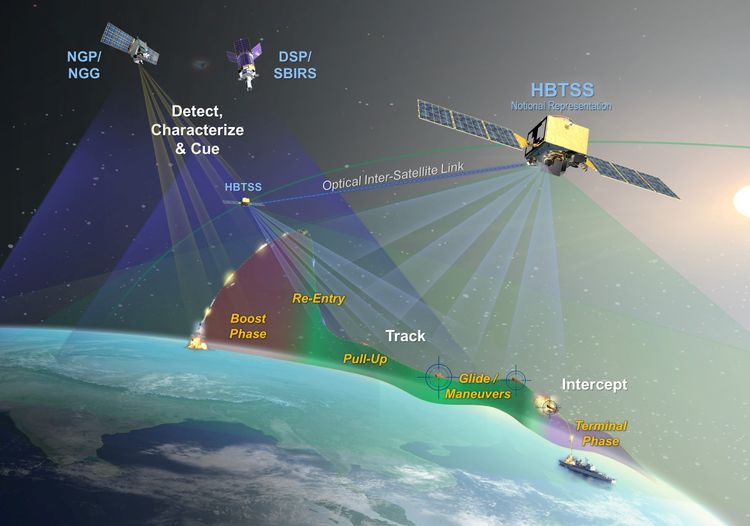
In a hearing before the Senate Armed Services Committee Kelly argued to Secretary of Defense Pete Hegseth that “we’re talking about hundreds of [intercontinental ballistic missiles] on simultaneously, varying trajectories, [Multiple Independently-targetable Reentry Vehicles], so multiple re-entry vehicles, thousands of decoys, hypersonic glide vehicles, all at once. And considering what the future threat might be, might even be more complicated than that.”
Kelly added that while the Trump administration is proposing starting by spending $25 billion for Golden Dome in the reconciliation bill, he said the Congressional Budget Office (CBO) said this could cost upward of $500 billion while other estimates are closer to $1 trillion.
Last month, President Trump announced some details of Golden Dome, including that it would have a total cost of $175 billion and be ready only within three years with a nearly 100 percent success rate. (Defense Daily, May 20).
A May CBO report estimated the costs of the Golden Dome space-based interceptor constellation section alone could range anywhere from $161 billion to $831 billion, depending on its scope.
“I am all for having a system that would work. I am not sure that the physics can get there on this. It’s incredibly complicated,” Kelly, a seasoned astronaut, warned.
This tracks with March statements from former first Trump administration Under Secretary of Defense for Research and Engineering Michael Griffin, who argued boost-phase missile defense via space-based interceptors is probably not physically or technically possible, as in under a one percent chance. He said it was not worth spending money on a space-based interceptor constellation that targets a missile’s boost phase (Defense Daily, March 4).
Given these challenges, Kelly pressed Hegseth on how this might hurt the initiative’s reliability when DoD is cutting most of the staff of the Office of the Director of Operational Test and Evaluation (DOT&E), the Pentagon’s top weapons testing office.
He asked Hegseth if DOT&E was cut due to its plans to oversee testing of Golden Dome systems.
Hegseth responded, “the concerns were not specific to Golden Dome, it was years and years of delays, unnecessarily, based on redundancies in the decision making process, that the services, COCOMS and the Joint Staff, together with OSD identified as a logjam that was not helping the process.”
Kelly responded by arguing a strong weapons testing office would help make sure Golden Dome works to the ideal 99.99 percent reliability rate.
“You cut the staff of the people who are going to make sure this thing works before we make it operational, before we give it to the warfighters. You’ve got to go back and take a look at this.”
The senator urged Hegseth to put together a group of scientists to make sure the physics will work so the administration does not spend hundreds of billions of dollars only to “get to the end, and we have a system that is not functional, that very well can happen.”
Kelly argued the idea “might not be fully baked” but they should work with non-contractor scientists and figure out what needs to be done to build a workable system, “and then make smart decisions before we spend hundreds and hundreds of billions of dollars.”
Hegseth dismissed Kelly’s concerns. He said the Defense Department is doing that by “leveraging existing technologies and not premising the project on aspirational technologies. What we can actually do.”
Kelly replied the initial $25 billion is more than just figuring out if they have the ability to build a system that can handle the scale of the threats billed in Golden Dome.