Fighter jets, money to fund an Arleigh Burke-class destroyer and additional munitions top the Navy’s wish list of weapons it would like to have but couldn’t afford to include in its 2017 budget submission.
In a list delivered to Congress last week, the service ranked the purchase of 14 F/A-18E/F Super Hornets for $1.54 billion, two F-35C aircraft for $270 million and $433 million needed to finish procuring a DDG-51 partially funded last year as its top three unfunded priorities.

The Navy did not request funding in the 2017 base budget for any Super Hornets or its electronic warfare variant, the E/A-18G Growler, but the Defense Department requested two F/A-18E/Fs in the overseas contingency operations portion of the budget that funds wartime needs. Leaders such as former Chief of Naval Operations Adm. Jonathan Greenert and Rear Adm. Mike Manazir, the service’s director of air warfare, also have spoken often about the ongoing shortage of fighter jets caused by higher than anticipated operational tempo.
Congress is not obligated to fund any of the priorities on the list, but in past years it has been particularly disposed to adding extra Navy fighter jets to the budget. In the 2016 budget cycle, lawmakers included money for five Super Hornets and seven Growlers. In 2015, they funded an additional 15 E/A-18Gs.
The next two items on the list stress the service’s need for electronic warfare upgrades. The service included $81 million for 99 Counter Electronic Attack block II kits as well as $23 million for another Surface Electronic Warfare Improvement Program (SEWIP) block III system.
Besides asking for funds to complete the DDG-51 partially funded in 2016, the Navy included $65 million to modernize a combat system on an existing Arleigh Burke-class destroyer.
Munitions also ranked high on the list. The Navy called for funds for 23 MK-54 Mod 0 torpedoes, 75 AIM-9X Block II missiles, and $58 million for Joint Direct Attack Munitions components.
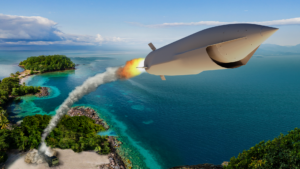
The service did not include funding for additional Littoral Combat Ships (LCS) in its unfunded priorities list despite a change that cut the over program of record from 52 to 40 ships and reduced the number of LCS to be procured in ’17 from three to two vessels. However, the Navy did list $43 million for an over the horizon missile to be integrated on the USS Fort Worth (LCS-3) and USS Milwaukee (LCS-5) for demonstrations.
The Navy asked for $53 million to be used to accelerate the deployment of its new shipboard network, called Consolidated Afloat Networks and Enterprise Services or CANES, on LPD-19 and DDG 73.
Also included were a number of small craft, including an additional landing craft utility for $22 million and three ship to shore connectors for $165 million. The service also added one $75 million T-ATS(X) tug and salvage replacement ship.