The House has defeated by voice vote a proposal to block funding for a new space-based missile defense system.The proposed amendment to the fiscal year 2018 defense appropriations bill would have denied money needed to carry out a provision in the House-passed FY 2018 defense authorization bill that would direct the Missile Defense Agency to begin developing a space-based system for intercepting ballistic missiles. Rep. Bill Foster (D-Ill.), who offered the amendment July 27, argued that a space-based system could cost hundreds…
Defense Secretary Pete Hegseth on Thursday acknowledged the Pentagon could potentially ask Congress for $200 billion in supplemental funding to support the ongoing operation against Iran and replenish munitions used […]
U.S. Northern Command (NORTHCOM) used a counter small unmanned aircraft system (sUAS) flyaway kit (FAK) in the early hours of the strikes against Iran on Feb. 28, according to Air […]
After lawmakers decided against including major “right to repair” reforms in the latest defense policy bill, a senior Army official has said the service is continuing its push for authorities […]
A Republican senator on Armed Services Committee on Thursday said that defending against Iranian drones has been challenge for U.S. warfighters and will be an area of focus in the […]
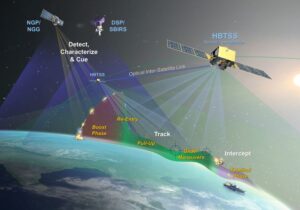
The House has defeated by voice vote a proposal to block funding for a new space-based missile defense system.
The proposed amendment to the fiscal year 2018 defense appropriations bill would have denied money needed to carry out a provision in the House-passed FY 2018 defense authorization bill that would direct the Missile Defense Agency to begin developing a space-based system for intercepting ballistic missiles.
Rep. Bill Foster (D-Ill.), who offered the amendment July 27, argued that a space-based system could cost hundreds of billions of dollars and still might not work.
The idea of a space-based system “has gone in and out of fashion for the last 30 years,” Foster said. “But every time this space-based concept has been looked at by technologically competent outside experts, it was deemed to be unworkable, impossibly expensive, vulnerable to countermeasures, easy for an opponent to destroy, easy to overwhelm with a small number of enemy missiles, or all of the above.”
But Rep. Trent Franks (R-Ariz.) countered that a space-based system represents the next logical step in U.S. missile defense development and would allow the United States to intercept hostile missiles early in their flight. He said opponents have overstated the expense of such a system and that a “regionally deployed system” would cost a relatively modest $20 billion over 30 years.
“We can build this system,” Franks insisted. “We will build it.”
Meanwhile, Rep. Scott Perry (R-Pa.) sought to offer an amendment that would deny funding needed to implement an authorization-bill provision that would set up a space corps in the Air Force Department (Defense Daily, July 25). But his amendment was not among those that the House Rules Committee cleared for floor consideration.
The House went on to pass its overall defense appropriations bill late July 27 as part of a “minibus” that includes several other appropriations bills. The vote was 235 to 192.
The Pentagon is “working options” for a potential supplemental spending request to fund the operation against Iran and replenish munitions used in the strike campaign, with a senior official noting […]

 By
By