
X-BAT Collab in Poland. Shield AI this month signed a five-year letter of intent with two Polish companies to partner on the design, production, delivery and sustainment of the X-BAT unmanned, artificial intelligence-piloted vertical take-off-and-landing fighter jet. Shield and PGZ Group will define how the Polish holding company will take part in design and production of X-BAT for customers in Poland and elsewhere. WZL-2, a Polish air force depot, is currently building a maintenance facility for the F110 engines that power X-BAT. “PGZ and WZL-2 already sustain Poland’s combat aircraft,” Ryan Tseng, Shield’s co-founder, chief strategy officer and president, said in a statement. “We want that industrial base building and supporting X-BAT for Poland and for export.”
Laser Collab. Two Australian-based companies, counter-drone system developer DroneShield, and AIM Defence, developer of a short-range laser system to defeat drones, have partnered. Through the collaboration, AIM’s Fractl high-power laser will become part of DroneShield’s layered counter-drone ecosystem, integrating into the DroneSentry platform, DroneShield said last week. DroneShield’s focus is on radio frequency-based drone detection and defeat systems. “The collaboration reinforces DroneShield’s long-term position as an open, software-led counter-drone platform provider, enabling customers to combine complementary sensors and effectors as threat environments and mission requirements evolve,” the company said.
Anduril, LeoLabs Collab. Anduril Industries and LeoLabs have demonstrated an integrated space domain awareness capability based on their respective commercial ground-based sensing platforms. The collaboration includes Anduril’s 400 telescopes deployed worldwide and LeoLabs’ global radar network, both of which are already used for sensing space objects and activities. The common operating picture created from both companies’ sensors leverages Anduril’s lattice command-and-control software, which performs sensor orchestration and mission planning and can enable tasks such as automated target tracking, the companies said last week.
Scarlet Dragon Ahead. The Army’s XVIII Airborne Corps will only do two Scarlet Dragon exercises in 2027 instead of three or four given the amount of preparation it takes for each event, which have grown in complexity the past five years, Col. Paul Staeheli, the Corps’ assistant chief of staff for operations, told reporters last week. “As we’ve evolved, now we’re looking at Corps-level warfighting systems and processes holistically to change the way that the Corps fights through people, process, and technology across the DOTMLPF spectrum,” he said. “What that necessitated was fewer Scarlet Dragons because you know, I talked about the six months of work that went into kind of the intellectual rigor that undergirds the exercise; we needed to do more background work and fundamental work on the complexities of the problems we’re trying to solve, and that drove us to do two Scarlet Dragons a year that are more focused and are more intense than four.”
German F-35As. Germany received the first of 35 planned F-35As for the country at a ceremony at Lockheed Martin’s plant in Fort Worth, Texas on Friday. German Minister of Defense Boris Pistorius said that the occasion marked a “new era for the German Air Force.” Germany expects full operational capability for its F-35As in 2029. This fall, Lockheed Martin is to deliver the first eight planes to Ebbing Air National Guard Base, Ark., for pilot training, and the first German F-35As are to arrive in country next year.
DAF Battle Network. The Department of the Air Force Battle Network has enabled a hybrid communications architecture, edge computing, air operations center upgrades, and the deployment of the Tactical Operations Center-Light (TOC-L) prototype, says Bryan Tipton, the department’s chief of architecture and systems engineering for command, control, communications, and battle management. The Air Force awarded Booz Allen Hamilton and its subcontractor, L3Harris Technologies, an up to five-year, $315 million contract for the TOC-L prototype in July last year. “We’re also overhauling beyond-line-of-sight and line-of-sight communications,” Tipton says. “Ground and air capabilities are now connecting to the Space Force’s Space Data Network. Looking forward, a good DAF Battle Network is one where integration becomes easy.” In May, Space Force awarded SpaceX a more than $2 billion contract for the Space Data Network Backbone.
Scorpion Medium. Global Military Products on Sept. 14 unveiled its new Scorpion Medium auto-lay 120mm mobile mortar system, developed in partnership with NTGS. GMP showcased the Scorpion Medium integrated on a GM Defense-built Infantry Squad Vehicle-Utility (ISV-U) at the Army Maneuver Warfighter Conference at Fort Benning, Georgia. “Built with mobility in mind, the Scorpion Medium 120mm mobile mortar system is light enough for the Army’s ISV-U and still carries 16 mortar rounds. The all-electric system has the same architecture and upgrade capability of the Scorpion Light 81mm mobile mortar system, which streamlines training and logistics and capitalizes on Army investments in modernizing mortar technology,” GMP said in a statement. “A single button controls the emplacement and displacement of the Scorpion Medium 120mm mobile mortar system, taking roughly 10 seconds. The autonomous targeting and auto-lay capabilities and single-operator functions remain the same. Its patented non-seating baseplate allows it to fire from almost any surface – even concrete or paved ground.” GMP noted the Scorpion Medium as 95 percent parts commonality with the Light variant, with the company having recently received a $12.9 million deal from the Army to deliver the latter system.
Abrams Engine Work. The Army on Sept. 14 awarded the National Advanced Mobility Consortium a deal worth up to $2.5 billion to support work aimed at enhancing the AGT 1500 gas turbine engine that powers the services’ M1 Abrams tank fleet. The new Other Transaction Authority Agreement begins with an initial obligation of $11.8 million in research and development funds. Work on the deal is expected to be completed by mid-March 2029, according to the Pentagon.
Spain FMS. The State Department said on Sept. 16 it has approved a potential $75 million foreign military sale with Spain for seven Sonar, Mine Hunting, AN/SQQ-32(V)3+ upgrade kits. Under the deal, Spain would also receive support equipment, spare parts and logistics and program support. Equipment and support would be provided by the Naval Surface Warfare Center, according to the department. “The proposed sale will improve Spain’s capability to meet current and future threats by providing an advanced and reliable sonar system, enhancing its ability to detect, classify, and neutralize underwater threats. This modernization prevents a capability gap in Spain’s Mine Countermeasure forces and ensures continued contribution to NATO maritime security operations,” the State Department said in a statement.
Austal Floating Dry Dock. Austal USA on Sept. 14 announced its new floating dry dock at its San Diego waterfront ship repair facility was fully certified and operational. The dry dock is meant to efficiently dock small surface combatants and other similarly sized ships and aims to boost its offerings at the West Coast facility. “Austal’s dry dock significantly expands our ability to offer the Navy and other customers a comprehensive, full-service repair facility in San Diego. This capability will be a tremendous asset to our customers, and we look forward to meeting the increasing demand for West Coast repair facilities with dry dock services,” Austal USA President Gene Miller said in a statement. The dry dock has a 9,000 light ton lifting capacity, is 531 feet long and 154 feet wide and its cranes have a combined lifting capacity of 16 metric tons. The partners helping perform the work included R.E. Staite Engineering Inc. for dredging, offshore, and inshore construction services, while Chula Vista Electric covered shore power installation. Austal USA also collaborated with PAE Industrial Operations Southwest Regional Maintenance Center (SWRMC) C980 and Heger Dry Dock to achieve the dry dock certification.
…Next LCS-24. Austal USA also announced it received a $10.8 million contract from the Navy to perform an emergent maintenance drydocking availability on the USS Oakland (LCS-24), which will use the newly certified dry dock in San Diego. The contract will have the company replace the ship’s main service diesel generator and Austal said performing it in a dry dock rather than at the pierside will improve efficiency and return it to the fleet faster in peak operating condition. “Now we have the capability to provide full-service dry-dock support for extended, year-long repairs. An additional dry dock in San Diego gives the Navy greater capacity to complete complex maintenance projects and emergent repairs in a dedicated dry-dock facility. This is exactly the type of work we built this facility for, and we look forward to demonstrating the exceptional quality and efficiency that our customers have come to expect from Austal USA,” Miller said in a statement.
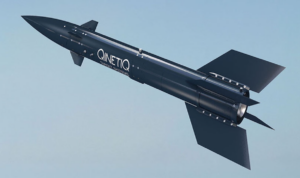
MDA Seeks Cheaper Targets. The Missile Defense Agency (MDA) added the topic “Innovative Technologies and Applications for Targets” in an amendment to its May 2025 five-year Advanced Capability Concepts solicitation that gives industry the opportunity to present DoD with new innovative ideas for missile defense. The new topic section said advancements in target areas they would consider include materials research and evaluation, conceptual designs from component level to subsystem level, prototype development with ground and flight testing, and modeling, simulation and analyses needed to demonstrate the viability of concepts. MDA said the advancements are especially related to target performance, performance predictions, acquisition cost and acquisition lead time. “These advancements may apply to payloads, associated objects, launch vehicles, or launch platforms,” the amendment said. The update also added a topic of “radiation effects on electronic devices and systems,” focused on new methodologies and technologies for characterizing complex components across a full spectrum of radiation environments. That topic is open to using diagnostic techniques including pulsed lasers, applying Artificial Intelligence and Machine Learning (AI/ML) to optimize test execution and automate data analysis, developing validated and physics-based models and digital twins to predict system performance, and culminating in prototype demonstrations within relevant space or man-made radiation environments to validate the new capabilities.
Saildrone Mapping. Saildrone on Sept. 15 announced it received a $10 million task order from the Navy’s Naval Oceanographic Office (NAVOCEANO) to perform bathymetric survey operations in international waters in the Atlantic Ocean, consisting of ocean floor mapping. The surveying work is set to start this year and last through most of 2027 via 65-foot Saildrone Surveyor unmanned surface vehicles. The company noted that since under 29 percent of the oceans are mapped to modern standards this kind of seafloor imagery is a priority, supporting the safe navigation of manned vessels, operational security in contested environments, helping safeguard critical infrastructure and expediting search-and-rescue efforts. Saildrone’s Kitch Kennedy said traditional survey deployments are long with unpredictable conditions, but that this is “precisely the type of mission that Saildrone’s autonomous technology was designed to execute.” Saildrone has been conducting bathymetric surveys for U.S. government customers since 2019. The company said beyond bathymetry the Surveyor measures ocean currents down to 1,000 meters.
DDG-134. General Dynamics Bath Iron Works laid the keel for the future USS John E. Kilmer (DDG-134) Flight III Arleigh Burke-class destroyer during a shipyard ceremony on Sept. 10. Keel laying represents the joining together of a ship’s first major modular components. The ship is named for Hospital Corpsman John Edward Kilmer, who posthumously received the Medal of Honor for his actions during the Korean War.
Freedom Edge. The U.S., Japan and South Korea concluded the five-day Freedom Edge 26 exercise on Sept. 11. The event focused on maritime, air, medical, and cyber forces from three participant countries conducting integrated training aimed at improving coordination, sharpening interoperability and strengthening trilateral defensive readiness. The exercise took place in international waters and airspace south and east of South Korea as well as at military posts in Japan. Freedom Edge originates as a maritime-focused event that now includes air, missile defense, cyber and medical capabilities. U.S. Pacific Command said during the exercise the forces trained in a series of events that especially tested how quickly and effectively the three countries could communicate and operate together, including having ships operate in formation and practicing replenishment-at-sea while maritime and aviation crews rehearsed conducting multilateral medical evacuation and search and rescue operations.
North Carolina Repair. Officials from the Defense Department, Department of the Navy and North Carolina state government cut the ribbon on a new repair complex at the North Carolina Global TransPark on Sept. 17, aiming to significantly boost Fleet Readiness Center East’s (FRCE) ability to deliver aircraft to warfighters. The new facility expands FRCE’s maintenance, repair and overhaul (MRO) capabilities for the Navy C/KC-130T Hercules, Marine Corps C/KC-130J Super Hercules and Air Force HH-60W Jolly Green II aircraft. This is about a new 75 acre purpose-built facility that covers more than 700,000 square feet and has direct taxiway access to the North Carolina Global TransPark’s 11,500-foot runway. The Navy said this streamlines ground logistics and will enable aircraft to more seamlessly transition from touchdown to active maintenance. This is the first public-state partnership of its kind between the Pentagon and the state of North Carolina, growing out of a 2023 state law that allocated $350 million to prepare the Global TransPark site for FRCE’s new facility. The Navy will manage and operate the facility under a lease executed by Naval Facilities Engineering Systems Command. The Navy said it expects the operational will add about 400 high-skilled positions to the region, including sheet metal artisans, aircraft mechanics, avionics technicians, quality assurance specialists, and aerospace engineers.