More Border Security Technology. Sen. Tom Carper (D-Del.), fresh of a trip earlier this month to the southern border to examine border security and immigration issues, tells reporters that one of his “pleasant” takeaways is that “I’m not convinced that we need a lot more boots on the ground. What we do need is what I describe as force multipliers,” which are investments in technology. He says in some cases Customs and Border Protection is still using officers with binoculars flying in aircraft rather than advanced sensors for surveillance. Carper said that “Technology is the key to securing the border” was a quote he heard several times during his visit.
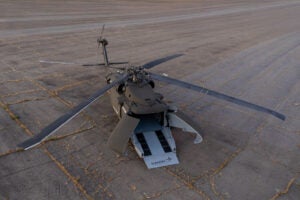
Army Lakota Deal. The Army awards Airbus Defense and Space a $221 million contract modification to procure 41 72A Lakota helicopters and 41 Airborne Radio Communications 231 Radios, according to a DoD statement. The Army obligates FY ’15 funds in the contract award. Estimated completion date is July 31, 2017. Airbus Group spokesman James Darcy says Feb. 13 in an email the Army is procuring these Lakotas under an existing contract completed in 2006. The contract modification, he says, brings the total number of Lakota helicopters ordered on that 2006 contract to 411, with 400 to the Army or National Guard and five to the U.S. Naval Test Pilot School. Six have been for Thailand under the Foreign Military Sales (FMS) program, Darcy says. The 41 Lakotas, he says, are slated for delivery between August 2016 and July 2017.
CGI Federal Bid Protest. The Government Accountability Office (GAO) denies CGI Federal’s protest of an Army task order award to CACI Technologies for information technology (IT) services. In a Jan. 28 decision, GAO says CGI alleges that the Army unreasonably evaluated CACI’s proposal with regard to the solicitation’s place of performance and security requirements. 
SpaceX’s Dragon. Space Exploration Technology Corp’s (SpaceX) Dragon cargo spacecraft splashes into the Pacific Ocean around 7:44 p.m. EST Feb. 10 with nearly 3,700 pounds of cargo, according to a NASA statement. Among the cargo is printed parts and hardware from the first technology demonstration of 3-D printing in space. The 3-D printer demonstration uses relatively low-temperature plastic feedstock on the International Space Station (ISS). The test phase ends with a printed ratchet wrench made with a design file transmitted from earth to the printer. SpaceX’s next mission is a Eutelsat launch on Feb. 27 from Cape Canaveral Air Force Station, Fla.
Lockheed Legion Pod. Lockheed Martin introduces Legion Pod: a multi-function sensor system that supports collaborative targeting operations among multiple aircraft in radar-denied environments. The company says combining its IRST21 infrared (IR) sensor with advanced networking and data processing technology, Legion Pod provides high-fidelity detection and tracking of airborne targets. Legion Pod also accommodates additional sensors within its current structure to address diverse mission requirements across a variety of platforms. Legion Pod is also available to support the current F-15C IR search and track program of record, which requires long-rang detection and tracking in a wide field of view.
BAE F-16 Award. The Air Force awards BAE Systems a $221 million indefinite delivery/indefinite quantity (ID/IQ) contract for F-16 support equipment and related services, according to a DoD statement. Work is expected to be completed by Feb. 4, 2020. This award is the result of a sole-source acquisition and is 100 percent FMS to multiple countries including Morocco, Egypt, Oman, Pakistan, Indonesia and Portugal.
Testing MUOS. General Dynamics has added an “over the air” testing capability at its Arizona laboratory that allows companies to determine how well their products will be able to interact with a new constellation of Navy satellites known as the Mobile User Objective System (MUOS). General Dynamics says this week that the lab in Scottsdale is certified by the Navy and allows companies to understand how well their equipment will work with MUOS. MUOS is designed to allow warfighters to communicate in real time in beyond-line-of-sight scenarios. The third of the MUOS satellites was launched in January. MUOS will supposedly offer 10 times greater communications capacity than the constellation it is replacing.
International Predator. General Atomics recently conducted a long-endurance flight of its Predator XP unmanned aerial vehicle, which it is hoping to market internationally in accordance with U.S. government export rules for defense products. The 40-hour flight of the XP took place over Arizona earlier this month. It is a derivative of the Predator family of UAVs widely used by the Air Force and CIA. A key the XP lacks, which is why it can be sold to other countries, are hard points on the wings that would enable weaponization.
Keys to Fighting ‘Islamist’ Terror. House Homeland Security Committee Chairman Michael McCaul (R-Texas) on Thursday addressed the American Enterprise Institute, delivering a “seven-point plan for victory in the war against Islamist terror.” McCaul and other Republicans in Congress have been critical of President Barack Obama for couching the terrorist threat as coming from violent extremists as opposed to radical Islamists. McCaul’s plan calls for labeling the threat “violent Islamist extremism,” taking the fight to the enemy, targeting the enemies’ tools such as human capital flows, denying terrorists safe havens by confronting threats early, defending the homeland against domestic radicalization, countering the “insidious ideology” at the core of the Islamist threat, and “promoting liberty and human dignity as the great alternatives to repression and terror.”