By Michael Chappell, Defense Opinion Writer.
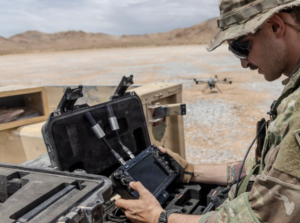
Military personnel frequently operate in austere environments. They face unreliable communications, limited bandwidth, and unexpected disruptions to connectivity. The situation is so common that it has its own acronym: DDIL, which stands for denied, degraded, intermittent and low-bandwidth conditions.
Today, these conditions affect not only foreign deployments but also installations in the United States, where aging infrastructure, disconnected systems and inconsistent network performance can slow information sharing and create operational challenges.
Adding to the complexity is the fact that military communication systems are changing fast. The Department of Defense is moving away from traditional, isolated satellite networks to new generations of satellites, commercial communications providers and multiple pathways for transmitting information.
Whether troops are forward-deployed or at home, their critical processes must remain reliable even when connectivity is unstable.
Intermittent connectivity
DDIL conditions are often a fact of life on the front lines of battle, but they can also impact military bases, logistics hubs and administrative environments that rely on aging facilities and legacy infrastructure.
When connectivity fails, personnel fall back on offline workflows including spreadsheets, manual data entry and workarounds to bridge gaps between systems. These manual fixes slow operations, increase the risk of errors and make it harder to maintain an accurate picture of ongoing activities.
Over time, that fragmentation weakens every level. Personnel have to cobble information together across different systems and locations. Military analysts are forced to act on partial or outdated information. Decision-making slows, response times increase and missions become harder to execute efficiently. Recognizing DDIL as military–wide condition, not solely a tactical one, is a critical step toward rectifying these challenges.
Resilient communications
Once teams understand how disrupted, degraded, intermittent and limited connectivity can complicate the ability to coordinate processes across military and defense information systems, they can better plan for resiliency. Effective process orchestration systems are able to anticipate connectivity challenges and build contingencies for coordinating information and actions across people, applications and organizations.
Mission processes must be reliable in any context. At the tactical edge, network-independent systems can work independently despite disruptions and delays. Within the United States, organizations can minimize disruptions through resilient infrastructure, backup capabilities and modernized networks.
A recipe for success
To design and build resilient systems, agencies should follow four key principles:
- Local autonomy with enterprise coordination – Systems must support localized execution of maintenance, resupply or personnel movement without relying on constant connectivity. When networks fail, local units should be able to adapt workflows to continue the mission while still following enterprise-wide standards for governance and data management. When the network returns, these local workflows must automatically map back to the connected system.
- Edge computing for operational resilience – By running lightweight processing, analytics and local AI models close to the data source on vehicle servers or ruggedized field devices, units can make tactical decisions without transmitting large datasets through constrained networks.
- Secure, role-based policies – Security is paramount, even when systems are offline. Platforms must enforce identity, access and encryption policies regardless of connectivity. Role-based security ensures that only authorized users can execute or modify local transactions until they are revalidated through the central authority.
- Synchronization protocols – Rather than requiring a constant connection, resilient systems save information locally and automatically synchronize updates when bandwidth becomes available.
A modular blueprint
In addition to these principles, the military’s Modular Open Systems Approach encourages the use of systems that can be upgraded, replaced and connected easily over time. This approach means organizations can adopt new technologies faster, avoid dependence on a single vendor and keep operations running as mission requirements evolve.
Another advantage of modular systems is that they can be isolated when necessary. If a network is compromised or a cyber incident occurs, affected systems can be quarantined from the broader environment without interrupting critical operations. For defense organizations facing persistent cyber threats, the ability to contain problems while sustaining essential functions is a game changer.
The combination of advanced process orchestration, local computing capabilities and resilient communications networks helps ensure that missions can continue even when connectivity is disrupted. Defense organizations can maintain operational effectiveness and support better decision-making when it matters most.
Michael Chappell is chief technology officer for the defense division of Appian, which is based in McLean, Virginia.

Are you a Defense Daily reader with a thought-provoking opinion on a defense issue? We want to hear from you.
- We welcome submissions of opinion articles on national security, defense spending, weapons systems and related areas.
- We welcome submissions from lawmakers, administration officials, industry representatives, military officials, academics, think tank experts, congressional candidates, international experts and others on issues important to the national defense community.
- We welcome a diverse range of opinions all along the political spectrum.
- Email: editor@DefenseOpinion.com