Navy PAE Munitions. The Navy on June 25 announced it appointed Van Hendrey to lead the Navy’s Portfolio Acquisition Executive office for Munitions. The Navy previously established PAE Munitions in May and appointed, as its interim head, Paul Mann, the chief technical officer for the Golden Dome Strategic Alliance at AE Industrial Partners. Hendrey was appointed to the Senior Executive Service and began serving as the executive director of the Program Executive Office for Integrated Warfare Systems (PEO IWS) in September 2023. She has served as the director of the Office of the Chief of Naval Operations’ Digital Warfare Office (OPNAV N9DW) since August 2025.
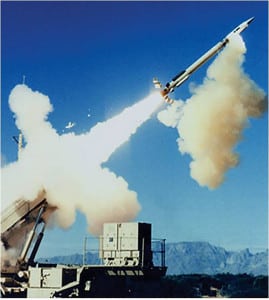
PAC-3. L3Harris Technologies on June 24 broke ground on two more plants at its Camden, Ark. Advanced Propulsion Facilities (AAPF) campus that aim to support increased production of the Army’s Patriot Advanced Capability (PAC)-3 missile systems. L3Harris CEO and chairman Christopher Kubasik in a statement noted the company self-funded the new facilities in order to move as fast as the program mission requires. “This expansion boosts our ability to deliver PAC‑3 propulsion faster and at greater quantities, while strengthening military readiness and providing proven capability our warfighters depend on,” Kubasik said in a statement. L3Harris produces the PAC-3 Missile Segment Enhancement (MSE) two-pulse solid rocket motor, Attitude Control Motors, and the Lethality Enhancer. The two new propulsion facilities will include a 75,000 square foot cast, cure and final assembly facility and a 70,000 square foot case preparation facility. The company said they will incorporate advanced manufacturing capabilities like “automated X-ray inspection systems leveraging AI for rapid defect detection, fully automated casting, and expanded curing capacity designed to accelerate production throughput.”
New USAF Long Range Weapon. The Air Force Life Cycle Management Center’s (AFLCMC) armament directorate plans to hold a classified industry day at Eglin AFB, Fla. on August 25-26 for a new, proposed missile–the Air Force Long Range Weapon (AFLRW). The missile is to have a minimum 1,000 nautical mile range and is “aimed at addressing the next generation of air-launched standoff weapon variants in line with [Pentagon] priorities,” said AFLCMC, adding that it “may select multiple vendors for both the air-to-air (A/A) and air-to-surface (A/S) variants with a focus on A/A solutions for initial operational capability…AFLCMC is seeking the next generation of Air-Launched Long-Range Weapon variants that expand the United States’ ability to hit priority air, land, and sea targets far and fast!”
Ethereal Forge. U.S. Strategic Command’s (STRATCOM) Joint Electromagnetic Spectrum Operations Center (JEC) is launching the Ethereal Forge initiative to accelerate the fielding of advanced electromagnetic warfare (EW) systems through rapid testing and evaluation of “software-centric systems to meet operational requirements,” STRATCOM said. “For Ethereal Forge, the JEC is seeking advanced, non-fielded, MOSA [Modular Open System Approach]-aligned EW capabilities that meet specific selection criteria.”
Quantum Tech. The Pentagon’s Defense Innovation Unit on June 23 announced a new multi-phase effort to transition mature quantum sensing and timing technologies toward fielding, with plans to invest up to $200 million over the next year into the project. The initiative will focus on developing high-fidelity quantum electric field sensors, magnetometers, gravimeters and tactical clocks that are “small enough for field deployment yet sensitive enough to unlock new tiers of situational awareness, and concepts of operation for aerial, surface and subsurface missions,” the Pentagon said in a statement. “A new era of battlefield awareness is underway, and America stands at the cusp of a quantum revolution. This pivot represents a fundamental shift away from the limitations of classical Intelligence, Surveillance and Reconnaissance sensors. By harnessing the unique properties of quantum physics, this project is set to shatter the longstanding ‘sensitivity-SWaP’ (Size, Weight and Power) trade-off, unlocking unprecedented situational awareness for aerial, surface and subsurface missions in electromagnetically contested environments,” the Pentagon added.
NSWC Lab. Naval Surface Warfare Center Indian Head Division (NSWC IHD) hosted a ribbon-cutting ceremony to mark the opening of its new Advanced Energetic Research Laboratory Complex in Indian Head, Ld. on June 24. The facility aims to enable the “development of novel materials and formulations to enhance range, speed, lethality and signature management of current and emerging joint weapon systems,” the Navy said in a statement. During his opening remarks, NSWC IHD Commanding Officer Capt. Steve Duba said the building is the culmination of over a decade of planning and will focus on the development of novel materials and formulations to give the Navy a capability and capacity it cannot easily reproduce anywhere else. The new 21,000-square-foot laboratory will specifically allow NSWC IHD scientists and engineers to expedite molecular-level research formulation and small-scale mixing of advanced explosives and propellants.
Military Labs Review. The Pentagon said on June 24 that a review of its military laboratories has led to recommendation that the department must ask Congress to establish a dedicated laboratory military construction appropriation specifically for research, development, test and evaluation infrastructure. “On one hand, our findings are reassuring, confirming that the research enterprise is fundamentally sound, with an unmatched concentration of world-class scientists, engineers and researchers who continue to drive capabilities to the tactical edge,” Joseph Jewell, assistant secretary of defense for science and technology, said in a statement. “But the findings also show the increasing drag that aging, costly infrastructure imposes on labs and test centers striving to tackle changing missions and pursue emerging technologies. We have researchers pushing the boundaries of 21st century technologies in facilities built when the cathode-ray tube and jet propulsion were the state of the art.”
Critical Minerals. REAlloys said on June 25 it has entered into exclusive contract negotiations with the Army on signing an enhanced use lease to design, finance, build and operate critical-mineral processing facilities at the Tooele Army Depot located in Tooele, Utah. Under the expected arrangement and award through the Army’s Strategic Capital Initiatives, REalloys said it would specifically establish domestic heavy rare earth processing capacity for heavy rare earth elements, to include refining dysprosium and terbium. Development would be slated to likely begin in 2027, with an aim for initial operating capability by 2028. “We believe selection by the U.S. Army for a processing facility on American soil is a powerful validation of REalloys’ mine-to-magnet strategy and of the urgent national need for domestic heavy rare earth capability. Dysprosium and terbium are the heart of the high-temperature magnets that keep our most advanced defense systems running, and today, almost all of that processing happens overseas,” Leonard Sternheim, CEO of REalloys, said in a statement.
More Transmissions. RENK America said on June 26 it has been awarded a five-year follow-on production contract worth up to $691 million to continue supplying HMPT 800 transmissions for the Army’s medium tracked vehicle fleet, to include Bradley fighting vehicles and the Armored Multi-Purpose Vehicle. “Readiness begins with a resilient and responsive industrial base,” Corey Johnson, CEO of RENK America, said in a statement. “This award reflects the trust placed in our team and our proven ability to deliver the HMPT transmissions and support our customers need to sustain the fleet. Every transmission we deliver contributes to the dependability and availability of the platforms that our Warfighters depend on around the world.”
ULTV Order. Polaris said on June 24 it has received the first delivery on its new Ultra-Light Tactical Vehicle (ULTV) contract with the Marine Corps, with the deal covering more than 70 MRZR Alpha vehicles and accessory kits. The Marine Corps in May awarded Polaris the follow-on ULTV contract worth up to $98.3 million, while the value of the initial order has not yet been disclosed. Polaris noted that “more than half the vehicles ordered were the new 5kW export power variant and the remaining were the standard, 1kW version.” The accessories covered by order include a Roof Kit, Road March Kit, Modular Cargo Systems, Fire Extinguisher and Towbar Mount, according to the company.
P-8A Training. The Naval Air Warfare Center Training Systems Division awarded Boeing an $880 million contract on June 18 that covers procurement, modernization, and sustainment of P-8A Poseidon aircrew and maintenance training systems. This also includes the development, integration, testing, delivery, and installation of new training devices and upgrades to existing trainers, as well as associated hardware, software, and support services related to Navy fleet readiness and evolving aircraft configurations, mission systems, and training requirements. Most of the work will occur in St. Louis, Mo. and Jacksonville, Fla. and is expected to be finished by June 2031. Funds were not obligated at award time, but will be obligated on individual orders as they are issued.
Carrier Elevators. Naval Sea Systems Command on June 15 awarded HII a five-year $418 million indefinite delivery/indefinite quantity (IDIQ) contract to provide elevator support unit maintenance and repair for U.S. Navy aircraft carriers and amphibious ships. HII is the sole prime shipbuilder for both types of ships. The contract notice said work will be performed inside and outside the continental U.S. and in forward-deployed locations and is expected to be finished by June 2031. No funds were obligated at the time, but they will be obligated on individual orders as issued under the parent contract. The company said under this award it will conduct sailor training to promote self-sufficiency at sea and provide rapid response fly-away teams for global deployments to make sure complex maintenance and repairs are completed effectively.
SPARC AI. Canadian firm SPARC AI on June 22 announced it was registered by the Australian government as an authorized user under the AUKUS agreement’s license-free environment, allowing it to move eligible defense technology to U.S. and UK partners without a separate export permit. The company noted this designation is especially relevant to its work with U.S.-built drone platforms, giving it a more direct route to embed its GPS-denied geolocation and target acquisition software into approved U.S. drone manufacturers and integrators.
Aussie Aircraft Training FMS. The State Department approved a potential $250 million Foreign Military Sale (FMS) of F/A-18F Super Hornet and EA-18G Growler aircrew and maintenance training as well as related technical and logistics support. This aims to supplement an original $18 million FMS case that was amended and raised to $67 million total in 2015 and then amended again with another $72 million for $142 million total in 2018. The State Department said the previous amendment caused the case to exceed the congressional notification threshold but a technical error preventing that was not detected until the latest amendment was requested.
Valiant Shield. U.S. Pacific Command started Exercise Valiant Shield 2026 (VS26) with allies and partners on June 22 in the Indo-Pacific region, with events scheduled to occur through the waters around the Commonwealth of the Northern Mariana Islands, Guam, Japan, and at sea around the Mariana Islands Range Complex. This multinational biennial field training exercise started as a unilateral U.S. event but has gradually changed into working with allies and focuses on “integrating interoperability training in a multi-domain environment,” the Pacific Fleet said in a statement. This is the 11th exercise and second time that the Japan Self-Defense Forces are being heavily integrated into planning and execution. VS26 also features U.S. Space Command and Transportation Command, preparing joint and combined forces to quickly respond to crises and contingencies from humanitarian assistance to armed conflict. U.S. Navy participants include the USS George Washington (CVN-73) aircraft carrier, Ticonderoga-class guided-missile cruiser USS Robert Smalls (CG-62), Arleigh Burke-class guided-missile destroyers USS Shoup (DDG-86) and Benfold (DDG-65), and Virginia-class fast-attack submarine USS Minnesota (SSN-783). Japan Maritime Self-Defense Force participants include JS Kaga (DDH-184), JS Fuyuzuki (DD-118), and JS Jingei (SS-515).
OICC PSNS. This summer Naval Facilities Engineering Systems Command (NAVFAC) will officially establish the Officer in Charge of Construction Puget Sound Naval Shipyard (OICC PSNS) during a ceremony on Aug. 28 at the Naval Undersea Warfare Museum in Keyport, Wash. During the event, NAVFAC Pacific Commander Rear Adm. Omarr Tobias will designate Capt. Troy Brown as OICC PSNS commanding officer. In this position, Brown will oversee contracting and construction for the proposed multi-mission dry dock at PSNS & Intermediate Maintenance Facility (IMF) at Naval Base Kitsap-Bremerton. The dry dock itself is a proposed multi-billion dollar multi-decade series of projects meant to revitalize PSNS & IMF, giving it the capacity to perform depot-level maintenance on a Gerald R. Ford-class aircraft carrier. The Environmental Impact Statement (EIS) process is underway, and the Navy said the EIS and Record of Decision are due later this year.
Lockheed/NGC2. After the Army’s selection of Anduril to lead the common data baseline for its Next-Generation Command and Control (NGC2) effort, Lockheed Martin has confirmed it plans to continue pursuing efforts to support the new architecture as the program moves beyond the current prototyping effort. Over the last year, an Anduril-led team has worked with the Army’s 4th Infantry Division on NGC2 prototyping while a Lockheed Martin team has worked on efforts to build out the architecture with the 25th Infantry Division. “The development of an integrated command and control ecosystem in close collaboration with industry partners – which has been proven to connect soldiers across the battlefield in contested and denied zones – remains our top focus. We look forward to continuing to showcase that with the remaining three Lightning Surge exercises this year,” Lockheed Martin said in a statement. Lockheed Martin added its current focus is on “implementing a full stack architecture at 25ID” while it will “continue to evaluate other opportunities within the NGC2 ecosystem.”