
OPC Icarus. Austal USA on Aug. 6 marked the start of production on the future Coast Guard Offshore Patrol Cutter Icarus at its Mobile, Ala., facility in a ceremony with the Coast Guard. Icarus will be the second of up to 11 cutters Austal USA will deliver to the service via the OPC Stage 2 contract. This kind of OPC is meant to replace the aging 270- and 210-foot medium endurance cutters and be a capability bridge between the larger National Security Cutter that patrols open ocean and the Fast response Cutter patrolling closer to shore.
Bollinger PSC. The Coast Guard recently announced it formalized an agreement with Bollinger Mississippi Shipbuilding (BMS) to build a production integration facility and land-based test facility at its Pascagoula, Miss., shipyard to support the Polar Security Cutter (PSC) Program. The agreement occurred on July 23 and the Coast Guard said it is part of an effort to further foster domestic shipbuilding industry growth and “maintain momentum for acquisition priorities.” It added the construction of the facilities is a “significant capital investment partnership” between the Coast Guard and BMS that aims to help streamline production and integration of PSC mechanical and communication systems for more simplified installation into the vessels. This comes after the Coast Guard modified the original March 2025 construction contract for the first PSC to provide funding for integration and test facilities through capital expenditure incentives.
Aussie Japanese Frigate. The Australian government selected an upgraded Japanese Mitsubishi Heavy Industries’ Mogami-class frigate as a preferred platform for the Royal Australian Navy’s future fleet of general purpose frigates. The government said this came after a “rigorous and competitive tender process,” but they assess Mitsubishi as best able to “quickly meet the capability requirements and strategic needs” of the military. The Mogami-class has a range of 10,000 nautical miles, a 32 cell Vertical launch System and also fields surface-to-air and anti-ship missiles. The new frigates will replace the Anzac-class frigates and be equipped for undersea warfare and air defense capabilities. Pat Conroy, Minister for Defense Industry, underscored the new ships will improve the capability of their general purpose frigates from firing up to 32 air defense missiles to 128 missiles. The announcement also acknowledged the losing “competitive, high-quality proposal” submitted by Germany’s Thyssenkrupp Marine Systems.
…Next Steps. The Australian government said the next step in the process is to enter into early binding commercial contracts with Mitsubishi and the Japanese government in 2026. It expects the first three frigates will be built in Japan, with the first set to be delivered in 2029 and operational in 2030. Following those three vessels, consolidation of the Henderson precinct in Western Australia means the remainder of the fleet will be built there as the government works to increase naval shipbuilding alongside the AUKUS submarine plans.
Organic Growth. Kratos Defense reported second quarter revenue of more than $351 million, up from $300 million in the second quarter of last year. “Virtually every Kratos business unit is forecasting significant future organic growth, including our hypersonic system franchise, small jet engines for drones, missiles and loitering munitions, our Israeli based microwave electronics business, and our military grade hardware business supporting missile, radar, hypersonic, counter UAS and strategic weapon systems,” said Kratos CEO Eric DeMarco. “We are also expecting increased EBITDA margins beginning in 2026 and continuing thereafter, as new higher margin programs begin, certain lower margin contracts are renegotiated at renewal, and as we reduce costs in certain areas.”
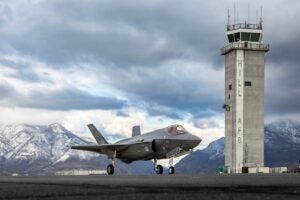
Bamboo Eagle. Air Combat Command has kicked off the Bamboo Eagle 25-3 exercise at Nellis AFB, Nev.’s Air Warfare Center. The exercise is the final stage of the Air Force’s Department-Level Exercise (DLE), which began last month. DLE is to be a new way to test the conduct of allied operations “in a contested, dynamic environment.” Bamboo Eagle is to feature 100 aircraft flying from more than 15 sites.
Agile Satellites. The Space Rapid Capabilities Office at Kirtland AFB, N.M., said that it hosted 13 companies–10 satellite builders and three system integrators–at an Agile Satellite Industry Engagement Day on July 30 to discuss future near-Geostationary Earth Orbit satellite, software and ground programs. The discussion drew upon lessons learned from the Space RCO’s Rapid Resilient Command and Control program to field software for cloud-based satellite operations that will allow quick repositioning of satellites. A solicitation related to the recent industry day is expected by the end of the year.
Ukraine Aid. Sweden, Denmark and Norway this week announced plans to buy $500 million in U.S. weapons to provide to Ukraine, including air defense systems, Patriot interceptors, anti-tank systems, ammunition and spare parts. The security assistance update follows President Trump’s recent announcement detailing a new plan for NATO countries to purchase “billions of dollars” in U.S. military equipment via the foreign military sales process that will be provided to assist Ukraine. “It is a strength that Sweden, together with Norway and Denmark, could quickly come together and co-finance a support package to Ukraine. The U.S. can assist with unique defense materiel for which Ukraine has a major need,” said Swedish Minister for Energy, Business and Industry Ebba Busch.
Ukraine FMS. The State Department on Aug. 5 approved two potential foreign military sales with Ukraine, a $104 million deal covering sustainment support for BAE Systems-built M777 howitzers and $99.5 million for transportation and consolidation services. “The proposed sale will improve Ukraine’s ability to meet current and future threats by further equipping it to conduct self-defense and regional security missions with a more robust local sustainment capability,” the Defense Security Cooperation Agency (DSCA) said of the M777 support deal.
Australia FMS. The State Department on Aug. 6 then approved a potential FMS case with Australia covering upgrades and maintenance support for its L3Harris-manufactured MC-55A aircraft fleet. The deal includes major and minor modifications, spare parts and repair support. “The proposed sale will improve Australia’s capability to maintain its fleet of MC-55A aircraft that enhances its ability to conduct effective air operations and supports U.S. operations in the region,” the DSCA said.
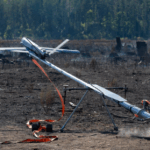
Altius/Taiwan. Anduril on Aug. 5 announced it has delivered the first tranche of its Altius loitering munitions to Taiwan this week, which coincided with a visit by Palmer Luckey, the company’s founder, to the island. Anduril said it built the Altius systems “at financial risk, enabling initial delivery within six months of contract signature.” “Anduril is committed to working with the U.S. government and Taiwan to continue delivering technology in operationally relevant timelines while laying the foundation for sustained engineering and production in Taiwan in the years ahead,” the company said in a statement. “As threats to Taiwan grow, so do the risks to regional security and global prosperity. Ensuring Taiwan can defend itself with asymmetric, combat-effective capabilities is critical to American interests.”
Anduril Office/Taiwan. During Luckey’s visit, Anduril also announced the opening of an office in Taiwan to support engineering, supply chain and program execution work as well as expanded partnerships with the National Chung-Shan Institute of Science and Technology (NCSIST) and Taiwanese commercial partners. “Anduril is here to stay in Taiwan, and we’re building a long-term physical presence to secure that,” Luckey said. “This office will allow us to work more closely with local partners and tap into Taiwan’s extraordinary engineering talent and industrial base. The stakes here are high, and we want to be part of the solution.” The work with NCSIST will focus on AI-enabled command and control and unmanned systems, according to Anduril.
MQ-25 Hangar. Members of the Airborne Command & Control and Logistics Wing (ACCLOGWING), Naval Air Systems Command, Naval Base Ventura County (NBVC), Naval Facilities Engineering Systems Command (NAVFAC) and civilian partners broke ground on a $149 million MQ-25 Stingray hangar construction project at Point Mugu on July 29. “We’re not simply constructing a building, we are building the future of Naval Aviation. NBVC is proud to be selected to host this platform that is leading the way in the transition from manned to unmanned carrier-based aviation,” Capt. Daniel Brown, commanding officer of NBVC, said in a statement. While the MQ-25 will be the first carrier-based unmanned aircraft that will also provide aerial refueling, carrier-based aircraft have land bases when not deployed on the carriers. Brown noted hosting the MQ-25 will lead to more civilian and military jobs at the base, including 650 uniformed service members. The Navy noted this project includes a hangar facility, maintenance shops, administration support spaces, aircraft parking apron, training areas, and communications shelter. It is expected to be ready by fall 2027.
Hornets And Growlers Hours. Naval Air Systems Command on Aug. 1 announced the Navy’s F/A-18 Hornet and EA-18G Growler fleet surpassed 12 million flight hours, the equivalent of 500,000 days or 1,370 years of nonstop flight. The F/A-18 Hornet was first introduced in the 1980s and it has been succeeded by the F/A-18E/F/ Super Hornet. The Growler is the electronic warfare version. This coincides with the 30th anniversary of the Super Hornet’s first flight this upcoming November and the Navy and Marine Corps’ 250th anniversary.