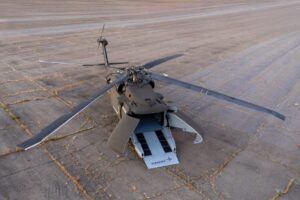

HAC-D Approves. The House Appropriations Defense Subcommittee approved its $1.07 trillion fiscal year 2027 defense spending bill on June 11 during a closed door markup. The legislation will next be considered by the full committee on June 24. The bill, which aligns with the Trump administration’s requested discretionary spending level, reverses Army aviation cuts, restores funding for the Air Force’s E-7 Wedgetail program and supports a range of multi-year munitions procurements.
Tanker Availability. A new Government Accountability Office (GAO) report is recommending that the Air Force assess and mitigate sustainment risks for the service’s KC-135 and KC-46 tankers by Boeing. The aircraft have not met availability and mission capability rate standards between fiscal 2019 and fiscal 2025, the agency said. Last month, GAO said that it “issued a sensitive report with data on availability and mission capable rates” for the tankers, but the Department of Defense “deemed that information to be Controlled Unclassified Information (CUI), which must be protected from public release.”
…RVS 2.0 Testing. Boeing said last week that it has finished the first phase of flight testing for the KC-46’s Remote Vision System (RVS) 2.0. “Following lab development, this flight testing demonstrated the system’s maturity and validated the ground-breaking optical performance of the ruggedized cameras, as well as control and processing hardware,” according to the company. The Air Force said last month that it had reached agreement with Boeing on a plan to boost KC-46 availability 20 percent by 2030, including accelerating RVS 2.0 retrofits to early 2028. “Boeing team members have worked side-by-side Air Force boom operators and engineers throughout the design and development of RVS 2.0,” the company said. “RVS 2.0 features a 4K Ultra HD 3D immersive visual display designed to perform in a wide range of operational environments. This gives airmen a more realistic view of their surroundings while performing mission-critical aerial refueling operations.” The Air Force and Boeing agreed on the RVS 2.0 redesign of the original RVS on April 2, 2020, to fix faulty RVS depth perception, and the Air Force had expected to field RVS 2.0 by October last year.
No Bid. In March, the U.S. Navy released its solicitation for a new Undergraduate Jet Training System (UJTS) to replace the 1980s-era T-45C Goshawk by Boeing and BAE Systems, but Boeing said on Friday that it would not offer its T-7A Red Hawk, which is in production as a U.S. Air Force trainer, for the Navy competition. “After careful evaluation, we have determined the T-7A does not meet the U.S. Navy’s Undergraduate Jet Training System requirements,” Boeing said. “We have therefore informed the Navy that we will not bid on the current RFP.” The Navy has said it will award a UJTS contract early next year.
Capital Allocation. A defense industry group is opposing provisions in the SASC’s fiscal 2027 defense bill on “right to repair” and limits on company share buybacks. “Restrictions on capital allocation for both defense and non-defense companies doing business with the Pentagon and sweeping mandates to provide access to sensitive technical data will disincentivize the very investment and innovation the industrial base depends on,” says Eric Fanning, the president of the Aerospace Industries Association (AIA). “Together, these provisions could undermine private investment, slow the pace of innovation, and discourage participation in the defense market by the companies policymakers are trying to attract, like non-traditional and commercial firms and suppliers.”
T-AO 210. The Navy on June 9 accepted delivery of the sixth ship in the John Lewis-class fleet replenishment oiler program, the USNS Sojourner Truth (T-AO 210), from builder General Dynamics NASSCO in San Diego. Delivery followed the end of successful integrated sea trials. These vessels are operated by Military Sealift Command and have substantial volume for oil, dry cargo capacity, and aviation capability. T-AOs also provide additional capacity to the Navy’s Combat Logistics Force and are a key part of the Navy’s fuel delivery capability. GD NASSCO is currently constructing four more T-AOs and has three more under contract.
DDG-128. The future USS Ted Stevens (DDG-128) Flight III Arleigh Burke-class guided missile destroyer departed HII’s Ingalls Shipbuilding facility in Pascagoula, Miss., on May 8 en route to its homeport in Norfolk, Va. The ship is due to be commissioned in Whittier, Alaska. DDG-128 is the second Flight III destroyer built and delivered by HII, featuring the AN/SPY-6(V)1 radar system and Aegis Baseline 10 combat system. Ingalls Shipbuilding has five more Flight III destroyers under construction with a further seven in early pre-planning and material procurement phases.
Oshkosh Responds. Oshkosh Defense on June 10 said it has officially submitted a response to the Marine Corps’ Request for Information (RFI) on a potential effort to add a second supplier to its Joint Light Tactical Vehicle (JLTV) program. The confirmation of the RFI response follows Oshkosh Defense telling Defense Daily recently it would plan to pursue the possible opportunity, which could open the door to its return building new JLTVs for the Marine Corps after it lost the follow-on A2 contract to AM General in 2023. “This is fundamentally about Marine Corps readiness and production availability. The Marine Corps operates a fielded JLTV fleet today and has near-term requirements tied to fleet commonality, fielding timelines and mission readiness. As the original JLTV manufacturer, Oshkosh Defense is uniquely positioned to help meet those requirements through an active production line, experienced workforce, and proven supply chain,” Oshkosh Defense said in a statement. “We look forward to continuing our long partnership with the Marine Corps and our role in delivering and sustaining the JLTV fleet. We respect the Marine Corps’ acquisition process and stand ready to support the service with proven production capacity and mission-ready vehicles should additional support be required.” The recent RFI requested information from vendors capable of delivering “mature, production-ready, rapidly fieldable” JLTV capabilities.
Aussie Naval Support Activity. The U.S. Navy has started early work to establish a new naval support activity (NAS) in Perth, Western Australia, as of May 30 as part of the AUKUS trilateral partnership between Australia, the United Kingdom and U.S. The Navy noted NSA Stirling is due to provide support services and programs for service members, civilian personnel, contractors, and families assigned to the future Submarine Rotational Force – West (SRF-West). SRF-West will have a rotational presence of up to four U.S. Virginia-class and one UK Astute-class submarine. Navy Region Japan was previously tasked in October 2024 to stand up NSA Stirling.
SASC NDAA on Taiwan. The Senate Armed Services Committee has included a provision in its recently approved version of the fiscal year 2027 National Defense Authorization Act (NDAA) that redesignates the Taiwan Security Cooperation Initiative as the First Island Chain Security Cooperation Initiative (FICSCI). Under the newly rebranded FICSCI, the Philippines would be eligible to receive security assistance, according to SASC’s executive summary of the FY ‘27 NDAA. The measure extends the FICSI program through 2032 and authorizes up to $1.5 billion in assistance in FY ‘27. SASC’s FY ‘27 NDAA also authorizes the Pentagon to establish a “War Reserve Stockpile” program for Taiwan, according to the executive summary.
3D Printing Bill. Sen. John Cornyn (R-Texas) introduced a bill on June 11 that would direct the Pentagon to establish a pilot program to evaluate the potential use of printable energetic materials for defense innovation efforts. Cornyn said the measure would have the department look into ways it can use 3D-printing to make “safer and more reliable explosives, propellants and pyrotechnics.” “I’m proud to introduce legislation that would empower the Department of War to study and expand the use of 3D-printed defense technologies for munitions modernization. Many Texas companies and universities are leading the way in developing these innovative technologies, and this legislation will strengthen the United States’ defense manufacturing and supply chain,” Cornyn said in a statement. The bill would also require a report to Congress on the findings of the pilot program and recommended legislative actions to help support the adoption of such technology.
CH-53K Support. Naval Air Systems Command on June 12 awarded Sikorsky a deal worth up to $525 million to provide “highly specialized non-recurring engineering, integration and flight test support” for the CH-53K heavy-lift helicopter program. The work supports development and modernization efforts, according to the Pentagon. “Efforts include the design, development, testing, verification and validation of product improvements, as well as the integration and qualification of advanced technologies to enhance aircraft capability, performance, and reliability for the Marine Corps, Navy and a Foreign Military Sales customer,” the Pentagon announcement states. Israel is currently the only FMS customer for the Sikorsky-built CH-53K.
VAMPIRE. L3Harris Technologies said on June 10 it has received an order worth up to $106 million from the Army to deliver more of its VAMPIRE capability for defeating unmanned systems, noting the deal is intended to support “urgent defense against hostile drones.” The company notes it developed VAMPIRE as a low-cost solution to assist Ukraine in countering Russian drone threats, describing the system as a “self-contained weapons solution that delivers advanced reconnaissance and precision strike against drones and remotely piloted aircraft.” L3Harris also said it began high-volume production efforts for VAMPIRE this year at its facility in Huntsville, Ala.
Brazil FMS. The State Department on June 11 said it has approved a potential $330 million Foreign Military Sale (FMS) to Brazil for 100 FIM-92K Stinger Block I missiles. Under the deal, Brazil would also receive gripstocks, engineering assistance, integration support services and logistics and program support. “The proposed sale will improve Brazil’s ability to meet current and future threats by providing the FIM-92K Stinger Block I missiles and thereby enhancing its air defense capability. This acquisition supports Brazil’s defense modernization efforts aimed at doing more for its own defense by securing South American airspace from illicit trafficking operations,” the State Department said.
Swarm UAS Engine. Large unmanned aircraft system (UAS) developer Swarm Aero has selected Honeywell Aerospace to provide the TPE331 turboprop engine to power its single-engine Group 5 UAS, which the California-based company said it will release specifications for in the third quarter. Honeywell has delivered 13,000 TPE331s, which has 122 million flight hours on military and commercial aircraft. Swarm Aero is currently building prototypes of its Group 5 UAS, which have a gross takeoff weight greater than 1,320 pounds and a nominal operating altitude 18,000 feet above sea level. The first TPE331s have already been supplied to Swarm Aero.
Stratos in African Lion. Mach Industries’ Stratos Dark Wing micro High-Altitude Balloon was used in the recent Africa Lion multi-national exercise for use as a stratospheric surveillance and communication system, and to host a kinetic effector, the Army said last week. A Special Forces Group launched six the micro-balloons six times from an Army vessel in the Atlantic Ocean, in part to understand how atmospheric affects of at-sea launches differ from land launches for balloon trajectories. The Project Director Sensors-Aerial Intelligence evaluated “situational awareness through persistent intelligence, surveillance and reconnaissance, communication extension and the ability to provide an elevated relay node for troops on the ground in austere environments, [and] the ability to deploy and control small uncrewed systems and sensor payloads from high-altitude balloons,” the Army said.
Dutch Investments. General Atomics Aeronautical Systems, Inc. (GA-ASI) has made new investments in six Dutch companies, expanding its presence in the Netherlands’ technology ecosystem. The companies and the mutual collaboration efforts are OPT/NET for artificial intelligence-related missions such as drone swarming and dark vessel detection, Vaeridion for advanced battery pack technology, Touchwaves on haptic technology for use with remotely piloted drones, FDCL Defence to explore the company’s technology for massively scaled low-cost platforms, Vydar Commercial on technology for GPS-denied environments and Emproof to evaluate the company’s data protection technology. The investments were made through GA-ASI’s Blue Magic Netherlands venture initiative.
New Space Platform. Godspeed Capital last week said it has acquired Florida-based JP Donovan, a provider of space infrastructure, fabrication, precision machining and support solutions for government and commercial space customers, to create a new space platform company. “Our investment in JP Donovan reflect our conviction in the critical role infrastructure, fabrication and mission-enabling capabilities will play in supporting the next generation of space exploration, launch operations and national security programs,” Cameron Terry, partner at Godspeed, said in a statement. “JP Donovan is well positioned to serve as a foundational and differentiated platform in a market benefiting from powerful secular tailwinds, and we look forward to supporting the company as it continues to scale its presence nationwide.”
International GEOINT Orders. HawkEye 360 last week said it has received more than $100 million in new international awards and options in 2026 for its satellite-based radio frequency signals intelligence data and analytics. The international customers include defense, intelligence and national security organizations in allied and partner nations, HawkEye said. “Surpassing $100 million in new international contract value demonstrates both the growing demand for our capabilities and the trust our customers place in HawkEye 360 to support their most important national security missions,” HawkEye CEO John Serafini said in a statement.
Capacity Expansions. RTX’s Raytheon business is investing $100 million to expand its facility in Portsmouth, R.I., to accelerate testing of the Lower Tier Air and Missile Defense Sensor radar and boost subcomponent production related to the Patriot GEM-T air defense missile. Kratos Defense & Security Solutions is investing to increase production capacity for its Spartan family of turbojet engines to meet increasing demand for missile and loitering munition programs. Kratos plans to produce 3,000 engines in 2027.
Unmanned Helo. Airbus Helicopters last week introduced an uncrewed version of its H145 twin-engine light utility helicopter, the U145, which will conduct its first flight in late 2026 with a safety pilot onboard. The U145 is being developed for civil and military applications, in particular high-volume cargo supply, the company said. In the U.S., Airbus is working with Shield AI, L3Harris Technologies and Parry Lab on an autonomous version of the MQ-72C helicopter for the Marine Corps.
C-UAS News. Aurelius Systems said it successfully demonstrated its autonomous Archimedes counter-unmanned aircraft system (C-UAS) laser system during the Defense Department’s Technology Readiness Experimentation (T-REX) 26-2 event at Camp Atterbury, Ind. The company said Archimedes tracked, detected and neutralized at a distance more than 20 quadcopters and more than five Army supplied drones that the system had not encountered previously.
…Parsons Demo. Parsons Corp. said it conducted a demonstration of its integrated, layered C-UAS solutions at a remote location in Texas for U.S. customers. The integrated architecture leveraged the company’s DroneArmor artificial intelligence-enabled command and control and sensor fusion platform, HurleyIR electro-optic and infrared sensors, DroneShield’s electronic warfare sensor and radars, and Allen Control Systems’ Bullfrog autonomous remote weapon station.
…Supply Chain Order. M-tron industries, a supplier of radio frequency components, said it received a $6.8 million follow-on order from a “rising” Defense Department customer in support of several C-UAS radar programs. The order includes oven-controlled crystal oscillators, M-tron said. The follow-on order came close on the heels of the initial order, the company said.