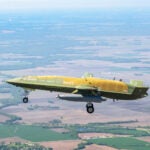
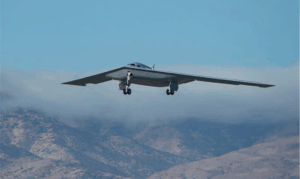
B-21 Crew. The B-21 Raider will have two pilots instead of one pilot and a weapons systems officer (WSO), according to the Air Force, as the service creates a competitive pilot transition program for WSOs and combat systems officers (CSOs) to attend pilot training for assignment to the B-21. The Air Force has faced a significant pilot shortfall. Last August, Air Force Global Strike Command had approved a crew of one pilot and one WSO for the B-21–the rationale being to allow a more ready fusion of radar, electromagnetic spectrum, sensor and battle management data for operators of the future bomber. The new direction for B-21 aircrews is a reversal of last August’s direction. “Following careful analysis of the B-21’s advanced capabilities, Air Force leadership determined that a two-pilot configuration optimally supports the aircraft’s mission profile,” the Air Force said. “To maximize the lethality and survivability of the Raider, it is imperative to retain the deep tactical and combat experience currently residing within the WSO and CSO communities.” Northrop Grumman built the B-2 and is to build a fleet of at least 100 B-21s.
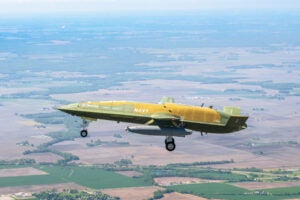
Two-Year Delay. The Air Force said it approved Milestone C low-rate initial production for the Boeing T-7A Red Hawk on April 23, but a full-rate decision, once scheduled for next January, is now to be in January 2029. The T-7A program “reported that it is experiencing significant delays in the completion of developmental testing,” according to this month’s annual weapons systems assessment by the Government Accountability Office. “These delays are a largely a result of the need to complete additional engineering analysis; lower than anticipated aircraft availability due to maintenance personnel issues and lack of spare parts; and finalizing software requiring more time than originally expected. As a result, program officials stated the developmental program underwent a replan to provide a meaningful training capability to the user. Consequently, the majority of developmental testing will be completed by April 2028, with lower priority requirements completing testing by May 2029.” The T-7As are to replace the Air Force’s Northrop-built T-38C Talons, which fielded between 1961 and 1972.
IBCS Test. Northrop Grumman on July 8 detailed the latest successful test for the Army’s Integrated Battle Command System (IBCS), noting the event “demonstrated seamless integration” with the service’s Indirect Fire Protection Capability (IFPC) and the Lower Tier Air and Missile Defense Sensor (LTAMDS) radar. The late April demo at White Sands Missile Range was the 34th flight test and 44th overall intercept with IBCS, the company added. “During the pivotal demonstration with IFPC, a ground-based weapon system designed to defeat cruise missiles, uncrewed aircraft systems and more, IBCS connected with the Sentinel A4 high-performance surveillance radar to track targets. Additionally, IBCS completed another successful integration with LTAMDS, where IBCS classified, engaged and intercepted a target. IBCS’ integration showcases the system’s unmatched flexibility, fusing data from diverse sensors and effectors, making it a force multiplier across U.S. and allied defense networks,” Northrop Grumman said in a statement. IBCS is the Army’s future air and missile defense command platform, designed to connect a wide swath of “sensor to shooter” capabilities, with the program now in full-rate production.
AUKUS Aussie Challenge. The Australian Defence Ministry on July 10 announced it awarded three Australian companies $4.3 million as part of the 2025 AUKUS Maritime Innovation Challenge. The awardees are BAE Systems Australia, L3Harris Integrated Mission Systems Australia Pty Ltd and Mission Systems Pty Ltd. Each received contracts with the government’s Advanced Strategic Capabilities Accelerator. This second innovation challenge series aims to further innovative offerings from Australian industry focused on technologies that support undersea communications and control of autonomous systems as part of the AUKUS Pillar II Signature project, which features sharing technologies unrelated to the Pillar I nuclear-powered submarine technology sharing. The contracts will specifically support development and communication capabilities between undersea vehicles and command and control battle management systems as well as navigational data for the vehicles.The ministry said the technologies will be demonstrated before the end of the year.
CVN-78 PIA. The USS Gerald R. Ford (CVN-78) aircraft carrier arrived at the Norfolk Naval Shipyard (NNSY) on July 7 ahead of its first Planned Incremental Availability (PIA). This will be the carrier’s first regularly scheduled availability at a public shipyard and the first time it is serviced at NNSY following its 326-day deployment. That historic deployment was the longest by an aircraft carrier since the Vietnam War. PIAs are used for a carrier to undergo extensive maintenance, repair and modernization but the Navy said the shipyard will also perform a concurrent availability to restore spaces damaged in a March fire.
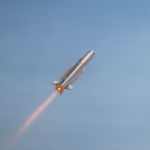
LRPM Demo. The Army said on July 6 detailed a successful user employment of its Long-Range Precision Munition (LRPM), the service’s lethal launched effects variant, firing several of the developmental weapons during the African Lion 2026 exercise in Tan-Tan, Morocco, in early May. The demonstration involved launching two LRPMs from a simultaneous strike on May 2 and three LRPMs for a separate strike two days later, employing them in a “wolfpack” to demonstrate a “self-sufficient ‘hunter-killer’ concept.” “These engagements, managed by a U.S. Army operational user, demonstrated one-to-many control in-flight and mission execution autonomy,” the Army said in a statement. “LRPM gives commanders the ability to strike key targets deep on the battlefield and enables the simultaneous massing of effects on one or more targets with high precision. The LRPM can be networked with other Launched Effects in a ‘wolfpack,’ leveraging multiple payloads to penetrate deep into complex enemy territory, or it can be employed as a standalone munition providing the commander with numerous options.” The developmental LRPM is an Anduril-built Altius 700 air vehicle with a government designed payload, while the Army has said it plans to award a contract in October to eventually build 200 to 600 prototype systems.
NGC2 Radios. L3Harris Technologies said on July 9 it has received orders totaling $84 million from the Army to deliver more Falcon IV AN/PRC-158 Multi-channel Manpack radios to support the Next-Generation Command and Control (NGC2) initiative. “The AN/PRC-158C systems include high-throughput Mobile Ad hoc NETworks (MANET) and highly resilient waveforms for assured communications in all conditions,” the company said. L3Harris noted this is its second Falcon IV award related to NGC2, following an initial $24 million order last October. “The manpack systems will serve as part of the program’s transport layer, which is a collection of networks, communication pathways and data-delivery technologies that move information across sensors, shooters and command-and-control systems,” L3Harris said. “The communication systems support the requirements of multi-transport gateways necessary to enable NGC2 with features including air-to-ground networking, routing, MANETs, In Line Encryption and Sensitive But Unclassified – Encrypted waveforms.”
Canadian Subs. The Canadian government on July 6 announced it selected Germany’s Thyssenkrupp Marine Systems as the preferred supplier to begin negotiations to deliver up to 12 new submarines for the Royal Canadian Navy in the Canadian Patrol Submarine Project (CPSP). Thyssenkrupp is offering its 212CD boat. The CPSP aims to replace the aging four-boat Victoria-class fleet of submarines that are planned to stay operational through the mid-to-late 2030s. The government and Thyssenkrupp are now set to enter into negotiations to finalize the contract, with Canada planning to conclude the agreement by the end of 2027. The government hopes the first four boats will be delivered by 2034 but the government noted if negotiations are unsuccessful, it may choose South Korea’s Hanwha Ocean as the next preferred supplier before entering into negotiations with them. Hanwha offered its KSS-III CPS submarine.
Counter-Drone Handbook. A new reference guide to create a shared understanding of the threat from small drones, how to protect against these threats, lessons learned from conflicts in Ukraine and the Middle East, and a common lexicon, was released last week by the Joint Interagency Task Force (JIATF)-401. The handbook, Small Drones, Big Problems: A First Principles Approach to Countering-UAS, is part of JIATF-401’s “mission to synchronize counter-unmanned aircraft systems efforts across the War Department and federal interagency partners,” the task force said on July 8.
AI for Space ISR. BlackSky Technology last week said it has won a “series” of research and development contracts to develop and field artificial intelligence solutions that help undisclosed U.S. customers conduct real-time, space-based tactical intelligence, surveillance and reconnaissance the leverages the company’s Gen-3 Earth observation constellation. One contract calls for the company to leverage existing object detection and identification algorithms to mature automated target recognition capabilities for a customer’s classified mission workflow. BlackSky will also develop AI-enabled battle damage detection analytics as part of its Gen-3 services.
Sharper Resolution. Finland’s ICEYE said it has deployed four new synthetic aperture radar satellites, carried into orbit on July 7th aboard the Transporter-17 mission from Vandenberg Space Force Base, Calif. The deployment marks 76 ICEYE satellites in space and adds another fourth generation satellite to ICEYE’s commercial constellation and additional ones for military missions, including one for Finnish Defense Forces. The Gen4 satellites have up to 16 centimeter resolution and a 400 kilometer high-resolution field of regard, according to the company. “ICEYE’s production rate is now doubling, from 50 satellites per year today to a target of 100 annually by 2027 and beyond, supported by a matching launch cadence,” the company said. “ICEYE recently delivered a fully operational sovereign space system to the Polish Armed Forces, from contract signing to operational capability in 12 months, among the fastest sovereign space deployments in history. The model is now being replicated across Europe, the Middle East, and Asia, and the pace is accelerating.”
Lift Challenge Ready. The contingent of teams has been finalized that will compete next month in the Defense Advanced Research Project Agency’s $6.5 million challenge to demonstrate drones that can carry at least four times their weight in flight. All told, DARPA has selected 124 teams for the Lift Challenge. In June, the agency sent invitations to the first 72 teams (Defense Daily, June 9). “These aircraft range from highly refined engineering projects to radically new approaches that challenge conventional thinking about vertical lift systems,” Phillip “Donna” Smith, Lift Challenge program manager, said in a statement. The challenge will take place at the National Museum of the Air Force in Dayton, Ohio.
Ready for Market. EarthDaily said that with launch of its eighth Earth observation satellite last week and initial imagery returning from its first seven spacecraft on orbit, the company will be ready to begin commercial operations later this year. “Each satellite carries 16 imagers across 22 spectral bands, engineered for tightly controlled geometric and radiometric calibration and spectral alignment with Sentinel and Landsat archives, so data can drop straight into AI and change-detection workflows,” the company said. In May, EarthDaily received a small contract from the National Reconnaissance Office under the Strategic Commercial Enhancements effort for commercial remote sensing imagery (Defense Daily, May 4).
UKR UGV Funding. Ukrainian unmanned ground vehicle (UGV) manufacturer Trinity Robotics last week said it raised about $571 million in a strategic funding round led by Swedish investors Front Ventures AB and Hede Capital, with participation from Defence Builder Fund I. The funding will help the company more than double UGV production from 70 a month to 150 beginning in July. Trinity’s robotic systems are used by more than 20 Ukrainian military units for logistics, casualty evacuation and other dangerous missions.
SRM Effort Completed. Propulsion developer Ursa Major last week said it has completed a $25 million solid rocket motor (SRM) pathfinder program with the Navy and the Pentagon’s Office of Strategic Capital that included the static firing of a 10-inch rocket motor prototype, development of a proprietary Highly Loaded Grain propellant for the motor, validation of the company’s Lynx manufacturing process, and facility expansion. The pathfinder program is a gateway for the Colorado-based company to build SRMs for larger missiles.
More Real Estate. Echodyne, which is manufacturing multi-role electronically scanned array radars, last week opened a new 86,350 square foot manufacturing facility, which includes 12,000 square feet of warehousing, with capacity to build more than 30,00 radars annually. The Washington-based company’s radars are in demand for counter-drone and short-range air defense uses globally. Kratos Defense & Security Solutions has added 106,000 square feet to its Oklahoma City manufacturing campus to support increased demand for its jet powered drones, including Valkyrie and Firejet. Kratos last week said it produces about 165 jet drones annually and the expanded facilities will enable an increase in production.
New JSDT Awardee. The Defense Innovation Unit (DIU) and its partners have awarded Gallatin AI a prototype contract to develop a logistics planning tool in support of U.S. Army Europe and Africa, DIU said last week. DIU previously awarded prototype contracts to Air Space Intelligence and Watchtower Labs under the Joint Sustainment Decision Tool (JSDT) program (Defense Daily, Feb. 19). Award values were not disclosed. The JSDT program is leveraging commercial artificial intelligence tools to proactively manage logistics management and get ahead of requirements.