 By
By 
QHSR Due Soon. The Quadrennial Homeland Security Review (QHSR) will be released soon, possibly within a week, Homeland Security Secretary Jeh Johnson tells a House panel on Thursday. Despite becoming secretary in late December, about the time the QHSR was originally due, Johnson says that “some” of the strategy document reflects his “own personal work” and it “reflects my vision and is consistent with the budget submission.” Johnson says the QHSR is being delivered to Congress late in part because of the amount of interagency coordination involved in putting it together. The first QHSR, which was issued by the Obama administration in February 2010, elevated cyber security to a key homeland security mission called homeland security a “national enterprise.”
…Congressional Concerns. Rep. Michael McCaul (R-Texas), chairman of the House Homeland Security Committee, tells Johnson that the release of the FY ’15 homeland security budget request earlier this month before the release of the QHSR “seems…that is putting the cart before the horse.” McCaul asks that after the QHSR is released if budget recommendations would change but Johnson says “it reflects our best effort as to where we see the department going.” McCaul is concerned about cuts to the Coast Guard that will make it difficult for the service to carry out its drug interdiction operations at sea. He says the Navy has had to stop doing drug interdiction missions, adding that with cuts to the Coast Guard this “puts this country in greater danger.”
…No Worries on Securing the Cities? Johnson says that despite a proposed $10 million reduction in FY ’15 to the FY ’14 funding levels for an urban area radiation detection program, other grant programs can be leveraged to make sure all regions that are part of the Securing the Cities program are “adequately funded.” The Domestic Nuclear Detection Office (DNDO) seeks $12 million in FY ’15 for the Securing the Cities, which is deployed in the New York City area and moving toward deployment in the Los Angeles region. DNDO plans to select a third region through a competitive grant process in FY ’14. Rep. Pete King (R-N.Y.) says he’s worried that federal funding cuts to the program will leave the cities having to administer it but Johnson says that as long is he runs DHS Securing the Cities will be “adequately funded.”
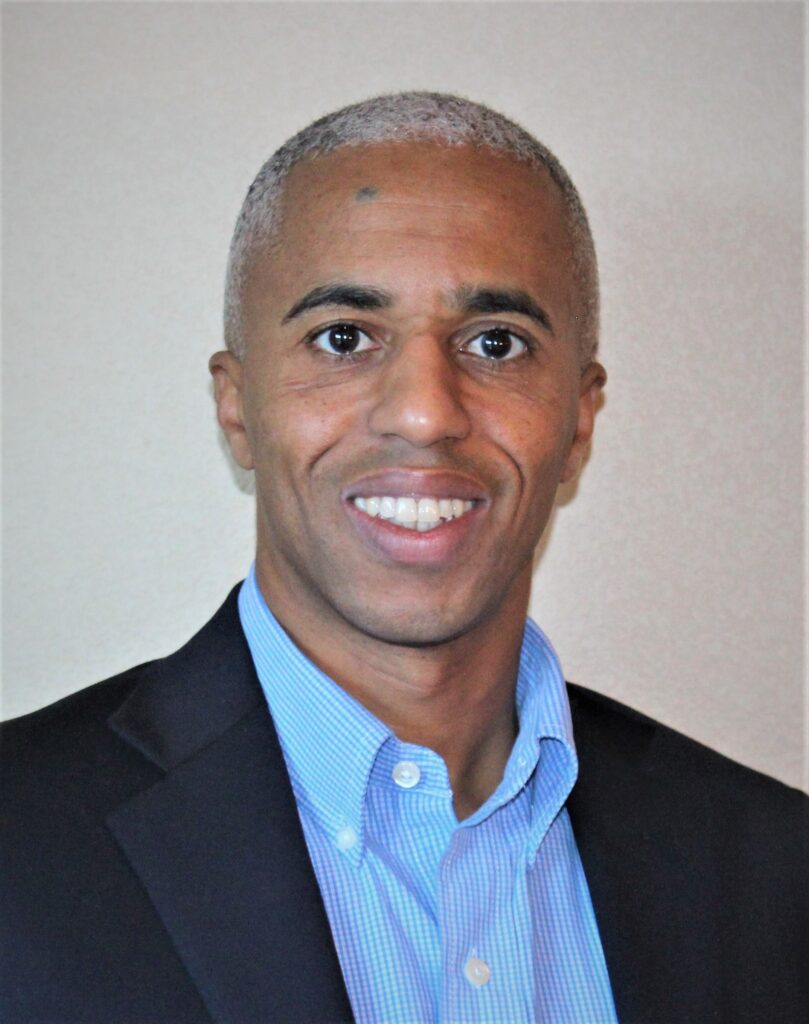
S&T Nominee. The Senate Homeland Security and Governmental Affairs Committee on Thursday reported the nomination of Reginald Brothers to be Under Secretary of Science and Technology at the Department of Homeland Security. Brothers’ nomination was approved by voice vote.
Praise for SBInet. A network of electronic surveillance towers that is monitoring 53 miles of the Southwest Border in Arizona has “taught” Customs and Border Protection that “technology does some pretty good things,” Mark Borkowski, head of border security acquisition programs for the agency, tells a House panel. He says the two deployments of the Secure Border Initiative Network (SBInet) in Arizona “had a near immediate effect on our ability to deal with those areas of the border,” adding that now, several years after the deployments, the illegal “activity in those areas is down tremendously.” Borkowski also says that the SBInet also “taught us how not to buy things.” The program, which was integrated by prime contractor Boeing, was behind schedule and over budget when the Department of Homeland Security canceled it three years ago after the initial deployments.
Florida’s New Congressman. Republican David Jolly narrowly beat Democrat Alex Sink to fill the shoes of the late congressman Bill Young as the representative for the defense-heavy 13th District in Florida. Jolly worked on the Hill for 12 years, including five as general counsel on Young’s staff, according to his biography. He then left for a lobbying career, first working for large firm Van Scoyoc Associates and later creating his own lobbying firm, Three Bridges Advisors, according to his biography on the Three Bridges Advisors website. The lobbying firm lists defense and homeland security at the top of its list of specialties, and his bio touts pro bono work he did with veterans and wounded warriors while working for Young. Jolly was sworn into Congress on March 13 after winning the special election March 11.
LCS Altered, Not Canceled. Defense Secretary Chuck Hagel refuses to call his changes to the Littoral Combat Ship (LCS) a program cancellation during a House Appropriations defense subcommittee hearing March 13, instead saying he wanted to work with the Navy to find a better way of meeting the LCS requirement. Rep. Ander Crenshaw (R-Fla.) questions why the Navy would cut the program by 20 ships–from a requirement of 52 to 32. Hagel stresses that his decision to stop the current set of LCS designs at 32 should not be construed as a program cancellation, rather he asks the Navy to “give me some options for a more capable LCS, one that’s far more survivable than this one. Upgunned. This panel has already talked about and will hear more about the technological capabilities of our adversaries; you can have a lot of ships, but … if they can’t survive these new technologies, then I’m not sure we made the right decision.”
Keeping the Cruisers. Navy Secretary Ray Mabus tells reporters after a March 12 HASC hearing that his plan to lay up 11 of the 22 cruisers for modernization is the best way to protect the fleet, keeping the operational requirement of 11 in service now and saving the others for service into the 2040s. “What we’re proposing to do now is, of the 22, put 11 into modernization all at once immediately. That would then come out of modernization as the other 11 retire. If we didn’t do anything, if we kept all 22 and did sort of our normal stop, all our cruisers would be gone by the end of the 2020s. By doing this, we’re going to have those cruisers, those 11 cruisers, modernized and in the fleet into the 2040s.” He adds that the 11 in maintenance would stay under the CNO’s control, meaning they could be patched back up and sent out to sea in an emergency. But by doing the work in one large batch, “we can do economic order quantities and things like that of the things that would be needed first for hull, mechanical and electrical upgrade and second for the combat system upgrade.”

Paying for SSBNs. Mabus tells reporters after the March 12 HASC hearing that the fact that committee members were even asking about paying for the Ohio-class replacement ballistic missile subs constituted a win for the Navy. : “I think the progress that we’ve made is that the committee clearly recognizes it, and [chief of naval operations] and I both said that we’ve got to have this dialogue, we’ve got to have this conversation or debate over it. We’re the most survivable leg of the triad, and we don’t replace these very often at all,” he argues. During the hearing, Rep. Joe Courtney (D-Conn.) asks for an update on whether there had been any progress on security help to pay for the submarines, a national security asset rather than a Navy-specific asset.
SpaceX CRS-3. Space Exploration Technologies Corp. (SpaceX) is delaying its scheduled March 16 Cargo Resupply Service (CRS) trip to the International Space Station (ISS) until March 30 with April 2 as a backup date, the company says on its website. This will be the company’s third trip to the ISS as part of its CRS contract with NASA. SpaceX says both the Falcon 9 rocket and Dragon capsule are in good health and that given the critical payloads on board and significant upgrades to Dragon, the additional time will ensure SpaceX does everything possible for a successful launch.
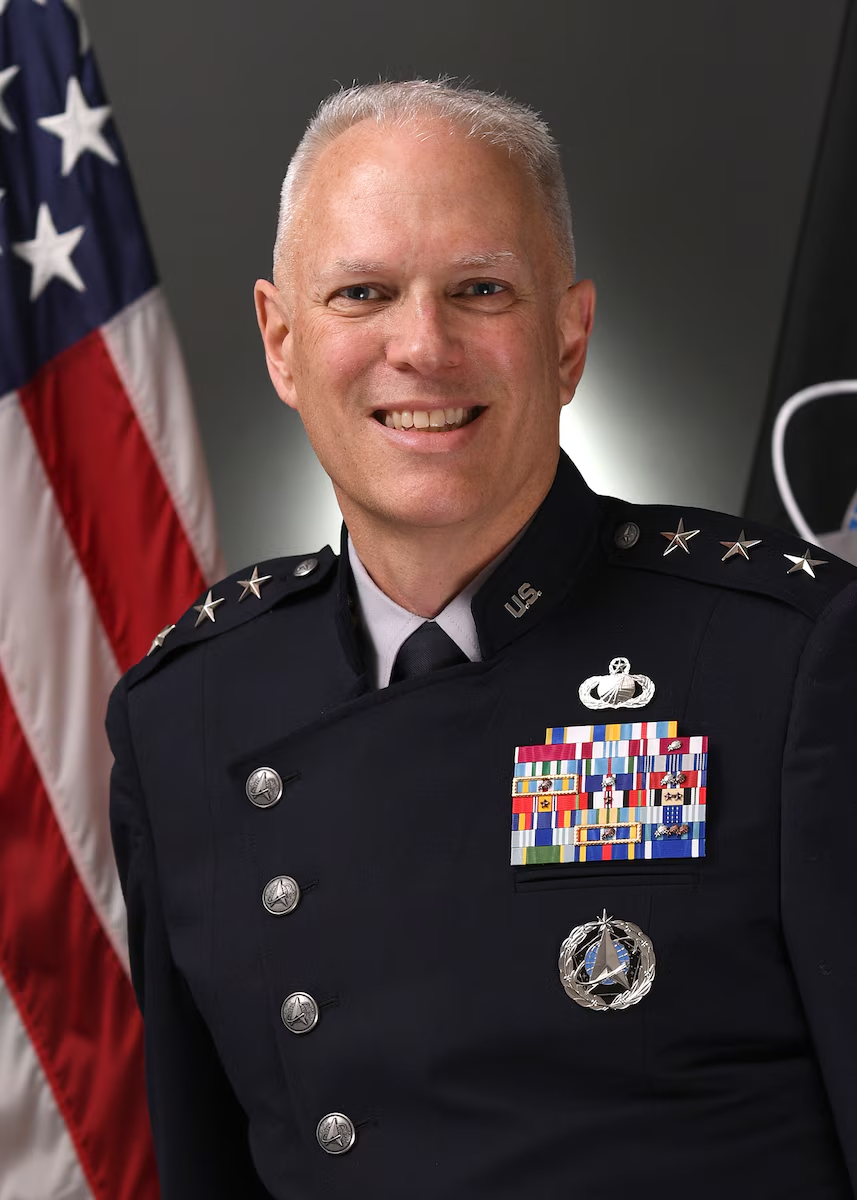
Hyten For APSPC. President Barack Obama nominates Air Force Lt. Gen. John Hyten to become the next Air Force Space Command (AFSPC) chief, according to a Defense Department statement. Hyten, currently Space Command’s No. 2, would replace current AFSPC chief Gen. William Shelton. Hyten currently assists Shelton in organizing, equipping, training and maintaining mission-ready space and cyberspace forces and capabilities for the North American Aerospace Defense Command (NORAD) and U.S. Strategic Command (STRATCOM). He also supports other functional and geographic combatant commands with missile warning; positioning, navigation and timing; communications and cyber capabilities.
FAB-T. The Air Force expects to downselect to a single contractor for the Family of Beyond Line-of-Sight Terminals (FAB-T) program’s command post terminal (CPT) production in early April, a service spokesman says in an email. The program, with an expected value of multiple billions of dollars, is being competed between Boeing and Raytheon. Boeing was the original contract award winner over a decade ago, but the Air Force brought in Raytheon to hedge its bet. FAB-T is to provide communications terminals so the president and DoD brass can communicate in the event of nuclear war.
SSPARS Contract. The Air Force awards BAE Systems a three-year contract extension for the Solid State Phased Array Radar System (SSPARS), according to a company statement. SSPARS is a complex network of radars that tracks more than 16,000 objects orbiting the earth and is used for missile warning and space surveillance operations. It detects and identifies various man-made objects in space, such as active or inactive satellites, rocket parts and other debris. It also tracks objects that may enter the atmosphere, information that is vital to air missile defense operations and to protecting against submarine-launched ballistic missiles. The award is a continuation of work that BAE has performed for the program since 2007 and raises the cumulative value of the contract to approximately $540 million.
MV-22 Engines. The Naval Air Systems Command (NAVAIR) awards Rolls-Royce a $90 million production contract for Marine Corps MV-22 engines, according to a company statement. The deal, a modification of a previous agreement, includes a total of 40 Rolls-Royce AE 1107C engines manufactured in Indianapolis. The AE 1107 exclusively powers the growing V-22 fleet for the Marine Corps and Air Force.
DGI and Malaysia Jet Crash. Satellite imagery firm DigitalGlobe solicits the public to scan through imagery captured by its satellites to help locate Malaysia Airlines Flight 370, which supposedly disappeared March 8 local time after taking off from Kuala Lumpur. DigitalGlobe says March 12 it continually tasks its satellites to image the ever-widening search area and now has more than 24,000 square km of imagery available for the public to comb thorugh. DigitalGlobe says, at first, it was facing a challenge of managing the sheer volume of traffic, but is now managing it better. Those who want to participate can visit http://bit.ly/MalaySar. The site was down when Defense Daily visited it March 14.
Office Hours. The Swiss Air Force found itself at the center of some ridicule in the media last week after failing to respond following the hijacking of an Ethiopian Airlines flight that was diverting to Geneva. Apparently the Air Force could not intercept the plane because the hijacking took place outside of office hours. A Swiss Air Force spokesman tells the French news agency AFP the Air Force was open between 8 a.m. to noon and 1:30 p.m. to 5 p.m. because of budget and staffing limitations. “Switzerland cannot intervene because its airbases are closed at night and on the weekend,” the spokesman says, according to AFP. The plane landed safely in Geneva, but that wasn’t the end of it for the Swiss Air Force, which had to take a few lumps from the media. The British Guardian newspaper’s headline read: “The Swiss air force: armed and dangerous, but only in office hours,” while Bloomberg writes: “Invading Switzerland? Try Before 8 or After 5.”