By Eric Rosenberg, Defense Opinion Writer.
The Trump administration’s top Army civilian sent shockwaves through the national security establishment this past fall with his short-sighted view of the last handful of major U.S. defense contractors still responsible for manufacturing the world’s most effective weapons for the world’s most capable military.
“I will measure it as success if in the next two years one of the primes is no longer in business, and the rest of them have all gotten stronger,” Army Secretary Daniel Driscoll said.
The prospect of losing a large defense contractor seems particularly ill advised considering the administration’s national defense strategy released in January that demands vast defense expertise and industrial capacity amid growing threats. It’s the kind of expertise housed in major defense contractors, is currently on display against Iran and has been successfully deterring potential enemies around the globe.
Add that the U.S. is in a new arms race with officials lamenting the deterioration of the nation’s defense industrial base, and this is not the time to be seeking the demise of a major military contractor. Indeed, by any metric, this is the time to nurture this institutional know-how and capability.
Growing and diverse threats
Fewer defense contractors made sense in the aftermath of the Cold War following the dissolution of Soviet Union and Warsaw Pact in the mid-1990s. Since then, the number of major defense companies has dwindled from 51 to five, according to the Department of Defense.
The global picture has since evolved dramatically as the U.S. is facing a raft of potent and growing threats. They include: a resurgent Russia that, after invading Ukraine, openly threatens NATO members; China, which is hard at work eroding the U.S. military’s technological primacy and stealing U.S. know-how; and, continued Islamic terrorism; and the need to build surge capacity for a range of munitions, as the conflagration against Iran highlights.
The threats from China alone suggest that this is far from the right time to be hoping for a downsize in long-time defense contractors.
“China’s historic military buildup has made the U.S. homeland increasingly vulnerable,” the administration said in its 2025 report on China’s military capabilities. “China maintains a large and growing arsenal of nuclear, maritime, conventional long-range strike, cyber and space capabilities able to directly threaten Americans’ security.”
Administration focuses on acquisition reform
The defense industry’s fall from favor is coinciding with the administration’s interest in jumpstarting weapons research and speeding their acquisition by enticing new thinking and new technologies from companies that don’t traditionally work with the Defense Department. The approach is not a new one. Several administrations have pushed for similar acquisition reform.
To grease the skids for these outsiders, the Pentagon is lowering the barriers to entry with novel contracting mechanisms, streamlining its own processes and allowing faster buying decisions. It is trimming a bureaucracy notorious for delaying programs, adding costly requirements and “leaving capabilities stranded in pilot (prototype) purgatory,” as Harvard’s Belfer Center for Science and International Affairs aptly describes it.
And in case anyone didn’t get the message, Defense Secretary Pete Hegseth said that the military will not be giving preference to a defense contractor’s solution for a needed military capability. “We will prioritize the purchase of industry-driven solutions, commercial solutions first that meet our needs faster, even if that means bids do not meet every requirement,” he said.
But while the idea of private sector innovation may be tempting, a quick look at the administration’s priorities shows just how unrealistic such a pivot would be. As noted by Frank Kendall, a former Air Force secretary and top weapons-buying official in the Obama administration:
“There is a lot of lip service being paid to acquiring cheaper, lower-risk programs right now,” he wrote. “When one looks at recent decisions, however, this rhetoric doesn’t seem consistent with practice.”
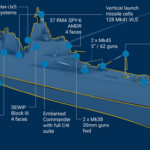
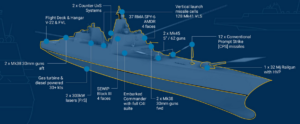
Kendall points to three new major programs the Trump administration has backed – the F-47 sixth generation fighter aircraft, the proposed Trump-class battleship and the Golden Dome, a complex missile and air defense system to protect the entire U.S. inspired by Israel’s Iron Dome.
Like much of what the U.S. military needs to counter potential adversaries, these are major technological efforts that require specialized defense expertise, experience managing the slings and arrows of Pentagon procurements and classified clearances not typically found in commercial companies.
In the case of the Gold Dome, developing the ability to protect the U.S. against a hypersonic missile traveling Mach 5 or a wave of intercontinental ballistic missiles “would require major advances in sensor coverage, battle management and interceptor reliability, not to mention substantial new infrastructure investment on a scale that has yet to be seen,” the Center for Arms Control and Non-Proliferation says.
Not exactly an off-the-shelf capability that can be handed to a new entrant given such high stakes. The same is true for a range of top-priority military modernization programs such as the Army’s Long Range Precision Fires program and its Integrated Battle Command System, and the Navy’s new Columbia-class ballistic missile submarine.
“National security customers often seek bespoke solutions to very specific problems versus an ‘out of the box’ commercial offering,” a McKinsey report noted. “With limited access to classified information and other sources of insight, tech firms can struggle to understand the precise nature of these problems.”
It’s a big tent
Despite the obstacles, commercial companies are making important contributions. They are enjoying success helping the Pentagon expand the use of artificial intelligence for surveillance, targeting and mission planning, while also struggling mightily in some areas as well. The Pentagon is signing up small tech firms to build low-cost, one-way attack drones. Traditional defense companies are teaming with commercial companies that have a novel technology or approach.
But welcoming new entrants shouldn’t come at the expense of an industry that ensures U.S. forces are the best equipped in the world. Just as Pentagon leaders are making it easier for upstarts to compete against legacy defense firms, they should also empower existing prime contractors to innovate and evolve programs with a successful track record.
“The fact is,” says Rebecca Grant of the Lexington Institute, “innovation requires all players in the game. Reinvigorating the defense industrial base is not just about purchase orders for new start-ups and ‘war unicorns.’”
Eric Rosenberg is the editor and publisher of Defense Opinion, a non-partisan outlet for commentary on national security, defense spending and weapons systems. He previously was a reporter and editor with Hearst Newspapers and Defense Week.

Are you a Defense Daily reader with a thought-provoking opinion on a defense issue? We want to hear from you.
- We welcome submissions of opinion articles on national security, defense spending, weapons systems and related areas.
- We welcome submissions from lawmakers, administration officials, industry representatives, military officials, academics, think tank experts, congressional candidates, international experts and others on issues important to the national defense community.
- We welcome a diverse range of opinions all along the political spectrum.
- Email: editor@DefenseOpinion.com