
Epic Fury Cost. The first 100 hours days of the U.S. military operation against Iran, dubbed Epic Fury, cost $3.7 billion, or $891.4 million per say, estimates the Center for Strategic and International Studies (CSIS) in a March 5 analysis. The study authors note that $3.5 billion of the costs have not been budgeted, including $3.1 billion to replenish munitions. “The shift of U.S. forces to less expensive munitions and the steep decline of Iranian drone and missile launches will drive costs down,” CSIS says. “However, future costs will depend on the intensity of operations and the effectiveness of Iranian retaliation.”
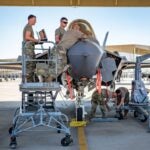
F-35 Parts. As the Pentagon has pursued new framework agreements with industry to increase production of select critical munitions, DoD Acquisition Chief Michael Duffey told lawmakers last week the department could look to apply a similar approach for bolstering manufacturing of F-35 parts. “We’re not stopping at examining those. We’re looking to partner with industry across other areas. I think F-35 parts would be another example where we need to ensure that we’ve got adequate both resource funding and industrial base capacity to make sure that we can supply the needed parts for the F-35,” Duffey said during a House Armed Services Committee hearing.
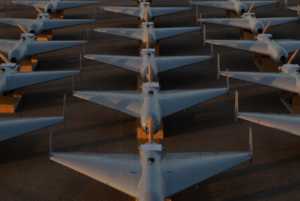
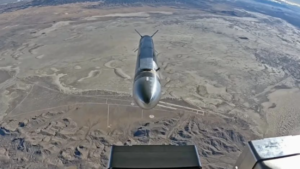
LUCAS Drones. Adm. Brad Cooper, commander of U.S. Central Command (CENTCOM), said on March 5 the Low-Cost Unmanned Combat Attack System (LUCAS) has been an “indispensable” part of the U.S. military’s strike campaign against Iran. “If I just walk back a couple of years, do you remember what you used to always hear, we’re shooting down a $50,000 drone with a $2 million missile. These days we’re spending a lot of time shooting down $100,000 drones with $10,000 weapons,” Cooper said during a press briefing. CENTCOM previously confirmed the first combat used the SpektreWorks-built LUCAS drones, and Cooper said they’ve been employed against “good targets.” He reiterated the LUCAS design was reverse engineered from Iran’s Shahed one-way attack systems. “We captured it, pulled the guts out, sent it back to America, put a little made in America on it, brought it back here, and we’re shooting it at the Iranians,” Cooper said.
Canadian CCA Investment. Canada’s Dominion Dynamics is investing $50 million Canadian dollars ($36.7 million U.S.) to begin developing a sovereign Autonomous Collaborative Platform (ACP), which would be similar to the U.S. Air Force’s efforts to develop the Collaborative Combat Aircraft (CCA), an autonomous jet aircraft that would fly with, and complement, manned fighters and potentially perform riskier missions than manned aircraft. “The future of air combat is human-machine teaming and sixth-generation systems,” Eliot Pence, founder and CEO of the Ottawa-based startup, said March 5 in a statement. “Canada shouldn’t just buy that future from others. We should build it and we will build it.” Pence formerly led the international team at Anduril Industries, which is competing for the Air Force CCA. Dominion will use the investment for engineering, prototyping and simulation work.
HASC Calls Out Colby. Senior Republicans on the House Armed Services Committee (HASC) aired frustrations with top Pentagon policy official Elbridge Colby during a hearing on March 5, to include Chair Mike Rogers (R-Ala.) lamenting a “breakdown in communication” over key decisions. “We may not always agree on a policy decision, but the Constitution requires you and your team to have forthright conversations with this committee about the decisions you are making and why you are making them. We shouldn’t have to resort to legislation to force you to have these conversations with us,” Rogers said. “I just want you to know, going forward, we feel very strongly that Congress has a say-so in these matters and we’re going to help y’all understand that in the coming months and years.” Rep. Mike Turner (R-Ohio) added he believes Colby has been “dishonest” and “so disingenuous” regarding his office’s decision making. “Tell me you’re not making decisions where you’re just divining an alignment with the president and interpretation, [but] that President Trump is the one making decisions,” Turner said.
…Colby’s Response. Colby refuted the criticisms and said his office has done “upwards of a hundred touches” to consult with Congress on Defense Department policy matters, to include engagements with HASC and the Senate Armed Services Committee. “I categorically assert that I was straight with you in our discussions, and I commit to be,” Colby said. “I would actually go so far as to say our organization is one of the leaders in Congressional engagement.”
…Rogers’ Concerns. Rogers raised particular concern with the Pentagon’s brief pause on weapons aid to Ukraine last March, which he said Congress only learned of after the fact “from others in the administration who had also been left in the dark and shared our frustration.” He also pressed Colby on the lack of information provided to Congress ahead of the Pentagon’s decision to withdraw a U.S. brigade from Romania in October. “Just days prior to the announcement, the president said any troop movements from Europe would be ‘little.’ A brigade is not ‘little.’ But you went ahead anyway. Neither Romania nor our other NATO allies were consulted in advance. To be clear, after-the-fact notification just before an announcement is not consultation,” Rogers said. “And while I strongly disagree with the decision itself, advance coordination could have allowed allies to replace the departing brigade to help cover the deterrence gap.”
Record Deployment Levels. Vice Chief of Naval Operations Adm James Kilby told the Senate Armed Services Subcommittee on Readiness and Management Support on March 4 that the USS Gerald R. Ford (CVN-78) aircraft carrier is expected to eventually conclude its deployment at possibly record levels of about 11 months. Carrier deployments usually last up to seven months. CVN-78 began this deployment in June 2025 and has included operations in the High North with NATO allies, the Eastern Mediterranean, Southern Command’s area of responsibility as part of the naval buildup aimed at Venezuela and now operating in the Eastern Mediterranean as part of operations against Iran.
…Maintenance Impact. Kilby noted these extensions will have an impact on the ship’s maintenance needs and schedule. “There will be an impact on her return and the schedule for her maintenance availability so she’s ready to go again,” he said. “The good part about our public shipyards is they’re adjusting that schedule, they’re ready to bring our carrier back and maintain her.” Kilby said 17 of the last 25 aircraft carrier availabilities were completed within two weeks of their scheduled timelines, “so there is a cost but we’re ready to go turn that ship around and have her do what she needs to do.”
…Other on Time Maintenance. In his written statement to the subcommittee, Kilby said the service plans to continue to improve its overall surface combat surge readiness levels through improvements to maintenance performance. While Days of Maintenance Delay (DoMD) have decreased 54 percent from 7,094 to 3,266 from FY 2029 to 2025, they project FY 2026 ship numbers to stand at 62 percent on time completion and 2,344 DoMD. He boasted that figures in the first quarter of FY 2026 are already “exceeding expectations” in reducing DoMD and increasing on time completion and due to improved material conditions and maintenance processes, the Navy was able to extend the service life of 17 destroyers and four cruisers.
Future PWSA Ideas. The Space Development Agency (SDA) last week issued a Broad Agency Announcement seeking proposals for new concepts, systems, technologies and capabilities to “enable leap-ahead improvements for future” tranches of its Proliferated Warfighter Space Architecture (PWSA) that consists of satellites in low Earth orbit to detect and track ballistic missile launches, and aid global data transfer for warfighters. Multiple Other Transaction Agreement awards are expected for these proposals that could provide future “capability layers, or enable new capability layers to address other emerging or evolving warfighter needs,” the SDA says.
…Tranche 3 Spacecraft. Speaking of the PWSA, Intuitive Machines last week said its Lanteris Space Systems subsidiary will supply L3Harris Technologies with 18 spacecraft platforms for the Tranche 3 Tracking Layer of the SDA’s architecture. Tracking Layer satellites are used to detect missile launches and track them in flight.
Domestic Antimony. The Defense Department last week announced a $27 million award to U.S. Antimony Corp. (USAC). “for the domestic extraction, processing, and refinement of antimony,” a critical mineral used in munitions, batteries, infrared sensors. China mines nearly half of the global supply of antimony. Based in Dallas, USAC has operations in Montana and Mexico, and has claims on land in Alaska. DoD said the Defense Production Act Title III award will support modernization of USAC’s “capacity in Montana to refine and produce antimony necessary for flame retardants, batteries, munitions, and other defense applications” and support the company’s plans in Alaska for “excavation and extraction.” DoD is using funds from the Additional Ukraine Supplemental Appropriations Act of 2022 for the investment.
Fully Operational Marketplace. The Pentagon’s counter-drone task force last week said its marketplace of products and solutions has achieved full operational capability (FOC) as of March 5. The FOC milestone comes shortly after the counter-unmanned aircraft system (C-UAS) marketplace achieved initial operational capability (Defense Daily, Feb. 24). Achieving FOC means “the contractual and funding pathways are fully established, contributing to our primary goal to quickly get C-UAS capabilities into the hands of the warfighters and access beyond DoW to our interagency partners is realized,” the Joint Interagency Task Force 401 said.
…New CSO. In late February, JIATF 401 released its first Commercial Solutions Opening (CSO)—a solicitation that remains open for a year or more and is used for rapidly acquire solutions—seeking capabilities in several areas, including mobile and on-the-move C-sUAS for the U.S. southern border, National Security Special Events, the military services and combatant commands, and for foreign use. Additional areas of interest include comprehensive layered defense of fixed-site and mobile—integrated with Infantry Squad Vehicles—solutions, a fixed-site C-sUAS capability for the services and combatant commands, and solutions that create a seamless and interoperable command and control ecosystem for different stakeholders. Army Brig. Gen. Matt Ross, director of the JIATF, last week said the CSO is “intended for us to be able to have a dialog” with industry. The CSO is open through Feb. 26, 2029.
Autonomous C-130J? A preliminary design review (PDR) for an autonomous C-130J for U.S. Special Operations Command (SOCOM) has finished, according to Boston-based Merlin Labs. The completion of PDR “brings us closer to delivering highly assured autonomy to one of the U.S. military’s most critical aircraft,” Merlin CEO Matt George said. “This approval affirms that our integration design and airworthiness approach meet all system requirements within acceptable risk constraints, and it clears the way for the transition into the critical design phase.” Merlin is developing the autonomous C-130J under a SOCOM contract worth up to $105 million. The company said last August that it will go public this year as Inflection Point Acquisition Corp. IV through a Special Purpose Acquisition Company. In addition to the five-year, C-130J contract with SOCOM, Merlin has worked with the Air Force’s 6th Air Refueling Wing at MacDill AFB, Fla., to test the company’s Merlin Pilot autonomy system to reduce aircrew on the KC-135 and eventually flight test an autonomous KC-135.
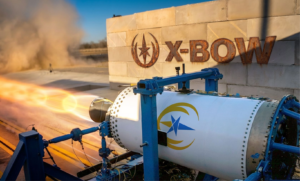
Improved Hadley Fired. Ursa Major last week said it conducted its first hot fires of the latest variant of its Hadley liquid rocket engine, the H13. The Colorado-based startup said the H13 features increased engine reusability and performance, “and it intentionally designed to fly in a variety of hypersonic and launch applications.” Chris Spagnoletti, the company’s CEO, said in a statement “with new materials and manufacturing, H13 can be reused more than twice as many times as previous variants, driving down the cost per flight while supporting new test objectives and mission profiles.”
$1B Valuation. Software test infrastructure startup Nominal last week said it raised $80 million in a Series B-2 Acceleration round brings the company’s value to $1 billion. The new funding will be used to accelerate product development, expand the customer set and the company’s global footprint, make strategic acquisitions, and pursue “new business lines across the hardware data ecosystem,” it said. The funding round was led by Founders Fund, which approached Nominal unsolicited, and included participation from existing investors Sequoia Capital, Lux Capital, General Catalyst, Lightspeed and Red Glass. The Navy is a customer of Nominal (Defense Daily, Feb. 27).
…HawkEye Raise. HawkEye 360 last week said it raised $23 million in an additional close of its Series E round. The provider of radio frequency-based satellites and related signals intelligence data and analytics, said it will use the financing to strengthen the balance sheet and execute strategic growth priorities, “including the integration of Innovative Signal Analysis.”
…Smack AI. Artificial intelligence firm Smack Technologies announced on March 2 it has secured $32 million in seed and Series A funding, which it noted follows recently securing Pentagon contracts to include work supporting the Joint Fires Network and the Marine Corps Warfighting Lab. Smack said Geodesic Capital and Costanoa Ventures led the Series A round, with participation from Point72 Ventures, Felicis, First In, Scribble Ventures, Bloomberg Beta, Washington Harbor Partners, Palumni VC, Fulcrum Venture Group, Anomaly Fund and Fortitude Ventures. “As the first frontier AI lab for national security, Smack is building domain-specific AI models, powered by deep reinforcement learning, for the singular purpose of either deterring WWIII, or winning it if necessary,” Smack said in a statement. “With this new funding, Smack will rapidly expand our technical leadership and scale up the development of our product suites, models and applications to serve all branches of the military.”
More ISVs. The Army on March 4 awarded GM Defense an $18.8 million order for 121 more base nine-seat troop carrier Infantry Squad Vehicles. The order is the latest placed under GM Defense’s potential $458.4 million production contract with the Army, originally awarded in June 2020. “GM Defense is continuously delivering ISV-9s to the U.S. Army, to include ISV-9s being delivered this month,” Tim Fuller, GM Defense’s senior program manager for light tactical wheeled vehicles, told Defense Daily. The Army has cited the ISV as a key capability for its new Mobile Brigade Combat Teams, with the service looking to build out more than 20 MBCTs over the next few years.
Kratos C-UAS Award. Kratos Defense & Security Solutions last week said it received a production contract for a counter-unmanned aircraft system (C-UAS) worth $7 million from an undisclosed customer. The company’s C-UAS is “designed to detect, track and classify threats, including low-profile unmanned aerial systems, cruise missiles, and other aerial systems,” Kratos said.
New Quadcopter. Unmanned aircraft system (UAS) developer Vector last week introduced a foldable quadcopter, the modular Hammer F1, that includes sensing and precision strike capability in a compact system. Hammer F1 complements the Utah-based company’s existing Dagger fixed-wing attritable drone. Vector says the Hammer F1 can reach speeds of 97 miles per hour and has a range of 25 kilometers. The new drone features interchangeable sensor packages, a fiber optic connector port, universal payload interface, and an integrated Picatinny rail that enables integration of ISR tools, electronic warfare components and precision strike payloads. Separately, Vector last week also said it received a $20 million loan from J.P. Morgan to scale its manufacturing capabilities.
Mullin For DHS. President Donald Trump last week ousted Kristi Noem as his Secretary of Homeland Security and picked Sen. Markwayne Mullin (R-Okla.), a member of the Armed Services Committee, as her replacement. “Markwayne truly gets along well with people, and knows the Wisdom and Courage required to Advance our America First Agenda,” Trump wrote in a social media post. Mullin represented Oklahoma’s 2nd Congressional district from 2013 to 2023, before being elected to the Senate in a special election to replace former SASC Chair Jim Inhofe. In the same social media post, Trump announced he was naming Noem as “Special Envoy for The Shield of the Americas,” which he said is the White House’s new Security Initiative in the Western Hemisphere.
AI Counter-Drone. Brazil’s Embraer and Mesa, Ariz.-based Valkyrie Aero said that they are teaming on putting Valkyrie’s Gunslinger artificial intelligence system on Embraer’s A-29 Super Tucano plane to defeat drones. “Valkyrie Aero’s Gunslinger further enhances the A-29 C-UAS capabilities that currently rely on existing, integrated sensors,” the companies said. “Militaries worldwide have invested enormous resources against disruptive and persistent unmanned threats by tasking high-end platforms such as mainstream fighter jets to counter drones with significant cost per mission. The A-29 equipped with Gunslinger offers extremely effective and low-cost counter drone capabilities, leveraging the Super Tucano’s advanced tandem cockpit, extended loiter time, and agility. Its ability to safely match the speed of one-way attack drones creates a stable, precise engagement platform for guns, guided rockets, and other effectors.”
Saildrone SBP. Saildrone last week announced it has integrated and operated a sub-bottom profiler (SBP), designated the Innomar Medium-USV SBP, on one of its Voyager unmanned surface vehicles (USV). The company first used this capability during operations in the Baltic Sea to monitor critical infrastructure and survey the seabed in support of the Danish Ministry of Defence Acquisition and Logistics Organisation. The Innomar system is a parametric, high-resolution system designed to gain full-waveform acoustic data that details the structure, layering and composition of the seafloor and sub-seafloor. Saildrone said combined with the Innomar, the Voyager can get high-resolution deep-penetrating sub-seafloor imagery to map sediment layers and identify geological structures and detect larger subsurface anomalies or utilities like pipelines or cables. The company said it can operate this system up to 250 meters down and penetrate the seafloor up to 70 meters, depending on sediment type.
NAVAIR Deputy. Steve Cricchi is deputy commander of Naval Air Systems Command (NAVAIR) effective Feb. 26, succeeding the retiring Tom Rudowsky. The announcement was made by NAVAIR commander Vice Adm. John Dougherty IV. Previously, Cricchi served as executive director of the Naval Air Warfare Center Aircraft Division since 2021. In the new role, he will now serve as the principal authority and advisor on corporate planning and management, strategic direction, resource management and program support. Earlier in his career, Cricchi served as director of NAVAIR’s Engineering & Cyber Warfare Group, NAVAIR’s assistant commander for Corporate Operations and Total Force and director of Integrated Systems Evaluation, Experimentation and Test at NAVAIR.
UK Helicopters. The United Kingdom has awarded Leonardo a $1.34 billion deal to build 23 of its AW149 rotorcraft for the New Medium Helicopters program. With potential international orders, the UK said there’s potential for $20.1 billion in exports over the next decade. “In a major backing for Britain, the partnership will see the UK lead the world in helicopter innovation and autonomy, with Leonardo setting up Yeovil, [England] as a future center of excellence for autonomous helicopters,” the U.K. government said in a statement.