By Rebecca Grant, Ph.D., Defense Opinion Writer.
Secretary of Defense Pete Hegseth has his “Arsenal of Freedom” tour in full swing, with visits to nuclear submarine production at Newport News, Virginia, and Blue Origin’s space launch at Cape Canaveral, Florida.
At the same time, President Donald Trump has been turning up the heat on the C-suites of major defense companies with criticism of stock buybacks and calls to invest more in facilities and research.
The fact is, innovation requires all players in the game. Reinvigorating the defense industrial base is not just about purchase orders for new start-ups and “war unicorns.”
Take drones as an example, a top priority for expanding the arsenal. “Our adversaries collectively produce millions of cheap drones each year,” Hegseth stated in July. In 2026 “I expect to see this capability integrated into all relevant combat training, including force-on-force drone wars,” he added.
On Feb. 3, the Pentagon selected 25 drone companies to participate in Gauntlet, a series of tests scheduled for February and March, after which it plans to place about $150 million in orders for small, cheap attack drones.
“By 2027, the Department will be fielding hundreds of thousands of weaponized, one-way attack drones ready for combat,” said the announcement.
Vendors include General Cherry, a Ukrainian attack drone company founded in 2022, which already offers a product line of small First Person View (FPV) attack drones. Speeding up the deployment of lighter drones to soldiers is the goal.
Unleashing American drone dominance requires every player on the roster.
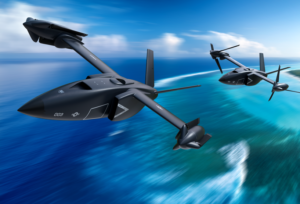
Not all innovators were born yesterday. In July, Bell Textron won DARPA’s X-plane competition for a Speed and Runway Independent Technologies (SPRINT) drone, capitalizing on a 10-year investment in the first-ever stop-fold wing technology. Textron “has long been one of the cool kids in the defense industry,” said Textron CEO Lisa Atherton.
Reliant on major defense contractors
Indeed, the Pentagon is heavily reliant on its proven “cool kids.”
The major aerospace primes won their spurs with innovation; the first X-plane was the legendary Bell X-1, flown by Chuck Yeager to break the sound barrier in 1947. These cool kids continue to be vast repositories of expertise critical to America’s aerospace technology lead over China.
The Trump administration can’t meet its “Arsenal of Freedom” goals without the combined efforts of the full range of American expertise: new entrants, prime innovators and commercial crossovers.
New defense entrants
The excitement over new companies for defense projects is justified. As with General Cherry, dedicated drone start-ups are an important source to tap. Anduril famously funded its own Ghost family, producing a drone with 25 pounds of payload and 100 minutes of cruise time.
Startups developing heavier drones often require funding from government programs. The Lifter Lite is a rugged, long-range cargo aircraft designed specifically for contested logistics. Grid Aero has branded it the “pickup truck of the skies,” capable of hauling thousands of pounds over thousands of miles. The concept calls for multiple lifters to be operated as a resilient, distributed mesh. Air Force Small Business Innovation Research (SBIR) money gave Lifter Lite its start.
Another firm on the Gauntlet list, Griffon Aerospace, leveraged its defense work on aerial targets. Griffon has a range of drones, including their MQM-172 Arrowhead, a delta-wing pusher attack drone capable of carrying a 100-pound warhead.
Innovative prime contractors
Complex innovation requires the “cool kids” with the intellectual capital for breakthroughs in large, powerful systems.
U.S. Special Forces is paired with DARPA to push the envelope on cargo drones. Bell Textron and Aurora Flight Sciences went head-to-head in the Speed and Runway Independent Technologies (SPRINT) competition, with Bell taking the win last summer. Bell’s SPRINT X-plane “stop/fold” tech features a tilting rotor used for hovering as well as vertical takeoff and landing.
The rotor can then be stowed to reduce drag. The system concept also included a sea-based option for landing on floating rafts. Next comes a complete demonstrator in 2027, followed by full flight testing in 2028. In the case of the SPRINT X-plane, innovation required expertise in a basket of technologies as well as substantial engineering experience. Those large-scale innovation capabilities rest with the primes.
Lockheed Martin, builder of Stalker and other unmanned systems, “will continue to invest and innovate at scale to ensure our warfighters maintain a decisive advantage and are never sent into a fair fight,” a company spokesman told Philip Wegman of RealClear Politics.
Commercial crossovers
A Pentagon boost to commercial U.S. drone manufacturers is overdue. China is running away with the global drone market.
In December, the FCC officially banned imports of new drones from the Chinese drone colossus DJI. (Drones on the Defense Contract Management Agency’s Blue list may still be imported.) A slew of American companies sells drones with U.S.-only parts, so bridging to warfighter experiments like Gauntlet is a smart move.
Teal developed the first mass-produced drones built entirely in the U.S. with defense-compliant components. Commercial drones from Teal conduct bridge inspections, assist with ranch work and construction. It’s a perfect example of the Pentagon’s push to operationalize commercial drones into new one-way attack systems.
Another competitor is W.S. Darley, a company with over 100 years of experience in fire-fighting equipment that is now developing U.S.-made drones for surveillance support.
Alongside the Gauntlet attack drone competition, DARPA kicked off a “lift challenge” prize. The program seeks “university researchers, independent innovators and industry to set a new standard in vertical lift performance.” This time, the Pentagon is seeking a drone design that can carry four times its weight. While the challenge focuses on basic research concepts, the Pentagon will need to engage all players across the drone delivery space to achieve a breakthrough in combat logistics.
Fully equipping the drone arsenal is a significant undertaking. Innovation can start small, but the military needs manufacturers that can scale up and remain “cool kids” thriving on technology breakthroughs.
Dr. Rebecca Grant is a national security analyst and vice president, defense programs for the Lexington Institute, a nonprofit public-policy research organization in Arlington, Virginia. She has held positions at the Pentagon, in the private sector and has led an aerospace and defense consultancy. Follow her on Twitter at @rebeccagrantdc and the Lexington Institute @LexNextDC.

Are you a Defense Daily reader with a thought-provoking opinion on a defense issue? We want to hear from you.
- We welcome submissions of opinion articles on national security, defense spending, weapons systems and related areas.
- We welcome submissions from lawmakers, administration officials, industry representatives, military officials, academics, think tank experts, congressional candidates, international experts and others on issues important to the national defense community.
- We welcome a diverse range of opinions all along the political spectrum.
- Email: editor@DefenseOpinion.com