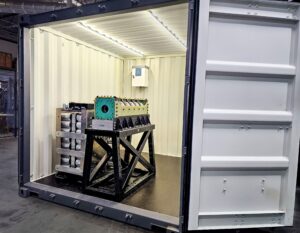
Three years after the Department of Homeland Security (DHS) terminated a program aimed at developing and producing the next-generation of portal systems to detect radiological threats hidden in cargo and vehicles, dozens of the Advanced Spectroscopic Portals (ASP) are being used in operations and for scientific research, a department official said on Tuesday. Following cancellation of the program in 2011, 36 ASPs purchased through low-rate production are now being used by universities and the national laboratories for research and others…
Recommended
Trending
Congress Updates
Pentagon May Make ‘Tradeoffs’ For Low-Cost Autonomous Tech Without Reconciliation Funds, CTO Says
The Pentagon’s chief technology officer has said the department may need to make “tradeoffs” on certain capability priorities if Congress doesn’t pass a reconciliation with $350 billion in requested defense […]
SASC’s FY ‘27 NDAA Sticks With Army’s Plan For Legacy Aviation Procurement Cuts
The Senate Armed Services Committee’s (SASC) version of the next defense policy sticks to the Army’s proposed plan to cut procurement of its legacy aviation fleet, and does not authorize […]
SASC Approves $1.14 Trillion FY ‘27 NDAA With ‘Right to Repair’ Reform, Stock Buyback Restriction
The Senate Armed Services Committee (SASC) has approved its $1.14 trillion version of the next defense policy bill, adopting “right to repair” reform to provide the military services’ greater ability […]
House Appropriators Unveil $1.07 Trillion FY ‘27 Defense Bill, Restore Funds For E-7, Army Aviation
House appropriators on Wednesday released their $1.07 trillion fiscal year 2027 defense spending bill, with the legislation reversing Army aviation cuts, restoring funding for the Air Force’s E-7 Wedgetail program […]
By