 By
By The U.S. Air Force intends to rapidly buy a fleet of light-attack aircraft after it conducts a second round of experiments with such planes later this year, service Secretary Heather Wilson said Feb. 16.
The Air Force recently updated its five-year spending plan to include a $2.4 billion “placeholder” to acquire the aircraft, Wilson told reporters after speaking at a Capitol Hill event organized by the Air Force Association’s (AFA’s) Mitchell Institute for Aerospace Studies.

The upcoming experiment will help the Air Force iron out program details, including how many aircraft it will buy and over what time period. Those details will likely be reflected in the service’s FY 2020 budget request, due for release in early 2019.
“We’re going to try to move very quickly,” Wilson said. “It’s not intended to be a long procurement.”
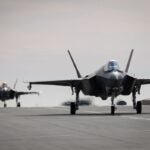
Air Force leaders have concluded that low-cost, light-attack aircraft would ease the anti-terrorism workload on its fighter jets, which are overtaxed and expensive to operate. In November, the stealthy F-22 Raptor conducted its first mission in Afghanistan by dropping Small Diameter Bombs on a Taliban opium processing plant (Defense Daily, Nov. 20, 2017).
“We should not be using an F-22 to destroy a narcotics factory in Afghanistan,” Wilson told the AFA audience.
The Air Force announced Feb. 2 that the second phase of light-attack aircraft experiments will take place from May to July at Davis-Monthan Air Force Base in Arizona. The event will involve “the two most promising” aircraft that the Air Force used in last year’s flight demonstration: the AT-6 Wolverine turboprop from Textron [TXT] Aviation Defense and the A-29 Super Tucano turboprop from Sierra Nevada Corp. (SNC) and Embraer Defense & Security (Defense Daily, Feb. 2, 2018).
The second phase will focus on how the planes share information, what sensors they should carry and how they should be operated and maintained.
The Air Force plans to buy aircraft “that are ready” and require minimal development work, Wilson said. The service also intends to encourage allies and partners to field similar aircraft and networks and train in the United States to promote interoperability.
“It has to be coalition at the core,” she said.