By Anna Iovenko, Defense Opinion Writer.
Defense innovation typically moves slowly, shaped by long procurement cycles and controlled testing. The war in Ukraine has upended that model.
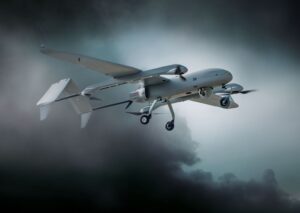
Since 2022, Ukraine has become the most demanding real-world proving ground for drones, artificial intelligence-enabled targeting systems and electronic warfare countermeasures, forcing technologies to evolve under continuous combat pressure. Analysts note that Ukraine’s experience illustrates how autonomous and AI-augmented systems are transforming modern combat and prompting militaries worldwide to reassess force design.
Ukraine serves as a global case study in how modern defense technology must be designed, tested and deployed to remain effective in high-intensity conflict.Fnav
Battle tested is new standard
Before Ukraine, “battle tested” often meant success in simulations or controlled exercises. Today, true battlefield validation means systems must operate under constant electronic warfare (EW) countermeasures, adapt to rapidly evolving enemy tactics, incorporate real-time soldier feedback, receive updates within days and survive extreme conditions.
Frontline operators often say, “If it works here, it will work anywhere.”
French Adm. Pierre Vandier, who serves as NATO’s Supreme Allied Commander Transformation, has observed that the scale and speed of Ukrainian innovation are forcing Western militaries to rethink doctrinal assumptions about unmanned systems.
Electronic warfare dominates
In Ukraine, Russian forces neutralize Ukrainian drones primarily through electronic warfare rather than kinetic air defenses. GPS spoofing, radio frequency jamming, telemetry disruption and degraded video feeds define the threat environment.
Ukrainian engineers introduced frequency-hopping radios, redundant communications, offline-capable autonomy, predictive navigation and sensor fusion to maintain operations in GPS-denied environments.
Platforms now integrate computer vision and onboard processing, enabling drones to complete missions autonomously even when communications fail. Analysts emphasize that autonomous navigation significantly increases strike reliability under heavy EW disruption.
Operators juggle multiple drones, EW threats, fire correction, navigation and system health simultaneously. Automation must reduce cognitive load rather than add to it.
User interface priorities shifted to minimal, high-clarity telemetry; actionable alerts; one-click workflows; automatic rerouting under jamming; and early voice or gesture controls. Ukrainian drone curricula are updated as frequently as every two weeks to reflect front-line lessons.
Artificial intelligence in combat
Tactical artificial intelligence has matured at an unprecedented pace. AI proved indispensable for target classification, optical tracking, video stabilization under jamming, navigation without GNSS, battle damage assessment, autonomous loitering and rapid terrain mapping.
Experts note that AI assists operators in degraded environments, reduces cognitive load, and improves mission reliability. Small AI-augmented guidance modules allow drones to operate semi-autonomously when human control is disrupted by EW.
The conflict shows that battlefield AI must be fast, lightweight, reliable and capable of operating without cloud connectivity.
Human-machine collaboration; soldier-driven R&D
Automation reduces cognitive load while enabling faster decision-making. Analysts note that effective human-machine collaboration—where AI augments, not replaces, human operators—is a central lesson from Ukraine’s drone corps.
Ukraine exposed the limits of slow procurement cycles and hierarchical development. Ukraine built successful systems through fast, iterative, soldier-driven R&D grounded in real-world data.
Effective defense innovation today requires speed over perfection, modular upgradable systems, collaboration over hierarchy, continuous updates, open architectures and field telemetry over lab assumptions. Frontline lessons: updates must ship within 48–72 hours; soldier feedback shapes requirements; R&D and production operate in parallel.
Ukraine’s battlefield experience, where military units, commercial innovators and volunteer developers collaborate closely, drastically shortens the cycle from idea to battlefield use.
The war in Ukraine has reset expectations. A system that performs in testing but fails under jamming is operationally irrelevant. Ukraine has demonstrated that speed saves lives, modularity increases survivability, AI multiplies effectiveness, soldier feedback drives capability, and field data beats theory.
Defense technology has entered a new era—shaped not by laboratory prototypes, but by systems hardened on the battlefield.
Anna Iovenko is a content manager at Ukrainian outsourcing company Abto Software, with a background in research, technical and consecutive translation and writing. She is based in Lviv, Ukraine.

Are you a Defense Daily reader with a thought-provoking opinion on a defense issue? We want to hear from you.
- We welcome submissions of opinion articles on national security, defense spending, weapons systems and related areas.
- We welcome submissions from lawmakers, administration officials, industry representatives, military officials, academics, think tank experts, congressional candidates, international experts and others on issues important to the national defense community.
- We welcome a diverse range of opinions all along the political spectrum.
- Email: editor@DefenseOpinion.com