This Technology Will Help the Next Spacecraft ‘Stick the Landing’
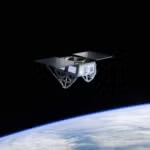
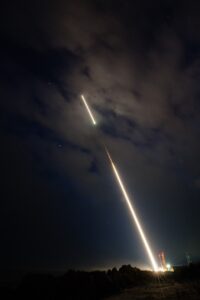
Draper is developing technology to equip the next generation of spacecraft with high precision navigation and landing capabilities. Credit: Southwest Research Institute, Boulder, Colo.
PR Newswire
CAMBRIDGE, Mass., March 1, 2020
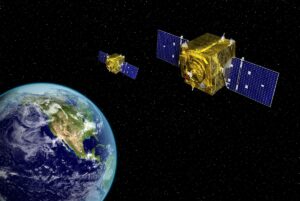
CAMBRIDGE, Mass., March 1, 2020 /PRNewswire-PRWeb/ — The next missions to space will require new technologies that are just now being developed and tested. One of the goals is to make spacecraft capable of high precision navigation and landing.
On March 2, a panel of engineers and scientists whose job it is to help put astronauts in orbit and bring them home again will talk about the technologies needed to do that.
And not just for missions around Earth, according to panelist and space engineer Courtney Mario, but also for foreseeable projects in deep space.
“Two key technologies that will likely fly on next-generation spacecraft are vision-aided navigation and hazard detection and avoidance,” Mario says. The Draper engineer will present on a panel at the Next-Generation Suborbital Researchers Conference in Broomfield, Colorado.
Mario builds vision-aided navigation systems for cars, spacecraft and unmanned aerial vehicles—that is, any vehicle that can’t rely on GPS. She says the next step in designing and testing technology for space is well underway.
With better navigation and precision landing capabilities, says Mario, spacecraft can potentially achieve pin-point landing and large hazard avoidance. “Precision landing algorithms are increasingly a part of space missions and already show promise for enhancing the overall capability of spacecraft.”
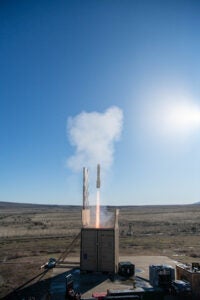
Draper is preparing to test its precision landing algorithms in the harsh environment of suborbital space using space-rated cameras in various locations and conditions at altitudes nearing 100 kilometers. Recently the company completed tests on a Masten Space Systems, Inc. spacecraft flight at 500 meters and a World View Enterprises high altitude balloon flight at 30 kilometers. The flight demonstrations, including several upcoming tests, received funding from NASA’s Flight Opportunities Program.
Draper’s technology for space exploration builds on the company’s legacy of support to commercial space companies and to NASA, which began with Draper’s design of the Apollo guidance computer, and has continued with programs including the International Space Station, the Space Shuttle and the Orion spacecraft.
SOURCE Draper