Australian VLS. The Australian Defense Ministry on Sept. 25 said the Australian Defense Force (ADF) supported the re-arming of vertical launching systems (VLS) for Australian, Canadian and U.S. naval ships. Australia helped re-arm both the Royal Australian Anzac-class frigate HMAS Warramunga and U.S. Navy Arleigh Burke-class guided-missile destroyer USS Dewey (DDG-105) at East Army Wharf Darwin in Northern Australia while the Royal Canadian Navy Halifax-class frigate HMCS Vancouver was rearmed at the Port of Broome in Western Australia. This was the first time Australia supported a non-U.S. partner with this kind of VLS rearmament in Australia.
32 Amphibs. Marine Corps Lt. Gen. Eric Austin, Deputy Commandant for Combat Development and Integration, told reporters during a virtual roundtable on Sept. 24 that there are currently 32 large deck amphibious ships in the Navy and with the recent four-ship buy of three LPDs and one LHA the Navy and Marine Corps are essentially expecting to maintain retiring one old amphibious ship each time a new one comes online. He noted Congress asked the service to report annually how it is maintaining the 31-ship floor every year and they are working to do that. “
…Delivery Dates. Tom Rivers, the executive director for amphibious, auxiliary and sealift programs at the Navy’s Program Executive Office Ships also told reporters the ships’ delivery dates are currently expected to be September 2031 for LPD-33, September 2033 for LPD-34, September 2035 for LPD-35 and September 2033 for LHA-10. This maintains the standard with LPDs typically ordered and meant to be delivered in two-year increments.
SSN-812. Secretary of the Navy Carlos Del Toro on Sept. 20 announced the future Virginia-class attack submarine SSN-812 will be named the USS Baltimore. He announced the naming during a ceremony in Baltimore aboard the historic USS Constellation. Previous ships named after the Maryland city were a Continental Navy ship and five Navy vessels.
Norwegian Frigate. Norway’s Vard, a subsidiary of the Italian Fincantieri, on Sept. 23 said it will offer a version of the U.S. Navy Constellation-class frigate to the Norwegian government as it plans to procure at least five new frigates. The U.S. frigate, contracted to the parent company’s U.S. subsidiary, Fincantieri Marinette Marine, has had design completion challenges and is three years behind schedule. The Constellation-class was originally based off Fincantieri’s FREMM Italian-French frigate. Vard pitched this to Minister of Defense Bjørn Arild Gram and Minister of Finance Trygve Slagsvold Vedum during a visit to the Vard Langsten shipyard.
India Wave Glider. A Sept. 21 White House-released joint fact sheet between the U.S. and India said Boeing’s Liquid Robotics is teaming up with India’s Sagar Defense Engineering to co-develop and co-produce Wave Glider Uncrewed surface Vessels (USVs) for India. A Sept. 23 Boeing statement said this project will support the U.S.-India Defense Industrial Cooperation Roadmap. The companies are using an Exclusive Teaming Agreement to jointly pursue co-development of solutions and large-scale co-production of Wave Gliders for the Indian Navy. They expect the partnership to result in co-produced Wave Gliders as soon as 2025.
The Last of the Extenders. On Thursday, the U.S. Air Force retired the last of its largest tankers, the Boeing KC-10 Extender, known affectionately to crews as “Big Sexy” or “Gucci,” when a Travis AFB, Calif., 60th Air Mobility Wing KC-10 flew to the 309th Aerospace Maintenance and Regeneration Group–“the boneyard”–at Davis-Monthan AFB, Ariz. A production run of 60 KC-10s, each with three fuel tanks, supplied gas for Air Force aircraft since 1982. The fleet dwindled to 21 in the last year and a half, as the service makes way for the Boeing KC-46A Pegasus. The company said this month that it has delivered 88 KC-46As to the Air Force–about 2/3 of the planned production run. Travis and Joint Base McGuire-Dix-Lakehurst, N.J., were the final main bases for the KC-10, the first three of which retired in 2020. Citing concerns with delays in the KC-46A program, Congress blocked KC-10 retirements in 2021 but resumed allowing them in 2022.
De-Orbiting. The U.S. Space Force’s Space Development Agency said that it has awarded 90-day contracts worth $1.9 million to Sierra Space Corp.; Quantum Space, LLC; Arkisys, Inc.; Impulse Space, Inc.; SpaceWorks Enterprises, Inc.; and Starfish Space for studies on the feasibility of “assisted, on-demand space vehicle de-orbit as a service for the Proliferated Warfighter Space Architecture (PWSA).” Starting in Tranche 1, the agency is to deploy hundreds of optically-linked communications and missile warning satellites for the PWSA. The satellites are to have “propulsion systems sized and qualified through end-of-life and have disposal plans that comply with orbital debris mitigation standard practices, ensuring the PWSA can perform its critical national defense mission while maintaining sustainability of the space environment,” SDA said. “Though current disposal plans are designed to exceed these goals, SDA is also interested in commercially available options for assisted disposal services as a potential future cost-saving measure or as a contingency, should they be required.”
Noms Confirmed. The Senate on Sept. 25 confirmed over 6,000 military promotions at the Pentagon, to include Lt. Gen. Ronald Clark to serve as the next commanding general of U.S. Army Pacific. Clark’s promotion was able to move forward after Sen. Tommy Tuberville (R-Ala.) lifted his brief hold on the nomination. Tuberville had previously cited concerns related to the role Clark, who was most recently the senior military assistant to Defense Secretary Lloyd Austin, had during Austin’s hospitalization earlier this year. An Inspector General’s investigation is currently underway into the handling of the hospitalization disclosure. Along with Clark, the Senate also confirmed Air Force Lt. Gen. Steven Nordhaus to be Chief of the National Guard Bureau, Navy Vice Adm. Alvin Holsey to be Commander of U.S. Southern Command, Air Force Lt. Gen. Randall Reed to be Commander of U.S. Transportation Command and Army Lt. Gen. Xavier Brunson to be Commander of U.S. Forces Korea.
Iraq FMS. The State Department on Sept. 24 approved a potential $65 million foreign military sale with Iraq for follow-on technical support for vessel maintenance and repair. The deal covers additional vessel maintenance services that will be added to a previously implemented $39 million FMS case, according to the department. The main contractor for the work is Amentum and it covers ship repair, maintenance, sustainment, support services, repair, upgrades, overhaul services, associated labor and support, U.S. Government and contractor engineering, technical and logistics support services of off-shore vessels, patrol boats and defenders of U.S. origin, fuel for quarterly tri-lateral exercises and other related elements of logistics and program support. “The proposed sale will improve Iraq’s capability to meet current and future threats by enhancing the strength of its homeland defense,” the Defense Security Cooperation Agency said in a statement.
Nebraska Senate Seat. New polls this week showed Sen. Deb Fischer (R-Neb.), ranking member on the Senate Armed Services Subcommittee on Strategic Forces, locked in a tight race against Independent Dan Osborn for the Nebraska Senate seat. Fischer has served in the seat since 2013, which has been considered a safely Republican stronghold. Osborn, a union leader who previously served in the Navy and then joined the Nebraska Army National Guard, has declined the endorsement of the Democratic party and has stated he would look to establish an Independent caucus in the Senate if elected.
Army Recruitment. The Army beat its active duty recruitment goals for fiscal year 2024, the service said on September 26, after falling short the prior two years. The Army said it will reach its goal of at least 55,000 total accessions for FY ‘25 and will place approximately 11,000 soldiers in the Delayed Entry Program for FY ‘25. This is compared to 50,181 total accessions in FY ‘23. “The U.S. Army’s recruiting force achieved our 55,000 accessions goal more than a month ahead of schedule, and we are on track to have more than 11,000 in our delayed entry program by the end of the month. This is more than double the goal we set for our delayed entry program and will allow our recruiting efforts for next year to start strong right out of the gate,” Army Secretary Christine Wormuth said in a statement.
Egypt FMS. The State Department on Sept. 24 approved a potential $740 million foreign military sale with Egypt for 720 Stinger missiles. The FMS case would cover RTX-built Stingers for “vehicle-based use on existing Avenger” air defense systems, according to the department, as well as 20 test munitions. “The proposed sale will improve Egypt’s capability to meet current and future threats by enhancing Egypt’s ability to defend itself against regional malign actors and improve interoperability with systems operated by U.S. forces and other regional security partners. Egypt’s continued investment in its defensive capabilities is crucial to protecting its borders, transportation infrastructure, and its residents,” the Defense Security Cooperation Agency said in a statement.
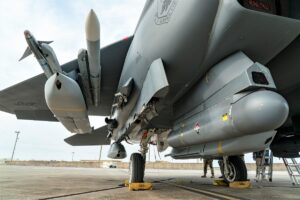
Australia FMS. The State Department on Sept. 27 approved a potential $405 million foreign military sale with Australia for up to 100 Advanced Anti-Radiation Guided Missiles-Extended Range (AARGM-ER). Along with the Northrop Grumman-built guided missiles, the new FMS case also includes up to 24 guidance sections and 24 control sections, missile containers, components parts and support equipment. “The proposed sale will improve the Government of Australia’s capability to meet current and future threats by providing the capability to suppress and destroy land or sea-based radar emitters associated with enemy air defenses, thereby improving survivability of tactical aircraft,” the Defense Security Cooperation Agency said in a statement.