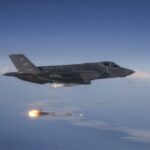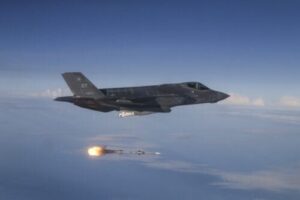

NATIONAL HARBOR, Md.–Air Force Special Operations Command (AFSOC) recently fired two ramp-launched Leidos [LDOS] AGM-190A Havoc Spear small cruise missiles in combat strikes from an AC-130J gunship against ground targets in the U.S. Africa Command area of responsibility, as the company plans to deliver 45 AGM-190As in low-rate initial production by next fall.
In the past, the U.S. has fired missiles at al-Shabab and ISIS-Somalia targets, but the Pentagon has not revealed the location of the Havoc Spear strikes. Adapting Havoc Spear for wider Air Force and other service use beyond AFSOC’s Enhanced Precision Effects portfolio would save AFSOC MFP-11 dollars for other special operations modernization efforts, according to the command.
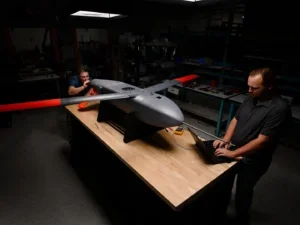
Havoc Spear stemmed from the AFSOC Small Cruise Missile Collaborative Research and Development Agreement, an “affordable mass” effort begun in 2022, and is a descendant of the 200-pound class GBU-69 Black Arrow small cruise missile by Leidos’ Dynetics unit.
“The GBU-69 was a fast fielding munition, and I think us going through that process with AFSOC and knowing how to do it from the design, what are the mission parameters and the driving requirements was beneficial,” Doug Jones, chief technology officer for Leidos’ defense sector, said in a company briefing on Havoc Spear at the Air & Space Forces Association’s annual conference here. “You’ve got to focus on what are the key requirements that you want to be successful on versus, ‘Here are 3,000 requirements.'”
“To keep costs down and speed up, you have to focus on those driving requirements and almost be religious about them,” he said. “What that does is it allows you to know where your trade space is. As we went through that, we showed how we could field onto multiple platforms…We were able to reuse things like our software, our avionics, things like. It’s a totally new aerodynamic model. It’s not a glide munition. It’s powered.”
The AGM-190A uses the TJ150 engine by RTX‘s [RTX] Pratt & Whitney.
AFSOC is aiming for an all-up-round AGM-190A unit cost of $200,000 to $350,000, but the command said that the LRIP unit cost is $600,000 due to the low quantity thus far. In July, Leidos received a $27 million contract for AGM-190A production.
Last March, AFSOC test fired the AGM-190A from an AC-130J at the Utah Test and Training Range in Dugway, Utah.