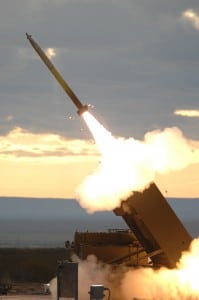
$500 Million PURL. Denmark, Estonia, Finland, Iceland, Latvia, Lithuania, Norway and Sweden have announced they will buy $500 million of munitions and other military items from the U.S. through the NATO and U.S.-led Prioritized Ukraine Requirements List (PURL), according to Ukrainian Defense Minister Denys Shmyhal. “Since August, when the PURL initiative began, it has provided about 75 percent of all missiles for Patriot systems and about 90 percent of missiles for other systems supplied to Ukraine by partner countries,” Shmyhal posted on X. “Together with this PURL package, Ukraine will receive long-range 155 mm artillery shells, as well as rockets for HIMARS systems (GMLRS) and guided aerial bombs.” RTX and Lockheed Martin build Patriot, while Lockheed Martin is the contractor for the High Mobility Artillery Rocket System (HIMARS) and the Guided Multiple Launch Rocket System (GMLRS).
…Drone Co-Production. Ukrainian President Volodomyr Zelenskyy told Bloomberg that Ukraine and the U.S. have started co-production of interceptor drones to disable Russian aerial attacks, as Ukraine tries to reach Zelenskyy’s goal of building 600 to 800 interceptor drones daily by the end of this month. Ukraine has not identified the names of U.S. companies involved in such co-production, but, in July, Zelenskyy and Swift Beat, LLC CEO Eric Schmidt inked an agreement to co-produce interceptor drones to shoot down high numbers of Russian-employed Shahed kamikaze drones. Schmidt is the former CEO of Google. Such interceptor drones likely include the Sting drone by Wild Hornets, a Ukrainian start-up. Sting has a unit cost of $2,500. In addition to drones, Ukraine is standing up electronic warfare “dome defenses” to disable Russian drone swarms in flight. Such domes include the “Kherson Dome” around the Ukrainian city of Kherson near the Black Sea.
Pension Hit. RTX last week said it will take about a $300 million non-cash, pre-tax charge in the fourth quarter due to a pension settlement. The company is transferring $2.5 billion in gross pension obligations from one of its plans to Prudential Insurance Company, which will be responsible for retirement benefits for 60,000 retirees and beneficiaries of the plan.
AV UAS Award. The Army on Oct. 27 awarded AeroVironment a deal that holds a “total cumulative face value” of $874.3 million covering a range of drone capabilities for current and future Foreign Military Sales customers. The deal specifically covers AV’s Puma All Environment 3, Puma Long Endurance, Puma AE/LE Hybrid and Raven unmanned aircraft systems. No funds have been allocated yet, the Pentagon noted in its contract announcement, which detailed a slew of awards made during the government shutdown.
IERUS. The Missile Defense Agency awarded IERUS Technologies a $475 million contract to perform Missile Defense System test related activities for “multiple radar platforms that includes planning, executing, and analyzing sensor performance in system flight tests and ground tests (including integration testing) for each assigned test event defined in the Integrated Master Test Plan.” This Huntsville, Ala.-focused contract has a performance period lasting through October 2034. DoD disclosed this contract was awarded on Oct. 9 with a Nov. 12 information dump of contracts awarded during the recent government shutdown. This contract was competitively procured with three offers received.
Parsons PDI. Parsons Corp. on Nov. 11 announced it won a position on the Navy Facilities Engineering Systems Command’s $15 billion Pacific Deterrence Initiative (PDI) Multiple Award Construction Contract (MACC). The MACC consists of a five-year base period with three one-year option periods. Under the contract vehicle, Parsons will compete for task orders to provide design and engineering services to deliver project more than $100 million in scope. This includes runways, hangars, waterfront facilities, warehousing and storage infrastructure, and energy and fuel storage solutions. The PDI MACC aims to allow faster execution of critical infrastructure projects in the region by streamlining the acquisition process and fostering industry collaboration.
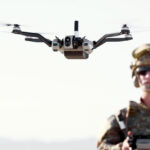
Drones for USAF. California’s Skydio said that it has signed two, multi-million dollar contracts to build drones for Tactical Air Control Party (TACP) and Explosive Ordnance Disposal (EOD) units with Air Combat Command at Joint Base Langley-Eustis, Va. “The Skydio systems will support TACP Airmen in characterizing enemy order of battle, enhancing situational awareness, acting as communications relays, and enabling near-peer engagements through integration with strategic platforms and weaponeering solutions,” the company said. “In a parallel effort, Skydio has also been selected as the aerial robot of choice for USAF EOD units deploying Skydio systems for both garrison operations and contingency deployments with additional systems planned over the next 18 months.”
Iraq FMS. The State Department on Nov. 13 said it has approved a potential $100 million deal with Iraq for the L3Harris-supplied Countrywide Repeater (CWR) System. L3Harris has said the CWR System provides “high-speed network access to mobile tactical users” using its RF-7850M family of radios to “enable secure end-to-end communication from commanders to troops.” “The proposed sale will improve Iraq’s critical command-and-control capabilities, bolstering its defense against regional threats. This strengthens Iraq’s ability to protect its borders, energy infrastructure, and residents, while advancing U.S. security interests,” the Defense Security Cooperation Agency (DSCA) said in a statement.
…Taiwan FMS. The U.S. has also approved a potential $330 million Foreign Military Sale (FMS) case with Taiwan to provide spare and repair parts and support services for its fleet of F-16, C-130 and Indigenous Defense Fighter aircraft. The DSCA noted that equipment will be transferred from current U.S. stockpiles. “USTBC welcomes the first of President Trump’s second term arms sales to Taiwan. Bolstering the sustainment of legacy equipment shows our ongoing commitment to helping the Taiwan military achieve high operational rates. Such programs have a long-standing place in American security assistance to Taiwan, with 27 sustainment CN’s (congressional notifications) in total since 2001,” Rupert Hammond-Chambers, president of the US-Taiwan Business Council (USTBC), said in a statement.
AI and Requirements. Army Secretary Dan Driscoll recently said the service has partnered with a “$950 million Series B-backed software company” to test how the firm’s quantum artificial intelligence algorithm can help assess program requirements. It is running those requirements through what it thinks could be tradespace. It is coming back to their PhDs who are looking them over and seeing if they agree with the outputs, who are then coming back to our requirements writers and we’re able to say, ‘Oh, man, if we trade out that allow, all of a sudden, we are certain that we can buy it,’” Driscoll told reporters during a briefing. Driscoll did not disclose the name of the software company.
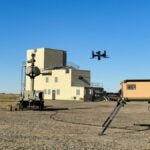
Counter Drone Flyaway Kit. To protect U.S. installations, U.S. Northern Command (NORTHCOM) has certified an Anduril Industries’ counter-small unmanned aircraft systems (UAS) fly-away kit, which includes the Anvil drone interceptor, the Heimdal mobile sensor trailer, the Pulsar detection and tracking tool, and the Wisp artificial intelligence infrared system. NORTHCOM certified the kit during an exercise last month at the 5th Bomb Wing at Minot AFB, N.D. “The validation and certification of our counter-small UAS fly-away kit is an important step in being able to support installation commanders within the United States as they defend against drone incursions,” Air Force Gen. Gregory Guillot, the head of NORTHCOM and North American Aerospace Defense Command, said in a statement. “Moving beyond an advisory role, we now have a team with equipment that is able to rapidly deploy and provide active and passive detection capabilities and low-collateral non-kinetic and low-kinetic defeat options in one package.” In February, Guillot told Congress that there had been more than 350 drone “incursions” last year at more than 100 domestic military installations. The temperature rose on DoD concerns about such drones after a 17-day stretch of their flights around Joint Base Langley-Eustis in December 2023.
Terminated. Govini’s board last week terminated Eric Gillespie, the software company’s founder and now former chairman, after he was charged in Pennsylvania with soliciting sex with a pre-teen girl in an online chatroom. Gillespie faces four counts. Gillispie stepped down as CEO of Govini nearly a “decade ago and had no access to classified information,” Govini said in a statement. “The actions of one depraved individual should not in any way diminish the hard work of the broader team and their commitment to the security of the United States of America.”
First Flight. Joby Aviation last week said it conducted the first flight of its autonomous turbine electric vertical takeoff and landing (VTOL) demonstrator aircraft in partnership with L3Harris Technologies, three months after the companies announced the hybrid concept. The companies are on track to fly demonstrations in 2026 for potential government missions. L3Harris will equip the Joby commercial hybrid aircraft with systems to perform military operations such as contested logistics, collaborative autonomous flight with manned aircraft and low-altitude support. Joby is developing electric VTOL aircraft for commercial and defense uses.
New Kratos Facility. Kratos Defense & Security Solutions last week said it will move into its new Propulsion Manufacturing Facility in Auburn Hills, Mich., where it will produce Spartan turbojet engines to meet rising demand. Kratos said the 22,500-square-foot facility can manufacture more than 50,000 engines per year.
Drone JV Close. U.S.-based AIRO Group Holdings and Ukrainian drone maker Nord Drone are set to finalize their joint venture (JV), AIRO Nord-DRON, LLC, that will increase the manufacture of drones to meet demand from U.S., Ukraine and NATO customers, the companies said last week. Formation of the JV, which was first announced in September, awaits regulatory approvals (Defense Daily, Sept. 8). The JV plans to use AIRO’s U.S. facilities, and possibly one in Denmark, to boost production of Nord Drone’s systems.