In this monthly column, Defense Daily highlights individuals from across the government, industry and academia whose efforts contribute daily to national defense, from the program managers to the human resource leaders, to the engineers and logistics officers.
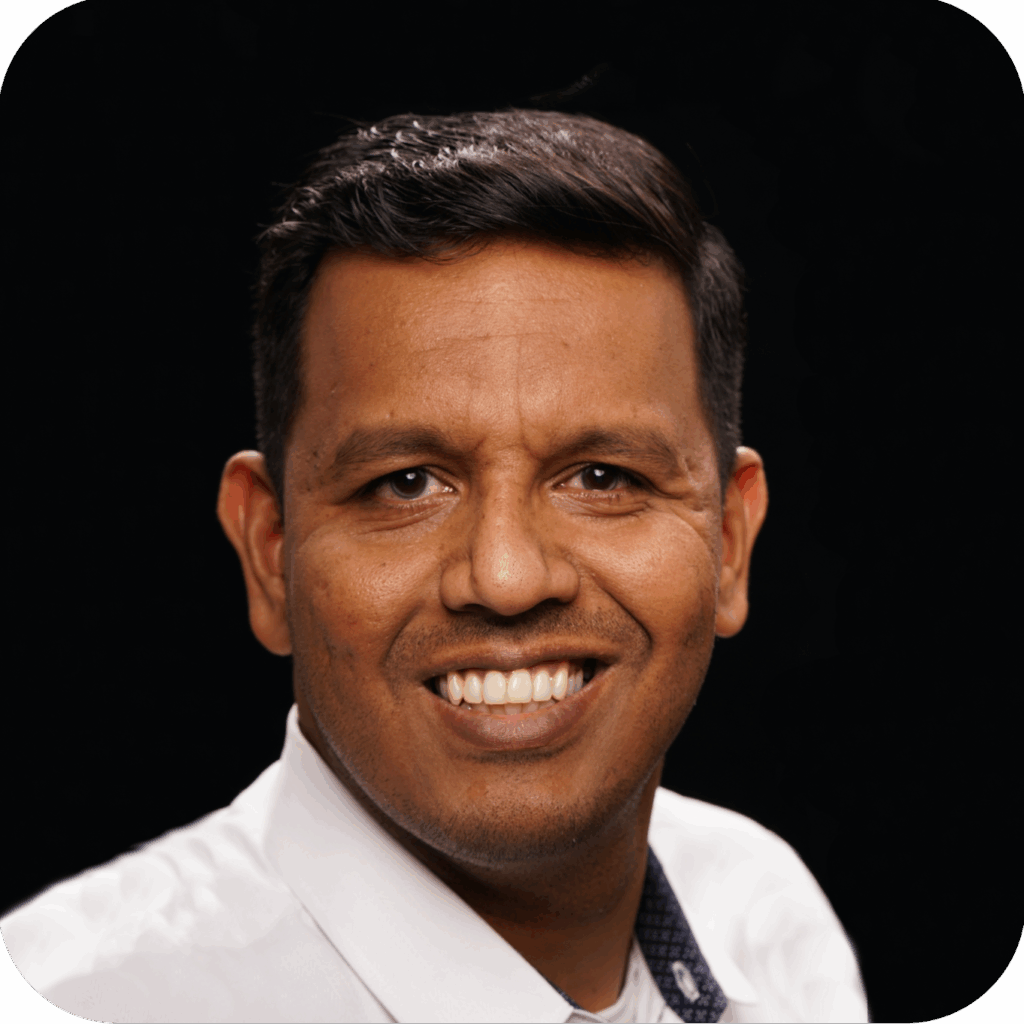
Jags Kandasamy is the CEO and Co-Founder of Latent AI, a company that focuses on solutions to design, deploy, and manage artificial intelligence/machine learning on the edge. Under his leadership, Latent AI developed technology including the Ruggedized AI Toolkit (RTK) and the Latent AI Efficient Inference Platform (LEIP), which enable warfighters to retrain and redeploy AI capabilities in the field rapidly. Kandasamy lso serves as an Industry Commissioner for the Atlantic Council’s Software-Defined Warfare Commission, which focuses on addressing the challenges of adopting and deploying advanced software solutions within the Defense Department and its allies.
How did you get involved in the defense industry or community?
My journey into the defense industry began through my work in embedded systems and edge computing. I come from a uniformed family back in India and had qualified for the National Defense Academy after high school. I had always wanted to serve.
The pivotal moment came when I recognized the critical gap between AI capabilities being developed for commercial applications and what was actually needed at the tactical edge. Through my partnership with SRI International and the Entrepreneur in Residence program, I met Sek Chai, who had been working on advanced AI
algorithms and low-power edge computing for more than 5 years under funding by DARPA and the Department of Defense. We realized that robust and efficient AI was essential for military applications, but the existing solutions simply weren’t designed for the resource constraints and security requirements of defense environments.
This led to the founding of Latent AI with a specific focus on solving the unique challenges facing warfighters who need AI capabilities that work in contested, bandwidth-limited environments where traditional cloud-based solutions fail. My involvement has since expanded to serving as an Industry Commissioner for the Atlantic Council’s Software-Defined Warfare Commission, where I work on broader challenges of adopting advanced software solutions across the DoD and allied nations.
What are some challenges you faced working through your career?
I struggled early in my career to find the right role. As an engineer, I was given quality assurance and software engineering roles. I did them well, but was not very happy doing so. Identifying that I excelled and loved to engage with customers and solve problems for them provided a big leap in my career. This revelation helped me find roles in Product management, Business development, customer success and finally grow into a general management role.
Did you feel like you always had sufficient mentors and leaders to help guide you? Why/why not?
I played sports growing up at club level, county and university level. Mentors and coaching is part of sports and I internalized that at a very young age. I have always had mentors and leaders helping me in my career. I owe everything I’ve achieved in my life to my mentors and coaches who have helped me get to where I’m today.
How do you work to be a mentor yourself to younger counterparts?
I currently serve as a mentor with The Honor Foundation, whose mission is to help retiring SOCOM members to land well in a civilian career. I mentor transitioning officers from Special Operations community and educate them about technology, venture capital, product management, sales and other relevant topics. I also mentor several younger professionals in the field of entrepreneurship and other first time founders in the art of fund raising.
What does it mean to be successful in your career field?
Success in defense technology means your innovations directly enhance warfighter capabilities and mission effectiveness.
But beyond technical metrics, success means building trust with the defense community. This requires consistent delivery, transparent communication about capabilities and limitations, and a deep commitment to security and reliability standards.
Treating humans as humans instead of their titles or the role that they play. When someone recognizes me for who I am instead of looking behind my name and reading my titles is success.
True success in this field is when your technology becomes an enabling capability that warfighters can depend on, rather than just another system they have to manage. It’s also about contributing to the broader transformation of how defense organizations adopt and integrate software-defined capabilities, which is why my work with the Atlantic Council is so important.
What are some of the under-appreciated positions in the defense field, the unsung heroes or essential cogs in the machine that help the job get done with less recognition?
The PMs, They are the linchpin between warfighter needs, contracting, and delivery. Without PMs, even the best tech never reaches the field. Their success is measured by bureaucracy navigated, not headlines made.
How can the industry improve in promoting these individuals and building them up?
Bad news is shared ten times more than good news. This is human nature. Industry should break from this mold and celebrate every success that a PM brings to the table. Industry should see them as a strategic partner and help in developing thought leadership with the PMs. We should also enable more public recognition of the PMs that are fighting the bureaucracy and moving the ball forward.
How has the culture changed around diversity within your career?
The defense industry has increasingly recognized that diverse perspectives are essential for developing robust solutions. Different backgrounds bring different approaches to problem-solving, which is particularly valuable when developing AI systems that need to work reliably across diverse operational scenarios. I’ve seen how collaboration brings valuable diversity of thought and approach to solving common defense challenges.
I’m an outsider to the defense industry and I’ve been welcomed with open arms and once the community knew that they could trust me, my view points have been considered seriously and implemented in most cases.
What is your advice for new entrants to the defense/military community?
First, invest time in understanding the operational environment where your technology will be used. Talk to warfighters, visit training facilities, and understand the constraints they face. Your technical solution needs to work in their world, not the other way around. In this phase, you need to build the relationships, earn their trust that you are there to solve their problems.
Second, be prepared for longer development and sales cycles, but understand that this rigor is necessary. Defense applications require a level of reliability and security that exceeds most commercial applications.
Third, find mentors who understand both the technical and operational sides of defense. The defense community is generally very willing to share knowledge with people who demonstrate genuine commitment to supporting the mission.
Finally, focus on solving real problems rather than applying the latest technology trends. The defense community needs practical solutions that enhance capabilities, not just demonstrations of technical sophistication.
What do you see as the future of your sector in national defense?
The future of AI in defense lies in making intelligence capabilities truly distributed and adaptive. We’re moving from centralized, cloud-dependent AI toward edge-native intelligence that can operate independently in contested environments.
We see AI capabilities becoming embedded throughout the sensor-to-shooter chain, with intelligent processing at the Tactical, Operational, Command, and Strategic Edge layers.
The key breakthrough will be AI systems that can adapt and learn in the field without requiring months of retraining cycles. Our work with the Army and Navy represents an early step in this direction, enabling warfighters to update AI models in theater based on new threats or operational requirements.
The war fought today is not the war we will fight tomorrow. AI will become as commoditized as ammunition for guns in the next 7-10 years.
Ultimately, we’re working toward truly software-defined warfare capabilities where AI augments human decision-making at every level of military operations, providing faster, more accurate intelligence while keeping humans in control of critical decisions. This transformation requires not just technical innovation, but also changes in doctrine, training, and organizational culture.
Who are the Force Multipliers in your community? Let us know at forcemultipliers@defensedaily.com.