
In this monthly column, Defense Daily highlights individuals from across the government, industry and academia whose efforts contribute daily to national defense, from the program managers to the human resource leaders, to the engineers and logistics officers.
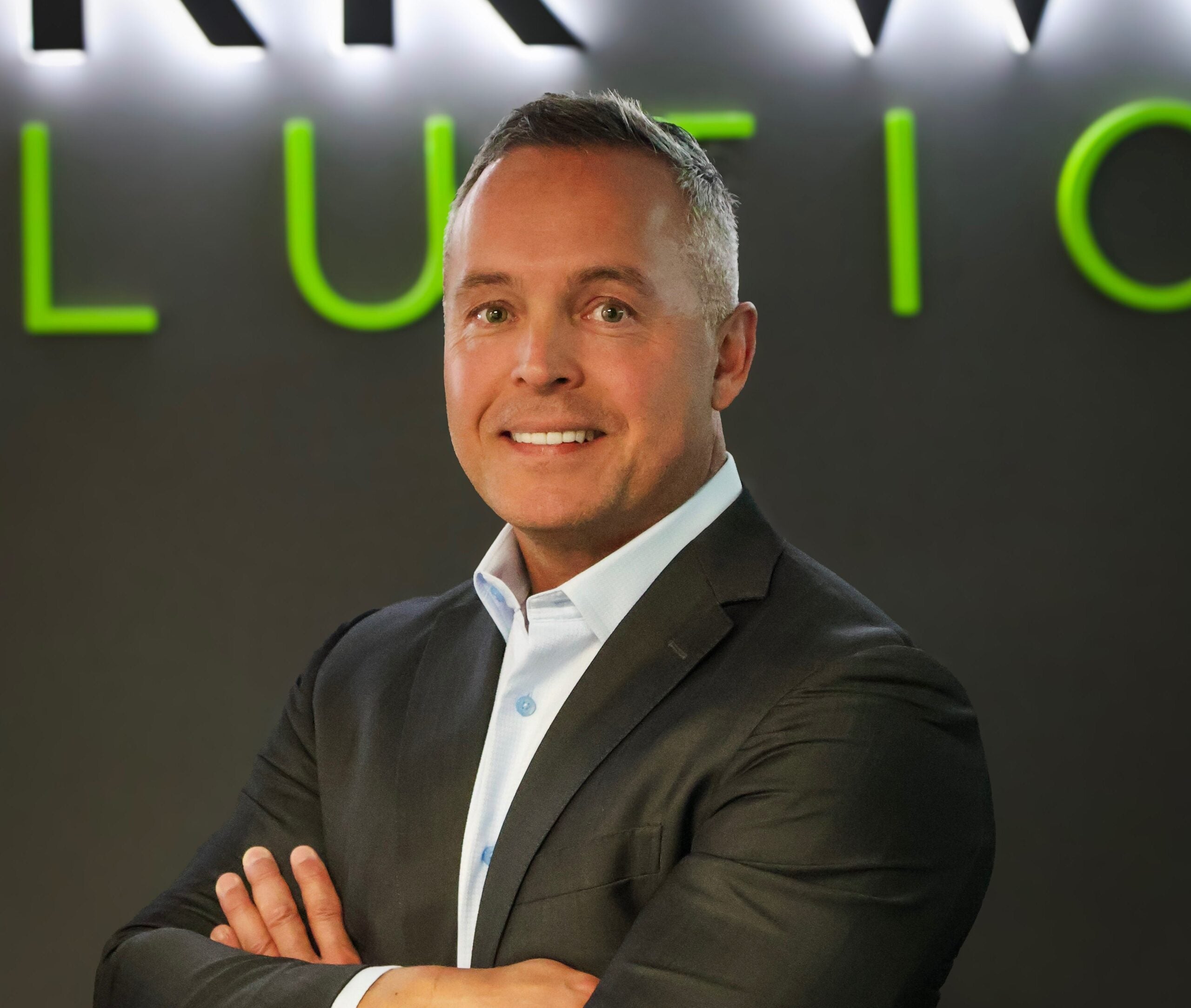
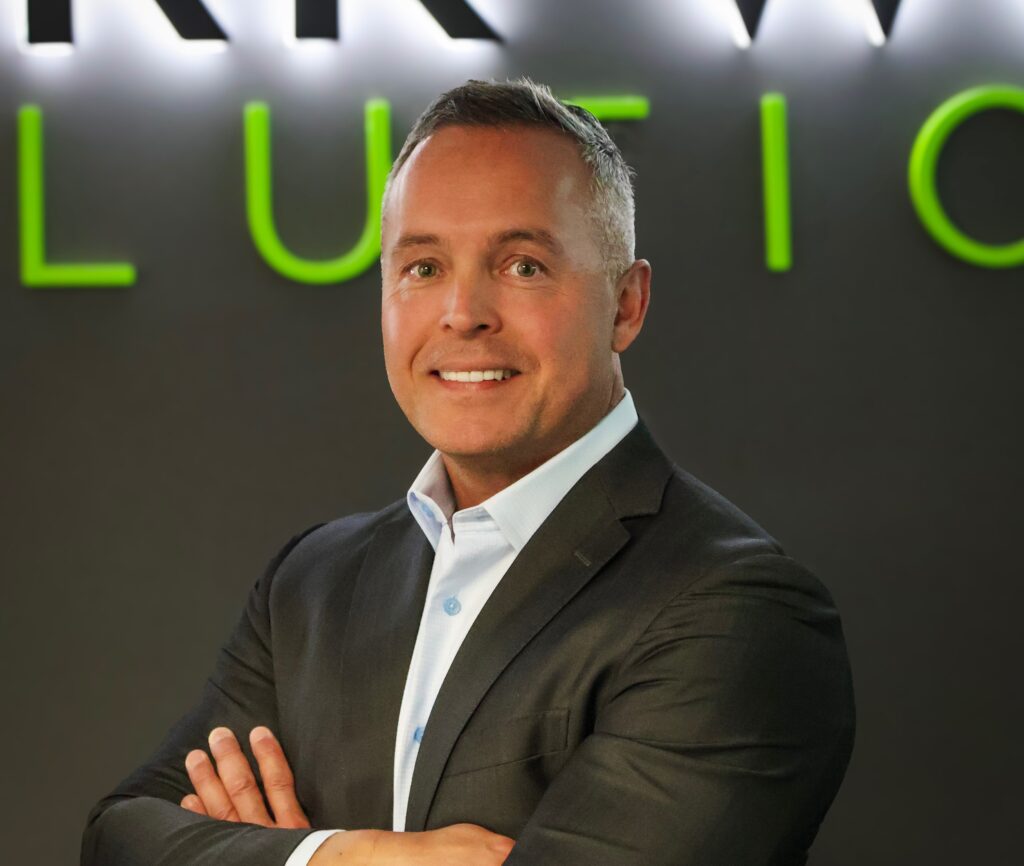
Arne Brinck is the Managing Director at Dark Wolf Solutions, an IT and cybersecurity partner that supports defense missions across the DoD and intelligence community. Brinck is a former Marine Sergeant where he spent years leading anti-terrorism security and force protection missions, including the multinational exercise Operation Bright Star, led a TOW missile section with a combined Anti-Armor Team and later served as a Sergeant with the Fleet Antiterrorism Security Team (FAST).
How did you get involved in the defense industry or community?
My father was a Navy civilian working as an engineer, so the defense community was a part of my life from an early age. Looking up to him, one of my first internships in high school was with the Naval Surface Warfare Center, where he worked at the time.
I enlisted in the Marine Corps after my junior year of college, where I gained experience and learned leadership lessons that have guided me throughout my career. The structured, deliberate approach to planning and execution I learned in the Marines translates directly to leading and managing complex mission programs, capability teams, programs, and a practice area in my work today.
After my four-year enlistment, I returned to college, followed by pursuing a career path in the private sector. Interviewing with a retired Marine Lt Col made an impression on me—he spoke of meaningful national security work and created a vision for me that was an extension of my Marine Corps service. This led me down the path supporting national security and information assurance.
What are some challenges you faced working through your career?
One of the biggest challenges I’ve faced throughout my career was transitioning from the culture within the Marine Corps to that of a large private sector organization.
Starting my career in the Marine Corps, there was a defined structure and built-in mentorship. Adjusting from this environment to a private sector career where there were fewer mentors and a greater need to lean on your personal network was an abrupt shift.
As I rose through the ranks, I learned to manage corporate relationships and dynamics with as much focus as I’d had on customer delivery. But I took away a lesson on the importance of mentorship and supporting those who are making the transition from the military into civilian work.
Did you feel like you always had sufficient mentors and leaders to help guide you? Why/why not?
My access to mentors has varied across the roles I’ve served.
A good mentor makes a significant and direct impact on individual success. In the Marine Corps, there were always mentors available—it is part of the DNA of the organization and built into the day-to-day execution of work.
Good mentors and mentorship reflect trust and unity of mission across an organization. Organizations that lack mentors and mentorship tend to lead to a more singular focus and lack shared goals.
How individuals are goaled and incentivized is a key indicator that can tell you about the team structure and likelihood of effective mentorship in an organization.
I’ve learned to seek these traits in the organizations I work for—I know these are places I can thrive.
How do you work to be a mentor yourself to younger counterparts?
My current employer, Dark Wolf, is a mission and people-focused organization, so it offers me ample opportunity to lead, guide and mentor my teams and younger counterparts.
Lessons that I learned as a part of the Marine Corps have been crucial to how I mentor. It starts with building trust and understanding culture. Leading small tactical teams reinforced the importance of trust, communication and integrity — principles that shape how I engage not only with mentees but also clients, teams and mission partners. Accounting for culture similarly builds trust and allows us to achieve shared goals and objectives.
What does it mean to be successful in your career field?
For me, success means day-to-day work that serves a purpose that aligns with my personal priorities and beliefs.
Throughout my career, I’ve had the good fortune to perform meaningful work in support of customers with a national security mission. Our customers are driven by mission, not quarterly profits, so serving them fulfills a sense of purpose that matters to me.
Along with performing work that matters comes a focus on people. At Dark Wolf, we embrace “Pack Life.” This means genuine care for people and authentic leadership.
It also means providing others with opportunities for personal and professional growth—even when that means coaching others into new roles and career paths. I feel accomplished and rewarded when junior professionals and mentees go on to do great things. Success all ties back to shared goals and unity of mission.
What are some of the under-appreciated positions in the defense field, the unsung heroes or essential cogs in the machine that help the job get done with less recognition?
There are many under-appreciated positions within the defense industry. If we consider the warfighter the ultimate end customer, then most support and enabling functions are in this category. These range from logistics and IT to food services and motor pools. These roles are all essential to support the warfighter and, in turn, national security.
What is your advice for new entrants to the defense/military community?
This is a community that innately offers the building blocks for growth, success and meaningful work. My first piece of advice is to learn from those around you and seek mentors whom you admire. My second recommendation is to always put the mission first and prioritize people. The Marine Corps taught me that success depends on empowered teams, no matter the mission. The experience of supporting seemingly inconsequential —and sometimes boring—missions taught me a lot personally and as a small unit leader.
Finally, maintain a mission-driven operational mindset. For example, after serving in the Marine Corps I viewed cybersecurity not as a matter of compliance, but as operational readiness — an extension of force protection in the digital domain. This meant making cybersecurity relevant to operations leaders and balancing the need for security with operational objectives. Creating these connections with the mission makes work meaningful and can guide critical decision-making.
This mindset has been key to recent work with the Defense Innovation Unit at the intersection of theater/mission to demand signals and critical, innovative commercial technology and products.
Meeting the organization’s efforts to accelerate the adoption of commercial and dual-use technology for national security requires constant consideration of how innovative technologies tie back to the mission.
What do you see as the future of your sector in national defense?
There’s so much innovation on the horizon. The Under Secretary of War for Research and Engineering recently highlighted six critical technology areas, intended to deliver the clearest results to the warfighter. The focus areas included applied AI, biomanufacturing, contested logistics technology, quantum and battlefield Information dominance, scaled directed energy and scaled hypersonics.
This revision of priorities tells a clear story— future IT investments that directly influence national security and military strength will define national defense technology investment in the coming years.
Building on this theme, I expect to see growth and investment in autonomous systems across all domains, advanced communications technologies in contested environments, DevSecOps and offensive cyber capabilities.
Who are the Force Multipliers in your community? Let us know at forcemultipliers@defensedaily.com.







 By
By