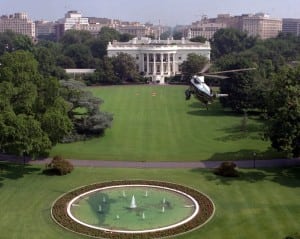
President Donald Trump signed the fiscal year 2018 defense authorization conference report (H.R. 2810) into law Dec. 12, calling the nearly $700-billion measure “a momentous step” toward rebuilding the military and protecting the nation.“This legislation will enhance our readiness, modernize our forces and help provide our service members with the tools that they need to fight and to win,” Trump said at a White House ceremony attended by Defense Secretary Jim Mattis and other Pentagon leaders. "We will fight and…
A new Congressional Budget Office report estimates the cost of the Iran war through Aug. 1 as $38 billion and says that the U.S. has likely depleted between one-half and […]
NATIONAL HARBOR, Md. – A Senate Armed Services panel chair today said boosters of the Golden Dome program still have work to do to increase support on Capitol Hill while […]
An HII [HII] shipbuilding executive last week told lawmakers how the company plans to improve and accelerate shipbuilding throughout via workforce improvements, adding new shipbuilding infrastructure and reinforcing distributed shipbuilding […]
The House on Tuesday passed a stopgap funding bill to keep the government open through Dec. 11, sending the temporary funding measure that also includes funds to support ongoing shipbuilding […]
President Donald Trump signed the fiscal year 2018 defense authorization conference report (H.R. 2810) into law Dec. 12, calling the nearly $700-billion measure “a momentous step” toward rebuilding the military and protecting the nation.
“This legislation will enhance our readiness, modernize our forces and help provide our service members with the tools that they need to fight and to win,” Trump said at a White House ceremony attended by Defense Secretary Jim Mattis and other Pentagon leaders. “We will fight and win. But hopefully, with this, we won’t have to fight because people will not be wanting to fight with us.”
Trump highlighted several provisions in the new law, including funding authorizations to fight the Islamic State and build up defenses against North Korean ballistic missiles.
He noted that the conference report, which Congress passed in mid-November (Defense Daily, Nov. 16), also calls for upgrading ground combat vehicles, buying more F-35 Joint Strike Fighters and building more “beautiful” Virginia-class attack submarines.
Trump urged Congress to “finish the job” by completing the FY 2018 defense appropriations bill and scrapping defense spending cuts required by the Budget Control Act (BCA) of 2011. House Armed Services Committee Chairman Mac Thornberry (R-Texas), who attended the ceremony, agreed, saying “Congress must follow this authorization with a matching appropriations bill if we are to really rebuild our military.”
The Senate Appropriations Committee unveiled an FY 2018 defense appropriations bill on Nov. 21 to pave the way for negotiations with the House, which passed its version in July. Committee leaders cautioned that funding will automatically be slashed by tens of billions of dollars if Congress does not reach a budget agreement by Jan. 15 to address the BCA (Defense Daily, Nov. 21). The federal government, including the military, is currently funded by a continuing resolution that expires Dec. 22.
In a statement on the authorization bill, Trump expressed “constitutional concerns” about several provisions, including one that would make the head of Air Force Space Command the “sole authority” over certain matters.
“While I share the objectives of the Congress with respect to maintaining the strength and security of the United States, my administration will treat these provisions consistent with the president’s authority as commander in chief,” Trump wrote.
Trump also criticized a section making full funding for the White House Communications Agency contingent upon the submission of a report on policy for cyberspace, cybersecurity and cyberwarfare. The agency provides secure communications to the president and his staff.
“The Congress should not hold hostage the president’s ability to communicate in furtherance of the nation’s security and foreign policy,” Trump wrote. “I look forward to working with the Congress to address, as quickly as possible, this unprecedented and dangerous funding restriction.”
While there has been criticism among missile defense advocates of Golden Dome’s development pace after the signing of an executive order in January last year, Space Force Gen. Michael Guetlein, […]


 By
By