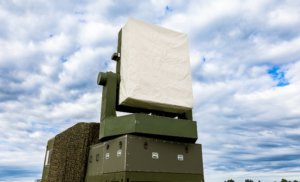
Although demand for a critical gas used in radiological detectors and for other purposes is outstripping the annual production of Helium-3 (He-3), it won't impact deployments this year and in FY '11 of radiation portal monitors (RPMs), a Department of Homeland Security (DHS) official tells Congress. The RPMs already have sufficient He-3 tubes, which are a critical component of the radiation detection systems, a Dr. William Hagan, acting director for the Domestic Nuclear Detection Office (DNDO), tells the House Science…
Recommended
Trending
Congress Updates
With $1.5 Trillion Request, Army, Air Force, Navy’s Unfunded Lists Focus Solely On MILCON Projects
With the Trump administration’s push to massively increase defense spending to $1.5 trillion in fiscal year 2027, the Army, Air Force and Navy have eschewed submitting large unfunded priorities lists […]
Bipartisan House Bill Would Give National Guard To Counter-Drone Authorities
Seeking to close gaps that may arise between state and local law enforcers in different jurisdictions, a bipartisan contingent of House members this week introduced a bill that would allow […]
Munitions Fired Represent Most of $25 Billion Spent By Pentagon on Iran War So Far
Munitions fired in the two-month old “Operation Epic Fury” against Iran represent most of the $25 billion cost the Pentagon has incurred thus far in the conflict, the acting Defense […]
Slotkin: Pentagon Should Use Anthropic’s Mythos To Spot Cyber Security Gaps
The Pentagon should be using Anthropic‘s recently announced Mythos artificial intelligence model to spot gaps in cyber security, Sen. Elissa Slotkin (D-Mich.) said on Tuesda. “I think the thing that […]